
Are Thin Condoms Less Safe? Myth And Facts Explained By Expert

There’s a lot of talk about thin or ultra-thin condoms, especially whether they compromise safety for sensation. Some people worry that thinner condoms might break more easily or protect less well against pregnancy and sexually transmitted infections (STIs). To get to the bottom of these concerns, we spoke with Dr Chirag Bhandari, Founder, IASH (Institute of andrology and sexual health), and looked at scientific evidence and right guidance. The good news is that thin condoms are not inherently unsafe, provided they meet quality standards and are used correctly.
Understanding Condom Safety Standards
All condoms sold legally whether thin, standard, latex or non-latex, must pass rigorous safety tests before they reach consumers. These include checks for burst strength, leaks, durability and elasticity, based on international standards such as ISO 4074, as per World Health Organization (WHO).
According to Dr Chirag, “A common misconception about thin condoms is that since they are thinner, they may be automatically weaker or less protective. The majority of these beliefs are actually myths that are unsupported by science or regulatory standards.” Modern materials like high-quality latex, polyurethane or polyisoprene can be engineered to be very thin and still strong.
1. Myth: Thin condoms are more prone to tearing
Fact: Dr Chirag Bhandari says, “Reputable brands' ultra-thin condoms go through the same stringent quality testing as regular condoms. These consist of leak tests, air volume, and burst pressure. Strength and safety are not solely determined by thickness.”

2. Myth: Condoms that are thicker offer superior protection
Fact: The quality of the material, correct storage, proper fit, and correct usage, rather than thickness, are what determine protection. The level of protection provided by a well-fitted thin condom is the same as that of a thicker one.
3. Myth: Thin condoms don’t protect against STIs
Fact: Thin latex or polyurethane condoms are equally effective in protecting against HIV and most sexually transmitted infections when used properly.

Don't miss: Why Joint Pain Worsens in Cold Weather — and What Actually Helps, Expert Explains
4. Myth: The failure rate of thin condoms is higher
Fact: The failure rates of regular and thin condoms are the same when used correctly. Dr Bhandari explains, “Most condom breakages are caused by incorrect use, which includes choosing the wrong size, not leaving space at the tip, using latex condoms with oil-based lubricants, using expired or heat-damaged condoms, or opening packets with sharp objects.”
Don't miss: 5 Morning Rituals That Help Ease Period Cramps
5. Myth: The sole purpose of thin condoms is pleasure, not safety
Fact: The purpose of thin condoms is to enhance sensation without compromising safety. Thin condoms also support safer sex practices as they offer better comfort and sensation.
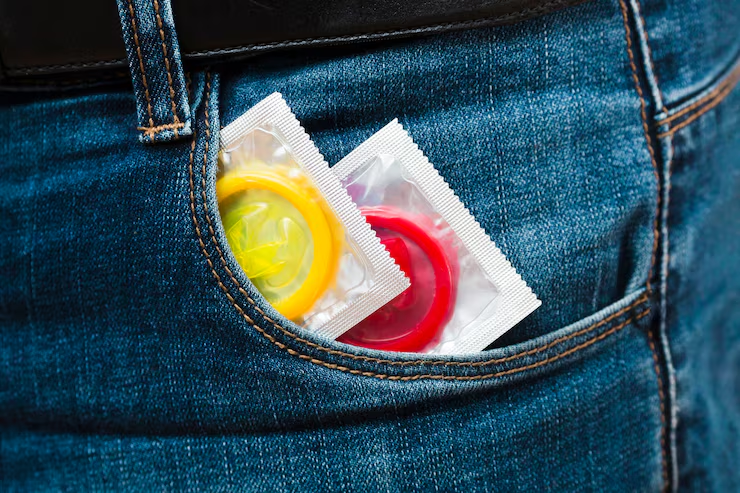
The idea that thin condoms are less safe is largely a myth. Modern thin and ultra-thin condoms undergo the same safety testing as regular condoms and, when used correctly, offer the same level of protection against pregnancy and STIs. What matters most is choosing a high-quality product and using it properly, and storing it well. By understanding these facts, people can make well-informed, confident choices about sexual health and protection.
For more such stories, stay tuned to HerZindagi.
Image credit: Freepik
Our aim is to provide accurate, safe and expert verified information through our articles and social media handles. The remedies, advice and tips mentioned here are for general information only. Please consult your expert before trying any kind of health, beauty, life hacks or astrology related tips. For any feedback or complaint, contact us at compliant_gro@jagrannewmedia.com.