
Postpartum Hemorrhage And Underlying Bleeding Conditions: Expert Insights On Early Detection And Management

Childbirth is often described as one of life’s most powerful experiences, but it also comes with its own set of risks. One such condition is postpartum haemorrhage (PPH), or excessive bleeding after delivery. While some bleeding is expected, heavy or prolonged bleeding can quickly become dangerous if not treated in time.
To better understand this condition and how women can stay prepared, we spoke to Dr Sonal Kumar - Consultant-Obstetrics, Fernandez Hospital, Hyderabad, for expert insights on recognising risks early and managing them effectively.
What Is Postpartum Haemorrhage (PPH)?
Postpartum haemorrhage refers to excessive bleeding after childbirth, most commonly within the first 24 hours, although it can also occur days or even weeks later. It affects around 4–6 in every 100 births, making it an important condition to be aware of.
Left unaddressed, PPH can lead to serious complications, but timely care makes a significant difference in outcomes.
-1776337957108.jpg)
Causes of Postpartum Haemorrhage (PPH)
The causes of PPH are generally grouped into three categories: pre-existing conditions, pregnancy-related factors, and labour-related complications.
1. Pre-existing Bleeding Conditions
Some women may have underlying bleeding disorders that affect how their blood clots. These can either be inherited or develop later in life. “Some people are born with bleeding disorders, while others develop them later. In both cases, the body doesn’t clot blood as easily as it should,” explains Dr Sonal Kumar. Family history can offer important clues. Conditions where the body lacks certain clotting proteins or cells may go unnoticed until a situation like childbirth brings them to light. “It’s helpful to let your doctor know if you’ve ever noticed unusual bleeding patterns in yourself or your family,” she adds.
2. Pregnancy-Related Factors
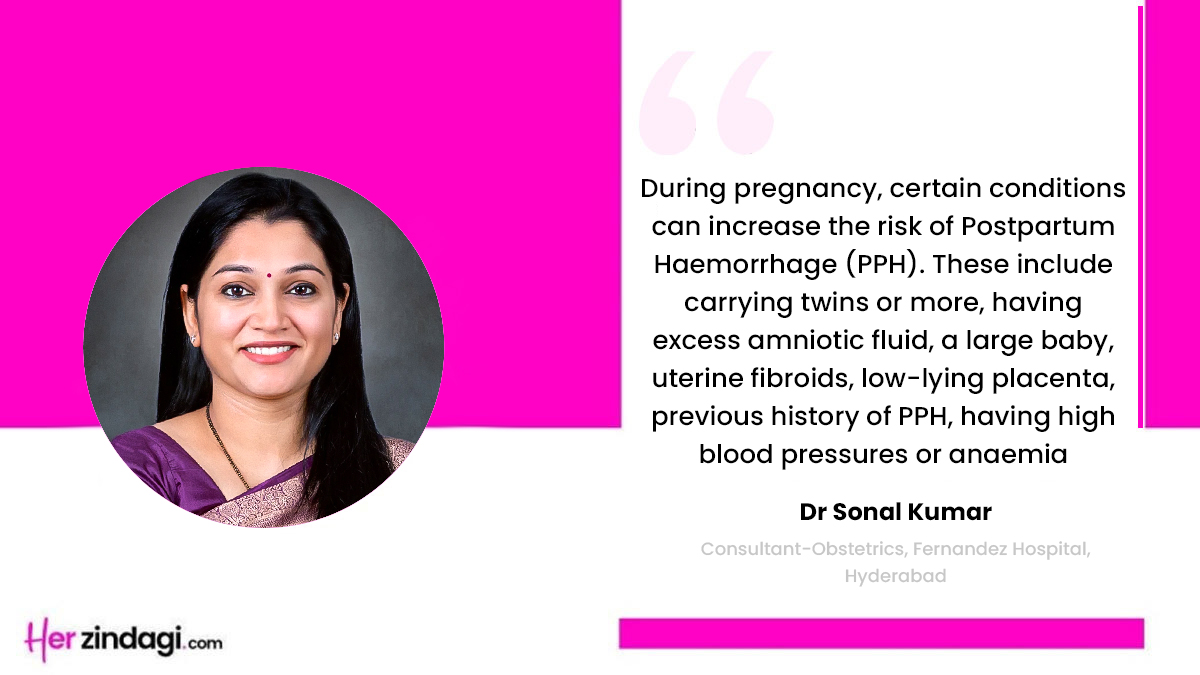
Certain conditions during pregnancy can increase the likelihood of PPH. These include carrying twins or more, excess amniotic fluid, a larger-than-average baby, uterine fibroids, low-lying placenta, high blood pressure, anaemia, or a previous history of PPH.
“When these risks are identified during pregnancy, it gives your care team the chance to plan ahead and make delivery safer for both you and your baby,” Dr Sonal Kumar notes.
3. Labour And Delivery Related Complications
Sometimes, PPH is linked to what happens during labour and delivery. Prolonged labour, infections, assisted deliveries such as forceps or vacuum, or incomplete separation of the placenta can all contribute to heavy bleeding.
ALSO READ- How To Start Your Day During Periods For A More Balanced Cycle
Postpartum Haemorrhage (PPH) Warning Signs
Often, the body gives hints when something isn’t quite right. Recognising these early can help prevent complications later. Here are the warning signs and key insights for identifying unusual bleeding as shared by Dr Sonal Kumar:
-Warning-Signs-1776337978167.avif)
Heavy periods: Flow that seems excessive or uncharacteristic for you.
Persistent bleeding: Bleeding that takes significantly longer to stop than expected.
Prolonged bleeding after minor procedures: Noticing slow clotting after events like a tooth extraction or small cuts.
Easy bruising: Developing bruises more frequently or easily than others.
The Milder Factor: While severe disorders are usually caught early, milder conditions can fly under the radar without careful, proactive screening.
ALSO READ- How Endometriosis Affects Fertility And Women’s Reproductive Health, Gynaecologist Explains
Postpartum Haemorrhage (PPH) Early Detection
Preparation plays a vital role in managing PPH. Dr Sonal Kumar advises, “Maintaining healthy haemoglobin levels, choosing a well-equipped birthing facility, and ensuring access to emergency care can significantly reduce risks.”
-Early-Detection-1776338148602.avif)
Maintain Healthy Haemoglobin: Keep iron levels up to ensure your body is resilient.
Facility Choice: Opt for a birthing center that is well-equipped for emergencies.
Emergency Access: Ensure there is a doctor backed plan for rapid access to specialised care.
Medication: Most cases are resolved using drugs that help the uterus contract (uterotonics).
Procedures and Surgery: In some instances, physical interventions, or surgery are necessary to stop the bleeding.
Blood Transfusion: This may be required to replace lost volume in cases of severe haemorrhage.
“The key to preventing serious complications from PPH lies in early identification of risk factors, careful planning, and prompt treatment,” says Dr Kumar. Knowing the signs, understanding the risks, and planning ahead can help ensure both mother and baby remain safe during and after childbirth.
For more such stories, stay tuned to HerZindagi.
Image credit: Freepik
Our aim is to provide accurate, safe and expert verified information through our articles and social media handles. The remedies, advice and tips mentioned here are for general information only. Please consult your expert before trying any kind of health, beauty, life hacks or astrology related tips. For any feedback or complaint, contact us at compliant_gro@jagrannewmedia.com.