
Day Starving, Night Binging? Dr. Archana Batra Explains The “Calorie Compensation” Cycle

If you drink only coffee in the morning, a rushed lunch and a few bites between the day, and then you consume dinner in a large quantity and repeatedly snack at night, then it should be worth looking at the entire pattern rather than blaming the dinner alone.
Dietician Dr. Archana Batra says, “I often see people try to save calories during the day because they expect to eat later. But, because of this the night time strategy can make night eating harder to regulate. The body is not particularly impressed by the intention to eat less, if the body stays under fuel for hours then it can become very different to ignore hunger.” The “Calorie Compensation” cycle can develop from here.
What Is Calorie Compensation?
Your day may begin with skipping breakfast, delaying lunch or deliberately keeping meals extremely small. Someone might think that they can now just have fruits and eat properly at night or they may avoid carbohydrates because they think that a lighter day will compensate for dinner. But there is a difference between eating light when you are genuinely not hungry and restricting the food despite hunger.
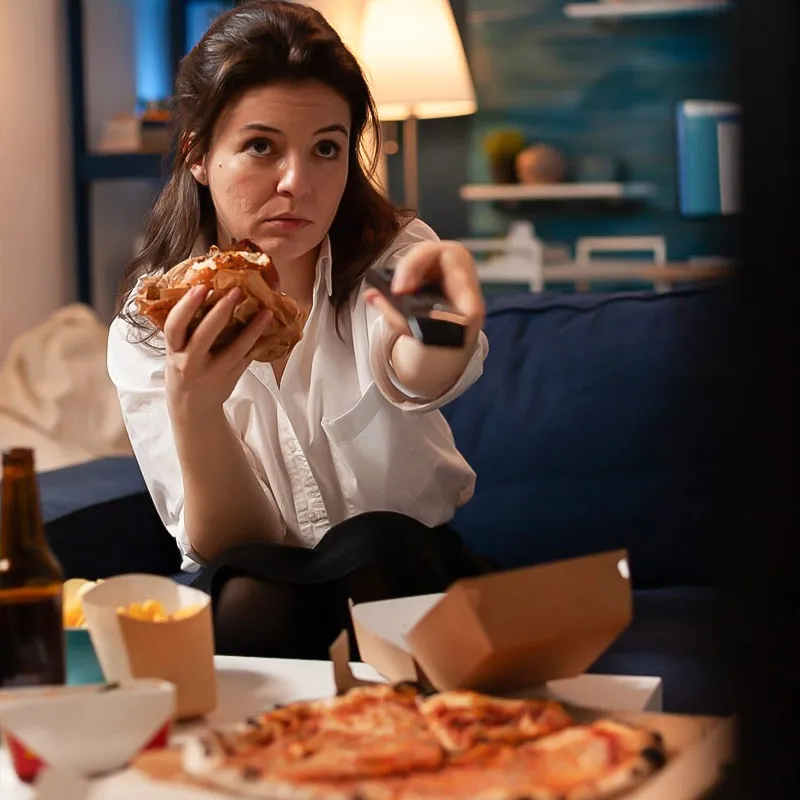
When it happens repeatedly, then the accumulated energy gap may show up later and lead to extreme hunger. By evening, you may not just want dinner but you may want something sweet after dinner, then a snack while watching television, and perhaps another bite before bed. This is called Calorie Compensation. This does not necessarily mean a failure in discipline. The earlier restriction is part of the context.
Why “Healthy” Daytime Eating Can Still Leave You Hungry
Another important issue is that a meal can be nutritious but it still might not be sufficiently filling. For example, a lunch box that contains a small bowl of salad and fruit may provide vitamins and fibre, but for someone who has to work very long a day, it may not provide enough protein, carbohydrates or total energy to carry them comfortably until dinner.
Similarly, if a person drinks only tea or coffee between a very long gap then it can only reduce the feeling of hunger temporarily without meeting any nutritional needs. By late afternoon, a very strong urge to eat may be felt.

Psychological Rebound Comes With Calorie Compensation
Another side of the story is when people label foods as “forbidden” during the day, they can become more mentally preoccupied with them by evening. A person who has spent the entire day thinking, “I can't have this today,” may find it much harder to stop at a comfortable amount when that food finally becomes available. This is why one should first look at the pattern, rather than treating only nighttime overeating as an isolated problem.
How To Break The Calorie Compensation Cycle
One should not eat breakfast in a huge quantity or force themselves to have multiple meals regardless of the fact that they have hunger or not. Instead of this, build a proper structure in the first half of the day because dinner alone does not have to carry the nutritional burden of the entire day. A good approach is to start by checking these three things: meal size, meal composition and meal gaps.
The daytime meal should generally include a good protein source, a source of carbohydrate and some foods rich in fibre also. Healthy fats can also contribute to satiety but it varies from person to person. The exact quantity is measured according to age, activity, goals and the person's health needs.
ALSO READ- Omega-3 in Your Daily Diet? Here's How to Actually Fit It In
How To Not End Up In Binge Eating Disorder
Paying attention to the gap between lunch and dinner is also important, if the gap is large regularly and you arrive home feeling ravenous, then it is better to have a planned snack than trying to survive until dinner. Most importantly, a person's don't eat pattern should not solely be judged by what happens at night. If nighttime overeating is not getting reduced then it is better to look at what your body was or wasn't given during the earlier 10 to 12 hours of the day. Sometimes the most effective way to make dinner smaller is not to fight dinner harder. It is to make the rest of the day more adequately nourished.
Conclusion
Overcoming nighttime overeating isn't about willpower or fighting cravings at dinner; it's about nourishing your body consistently throughout the day. By structuring balanced daytime meals with adequate protein, fiber, and carbohydrates, you can effectively break the calorie compensation cycle and maintain steady energy and control.
(Image Credits: Magnific)
Stay tuned to read more such stories on Her Zindagi.
- What is the calorie compensation cycle?
- It is the body's natural push to overeat at night to make up for inadequate fuel during the day.
- Why does eating light during the day cause night bingeing?
- Severe restriction during the day creates an energy gap and strong cravings by evening.
- How can I stop overeating at night?
- Eat balanced daytime meals containing protein, fiber, and healthy carbohydrates to stay satisfied before dinner.
Our aim is to provide accurate, safe and expert verified information through our articles and social media handles. The remedies, advice and tips mentioned here are for general information only. Please consult your expert before trying any kind of health, beauty, life hacks or astrology related tips. For any feedback or complaint, contact us at compliant_gro@jagrannewmedia.com.