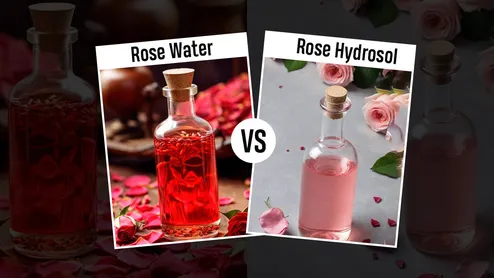
Facial mists and flower toners have been around for a while now and have always been an essential part of natural skin care. Of all the flowers used in these mists, rose toner has always been a favourite because of its soothing nature and ability to keep the skin hydrated. But on the other hand, one might see that there is no clear distinction between rose water and rose hydrosol on the labels. They differ in many ways, including the way they are distilled, their purity, chemistry and effectiveness.
What Is The Difference Between Rose Water And Rose Hydrosol?
Rose Hydrosol: The natural, fragrant water obtained during the steam distillation of true rose petals (usually Rosa damascena). It is made up of microscopic particles of essential oils along with other plant components that are soluble in water, thus making it natural, strong, and aromatic.
Rose Water: The general marketing name that may indicate authentic hydrosols, but more commonly refers to water scented artificially with rose aroma along with other essential oils and solubilisers.
Rose Water Vs Rose Hydrosol: How Distillation Changes The Final Product
In the process of steam distillation, steam goes through the cells of fresh rose petals, disintegrating the cells to obtain volatile aroma components. The steam as it condenses is divided into two phases, one being the essential oil at the top, and another one is the aromatic water (hydrosol) at the bottom.
Being the result of steam distillation, rose hydrosol contains cellular nutrients of plants that help to reduce inflammation and normalise the skin’s pH. Rose water, on the other hand, consists of distilled water mixed with rose oil, which does not contain any micronutrients in water, since oil does not mix with water.
Is Rose Hydrosol More Pure Than Rose Water? What The Labels Really Mean
Yes, indeed, a rose hydrosol is always purer by nature. But according to cosmetic product labelling guidelines, cosmetic producers are allowed to market their product as rose water.
How To Read A Rose Water Label: Ingredients To Check
Label For True Hydrosol: Search for the listing of only Rosa Damascena Flower Water/Distillate.
Problematic Ingredients: The presence of Water (Aqua), Fragrance/Parfum, PEGs, Polysorbate-20, or Alcohol on the label means the product is a reconstitution of a water solution.
How To Choose For Your Daily Skincare Routine
Feature / Need |
Rose Hydrosol
Synthetic / Reconstituted Rose Water
Primary Benefit
Soothes redness, restores skin pH, hydrates
Temporary refreshing scent, light hydration
Purity Level
100% pure plant distillate
Contains added water, emulsifiers and fragrance
Best Skin Types
Sensitive, acne-prone, dry, or reactive skin
Normal skin with no sensitivity to fragrance
Price Point
Higher (due to steam distillation yield)
Highly affordable and mass-produced
Conclusion
Sure, while fake rose water may give you instant freshness with its aromatic scent, real rose hydrosol delivers actual benefits to your skin barrier. Be careful when choosing ingredients and purchase a product made only from pure botanical distillation.
Image credits: Freepik
To read more such stories, stay tuned to Her Zindagi.