
Gel Moisturiser vs Cream Moisturiser: Which One Should You Choose As Per Your Skin Type?
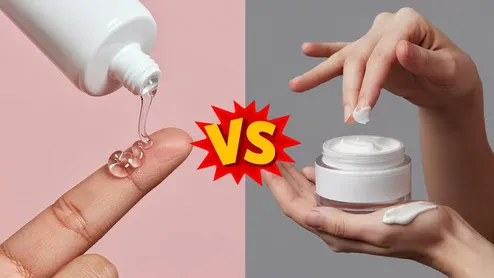
It becomes crucial when you choose either gel or cream as the type of moisturiser. Even though they both do the same basic function of hydrating your skin, the ingredients and usage for the two types are very different. Understanding the differences will allow you to select the best moisturiser.
Gel Moisturiser vs Cream Moisturiser
Feature |
Gel Moisturiser |
Cream Moisturiser |
Texture |
Lightweight and gel-like |
Thick and rich |
Base |
Usually water-based |
Oil-and-water-based |
Best For |
Oily and combination skin |
Dry skin |
Absorption |
Absorbs quickly |
Takes longer to absorb |
Finish |
Fresh and non-greasy |
Soft and nourishing |
Key Ingredients |
Hyaluronic acid, glycerin |
Ceramides, shea butter, squalane |
Best Weather |
Hot and humid |
Cold and dry |
Sensitive Skin |
Fragrance-free soothing gels can work |
Fragrance-free creams with barrier-supporting ingredients can help |
Main Benefit |
Provides lightweight hydration |
Helps lock in moisture and support the skin barrier |

Gel Moisturiser vs Cream Moisturiser: What's the Difference?
The major difference between them is in terms of base and consistency:
Gel Moisturisers: Water-based with light, fluid or gel-like consistency. It absorbs very fast, giving a boost of hydration without any greasy feeling left on the skin.
Cream Moisturisers: Oil-in-water or water-in-oil emulsion with rich, thick consistency. These moisturisers have more emollients and occlusive ingredients to trap moisture inside the skin.
ALSO READ- BB Cream vs Skin Tint: Which Is Better For Everyday Wear?
Gel Moisturiser vs Cream Moisturiser for Different Skin Types
Oily Skin
Best Option: Gel Moisturiser
Reasons: Oily skin requires moisture without additional oil. Gel moisturisers are lightweight, non-greasy, and do not cause any further oil secretion.
Dry Skin
Best Option: Cream Moisturiser
Reasons: Dry skin does not contain natural oils or an effective moisture barrier. Creams have the capability to moisturise deeply, calm any flakiness, and create a protective layer.
Combination Skin
Best Option: Both / Multi-Moisturising
Reasons: You can apply the moisturiser gel on your oily skin areas (the T-zone - forehead, nose, and chin), while you can apply the moisturiser cream on your dry skin (cheeks).
Normal Skin
Best Option: Personal Preference / Change According to Season
Reasons: Healthy skin has the ability to balance both oil and moisture very efficiently. For summers, you can choose a lighter gel; for winters, you can go for creams.
Sensitive Skin
Best Option: Creams or Soothing Gels (Without Fragrance)
Reasons: Ceramides are present in the moisturising creams that help repair a damaged skin barrier. But if you have acne as well, lightweight soothing gels without fragrance do a great job.

Can You Use a Gel Moisturiser and Cream Together?
Yes, you can; it is called 'moisture layering.' By using a moisturising gel first and then adding a very thin layer of cream, you can ensure that your skin is getting plenty of moisture and also locking in all the ingredients. This method works best for dry skin.
ALSO READ- Hyperpigmentation Vs Melasma: How To Choose The Right Brightening Serum For Your Skin Type
Conclusion
"Choosing between a gel and cream moisturiser depends on your skin type, hydration needs and the weather. Gel moisturisers work well for lightweight hydration, while creams are ideal for dry or dehydrated skin needing richer nourishment", as per Hari Ram Rinwa, Founder, Ashpveda
Ultimately, choose a moisturiser that keeps your skin comfortable, hydrated and balanced without feeling greasy or dry.
Image credits: Freepik
If you liked this story, then please share it. To read more such stories, stay connected to HerZindagi.
- Q1: Is gel moisturiser better for summer?
- Yes. Gel moisturisers feel cooling, absorb rapidly, and don't feel heavy or greasy when humidity and sweat levels are high.
- Q2: Can cream moisturisers cause breakouts?
- If you have oily or acne-prone skin, thick cream moisturisers containing heavy oils or comedogenic ingredients can clog pores and trigger breakouts.
- Q3: Should I apply moisturiser on damp or dry skin?
- Always apply your gel or cream moisturiser on slightly damp skin. This helps trap surface moisture and improves product absorption.
Our aim is to provide accurate, safe and expert verified information through our articles and social media handles. The remedies, advice and tips mentioned here are for general information only. Please consult your expert before trying any kind of health, beauty, life hacks or astrology related tips. For any feedback or complaint, contact us at compliant_gro@jagrannewmedia.com.