
Why Does Homemade Ghee Sometimes Turn White Instead Of Golden Yellow? Here's What It Means
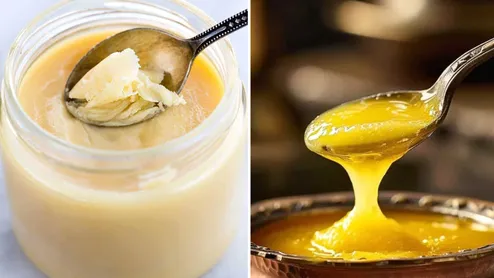
Homemade Ghee
You spend an hour simmering butter, strain it carefully, and the ghee that sets in the jar is pale and creamy white. Not the golden yellow you were expecting. Most people's first thought is that something went wrong, or that the ghee isn't pure. Usually, neither is true.
Is White Ghee Bad Or Fake?
No. White ghee is not a sign of spoilage or adulteration on its own. The colour of ghee mostly depends on where the milk came from, not on how well you made it. A pale batch can be perfectly pure and safe to eat.
How To Make Ghee At Home?
Start with malai or butter. Both work, but malai gives you more flavour.
Step 1
Collect the malai: Skim the cream off boiled milk every day and store it in a container in the fridge. Do this for 7 to 10 days, until you have a good amount.
Step 2
Make the butter: Let the malai come to room temperature, then whisk or churn it with a little cold water. The white butter will separate and float. Scoop it out and rinse it once or twice in cold water. If you are using store-bought butter, skip this step.
Step 3
Heat it slowly: Put the butter in a heavy-bottomed pan on low to medium heat. It will melt, then start to bubble and foam. Stir every few minutes so the bottom does not catch.
Step 4
Watch for the signs: After about 20 to 30 minutes, the bubbling gets quieter and the foam settles. The liquid turns clear, the milk solids at the bottom turn light brown, and you get that nutty smell. That is your cue to switch off the flame. Waiting too long will burn the solids and make the ghee taste bitter.
Step 5
Strain and store: Let it cool for a few minutes, then strain it through a clean muslin cloth or a fine strainer into a dry glass jar. Close the lid only after the ghee has cooled completely, so no steam gets trapped inside.
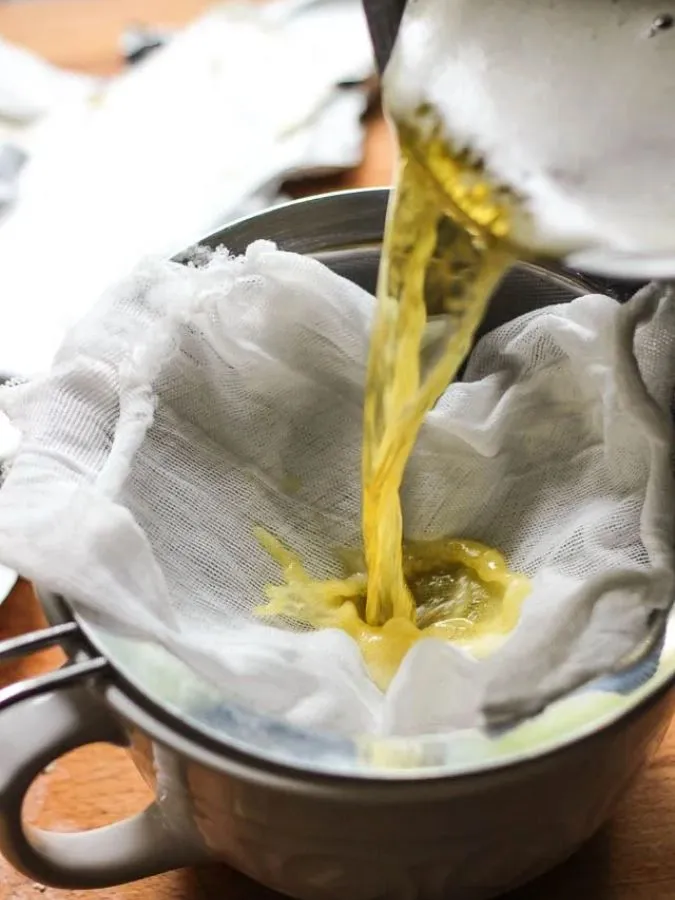 Image Credit: Pinterest
How To Make Perfect Golden Ghee At Home?
- Use a dry spoon every time you take ghee out of the jar. Even a drop of water can spoil it.
- Keep the flame low. High heat gives you dark, slightly burnt ghee.
- Use malai from cow's milk if you want a more golden colour.
Cow Milk Vs Buffalo Milk: The Main Reason
This is the biggest factor. Cow's milk fat carries beta-carotene, the same pigment that makes carrots orange. It passes from the grass and green fodder the cow eats into her milk, which gives cow ghee its yellow tint.
Buffalo milk works differently. Buffaloes convert most of their beta-carotene into vitamin A before it reaches the milk, so the fat stays white. If your malai comes from buffalo milk, which is common in many North Indian households, your ghee will be white or very pale cream.
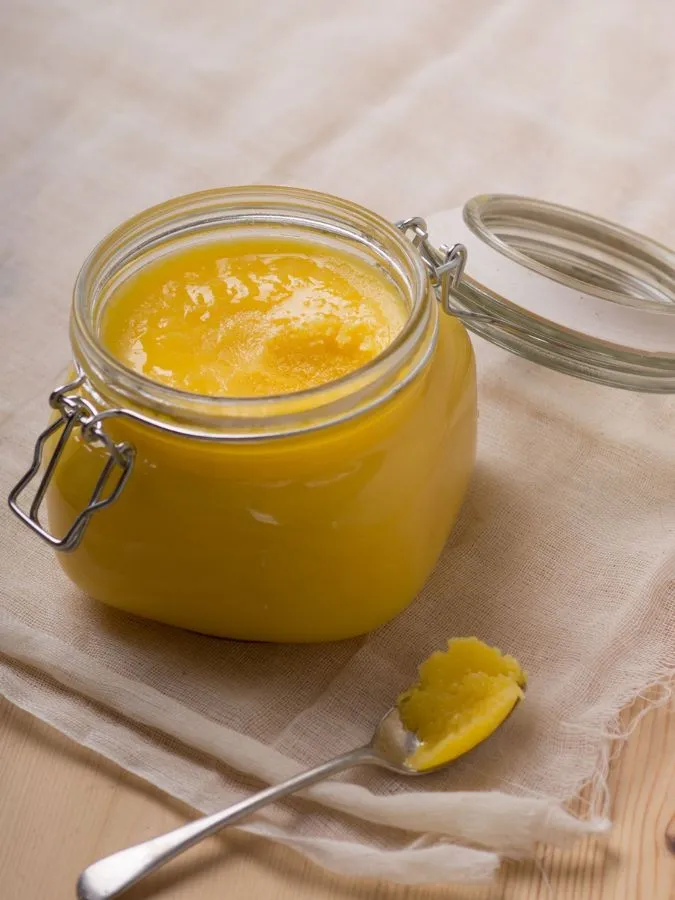 Image Credit: Pinterest
What The Animal Eats Changes The Colour of Ghee?
Even with cow milk, the colour is not the same all year. Cows grazing on fresh green fodder give deeper yellow ghee. In seasons when they are fed more dry feed, the colour fades. This is why the ghee made in one month can look different from the batch made in another, even when you follow the same method.
The breed matters too. Desi cow milk generally gives a richer yellow than milk from some crossbred cows.
ALSO READ- Why Gajar Ka Halwa Uses Red Carrots And It Is Not Just For Sweetness?
Does The Way You Make It Affect The Colour?
A little. Cooking the butter until the milk solids turn light brown adds a deeper golden shade and a nuttier aroma. If you switch off the flame early, the ghee will look lighter. Overcooking, on the other hand, can turn it dark brown and give a burnt smell.
Temperature also plays a part. Freshly melted ghee looks clear and golden, but once it sets, it can look paler and slightly opaque. So check the colour while it is still liquid before you decide it came out white.
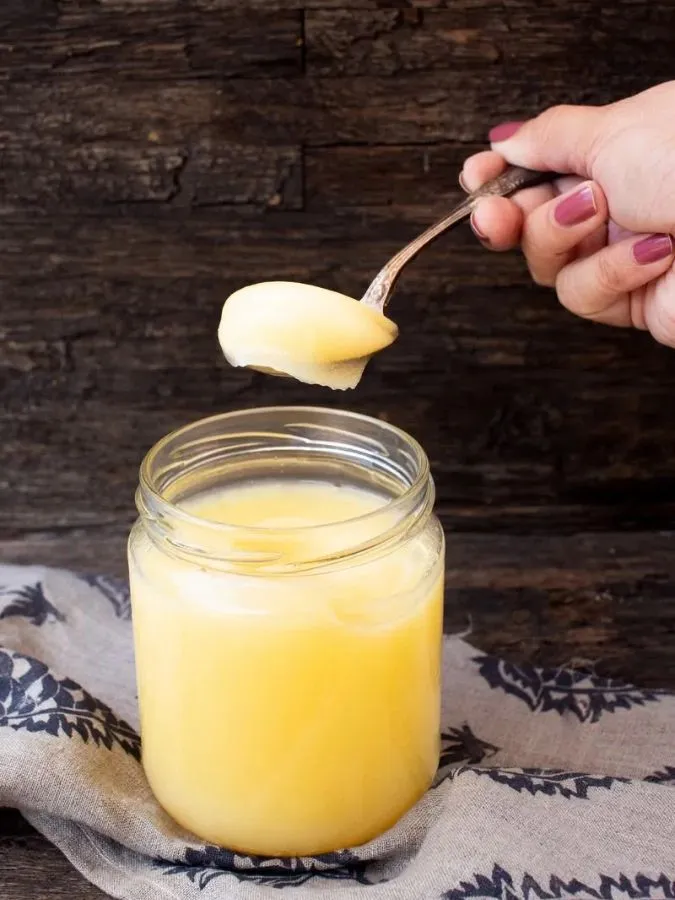 Image Credit: Pinterest
When Should You Actually Worry?
Colour alone does not tell you much. Watch for these instead:
- A sour or rancid smell
- A bitter or soapy taste
- Mould or any dark spots on the surface
- Water droplets collecting inside the jar
If you notice any of these, the ghee has gone bad and should not be eaten. Storing ghee in a dry, clean jar with a dry spoon every time helps it last for months.
ALSO READ- How To Make Thick Malai From Milk At Home: Simple Tips For A Creamy Layer Every Time
How To Check If Market-Bought Ghee Is Pure?
Smell it and taste a small amount. Pure ghee smells nutty and sweet, and melts quickly on the tongue. Home tests like the palm-melt trick are not fully reliable, so if you buy ghee and doubt its purity, look for FSSAI labelling or a lab-tested brand.
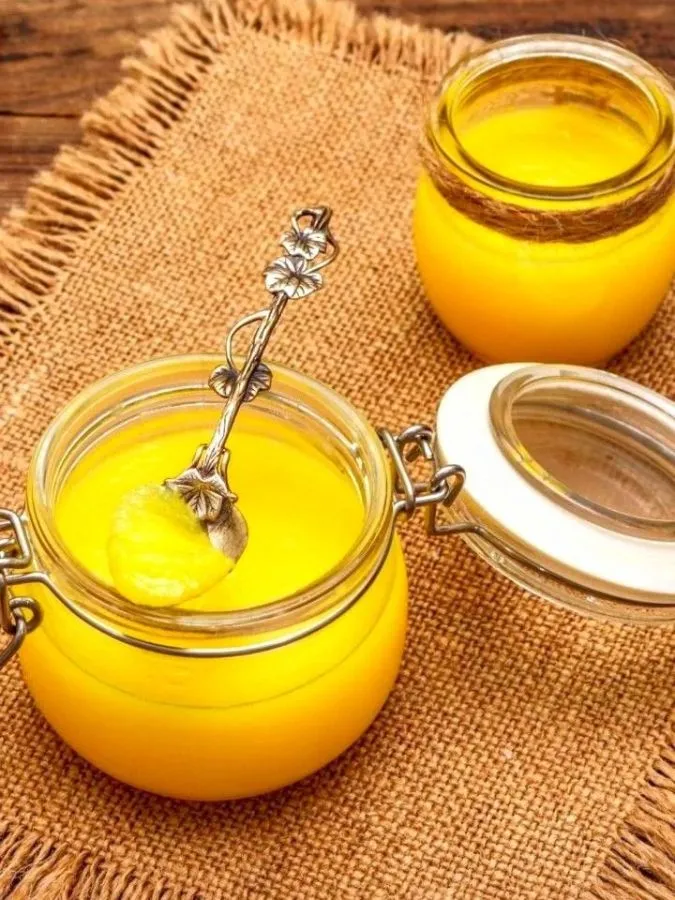 Image Credit: Pinterest
The Bottom Line
White homemade ghee usually just means the milk was low in beta-carotene, most often because it came from a buffalo. Yellow ghee is not automatically healthier or purer. Judge your ghee by its smell, taste and texture, and let the colour be what your milk decides.
To read more such stories, stay tuned to Her Zindagi.
- Which is better, cow ghee or buffalo ghee?
- Cow ghee is lighter and easier to digest, buffalo ghee is thicker, whiter, and higher in fat.
- How to store homemade ghee?
- Store in a clean, dry, airtight steel or glass jar away from sunlight. Do not use a wet spoon.
- How long does homemade ghee last?
- Homemade ghee can last 3-6 months at room temperature if stored properly, and longer in the fridge.
Our aim is to provide accurate, safe and expert verified information through our articles and social media handles. The remedies, advice and tips mentioned here are for general information only. Please consult your expert before trying any kind of health, beauty, life hacks or astrology related tips. For any feedback or complaint, contact us at compliant_gro@jagrannewmedia.com.