
Why Was Ganesh Chaturthi Once Banned? The Lesser-Known History Behind the Festival
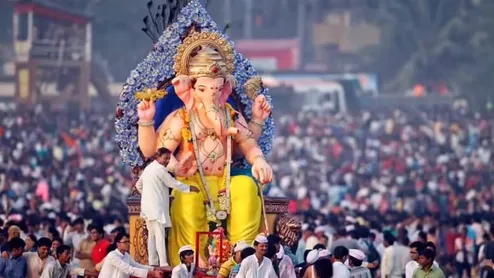
These days, the festival of Ganesh Chaturthi is marked by huge celebrations in all corners of India with massive images and grand processions (Sarvajanik Ganeshotsav). However, the origins of this festive event have much more to tell apart from religious zeal. In the 19th century, when India was a colony of Great Britain, the gathering of crowds was tightly regulated to prevent any independence movement.
Why Was Ganesh Chaturthi Once Banned?
After the Indian Rebellion of 1857, the British Crown ruled India and tried to ensure that there would be no more rebellions against its colonial rule. In an effort to stop the nationalist movement, the colonial government introduced very tough sedition laws and prohibitions on assembly in public, including those exemplified by the Rowlatt Act.
According to these laws, any assembly of Indians in public was viewed with suspicion and could be fined or disbanded. Religious assemblies in private were allowed, while political assemblies in public were forbidden. There was a risk that large gatherings of people could organise a rebellion against the colonial power.
ALSO READ- Why Was Met Gala 2027 John Galliano Exhibition Cancelled? Complete Controversy Explained
What Is The History Of Ganesh Chaturthi?
Ganesh Chaturthi is generally observed as an exclusively personal and domestic celebration. As noted by historians, Chhatrapati Shivaji Maharaj, the Maratha king, advocated for the tradition of worshipping Lord Ganesha as a public ritual in the 17th century as a strategy for creating unity among his people by way of their cultural identity.
However, after the fall of the Marathas and the subsequent emergence of British rule of the British in 1818, Ganeshotsav was no longer a royal celebration. From then on, for several decades, Ganeshotsav was a domestic celebration where smaller idols were worshipped at one’s own house.

How Did Ganesh Chaturthi Become A Public Festival?
Ganesh Chaturthi was transformed from a family function to a grand public festival in 1893. Knowing the British authorities' reluctance to directly tamper with religious traditions for fear of opposition, Indian revolutionaries understood that the religious meeting hall offered a safe space for organising communities.
As the Lord Ganesha idols were placed outside the four walls of the home and within the community area of the pandal, everybody from all walks of life could participate without breaking any prohibitory orders.
What Was Bal Gangadhar Tilak’s Role In Ganesh Chaturthi?
Lokmanya Bal Gangadhar Tilak was a visionary and freedom fighter who was the key mover behind this social reform movement. In 1893, Lokmanya Tilak made an innovative step to transform the festival when he instituted the first-ever public Sarvajanik Ganeshotsav in Pune. To circumvent the ban by the British on all political gatherings, Tilak took advantage of the ten days to:
Set up giant idols which brought together different social communities, thus removing the strict caste barriers through worship.
Lokmanya Tilak made use of the platform of the Ganesh Chaturthi festival to organise patriotic speeches, poetry recitals, classical music and dramas, thereby sending anti-colonial messages through the process.
Formed local mandals for the youth.
ALSO READ- Who Is Christina Koch? First Woman Astronaut Set for a Moon Mission
Conclusion
The transformation of Ganesh Chaturthi from an exclusive practice monitored by colonial forces to the biggest festival of India reflects the strength of collective culture. The wisdom of Lokmanya Tilak has helped this festival circumvent bans imposed by the British on public gatherings and left behind a heritage of unity in the festival.
Image credits: Freepik
Stay tuned to read more such stories on Her Zindagi.
- Q1: When did Ganesh Chaturthi become a public festival in India?
- Ganesh Chaturthi was transformed into a public (Sarvajanik) festival in 1893 by Lokmanya Bal Gangadhar Tilak in Pune, Maharashtra.
- Q2: Why did the British allow public Ganeshotsav gatherings despite assembly bans?
- The British avoided banning the festival directly because it was framed as a religious tradition, and interfering with local religious customs risked triggering widespread public unrest.
- Q3: Who started the tradition of installing large public Ganesha idols?
- Lokmanya Bal Gangadhar Tilak popularised large public idols and community pandals to encourage social integration and patriotic discourse during the Indian independence movement.
Our aim is to provide accurate, safe and expert verified information through our articles and social media handles. The remedies, advice and tips mentioned here are for general information only. Please consult your expert before trying any kind of health, beauty, life hacks or astrology related tips. For any feedback or complaint, contact us at compliant_gro@jagrannewmedia.com.