
Why Is Mumbai’s Ganesh Visarjan So Grand? The History Behind The Massive Processions
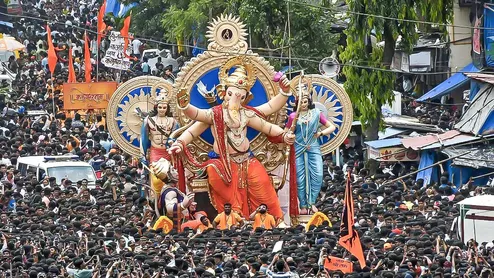
Each year during the festival of Anant Chaturdashi, the financial capital of India becomes a melting pot of faith, music, and colours as people converge to bid goodbye to their beloved Lord Ganesha. The Ganesh Visarjan of Mumbai is no ordinary ritual but a spectacle that brings traffic to a halt, fills the air at sea with gulal, and gets everybody from all walks of life together. From gigantic clay statues making their way through tight alleys to the rhythmic thumping of Nashik dhol bands, none can match Mumbai’s immersion processions.
Why Are Mumbai’s Ganesh Visarjan Processions So Massive?
The great public celebration of Ganesh Chaturthi in Mumbai has its roots in the later part of the 19th century, whereby the home-based tradition was upgraded into an epic event:
Social Vision of Lokmanya Tilak: Freedom fighter Lokmanya Bal Gangadhar Tilak changed the private celebration into a public one in 1893 to build unity among the people against British rule.
Competition and Mandals: During the past decades, various neighbourhoods have formed their respective Sarvajanik Mandals, competing to make better Ganesh idols with great decoration.
Cultural Identity: The last procession of Ganesh Chaturthi for Mumbaikars means the spirit of unity and social harmony.
What Makes Lalbaugcha Raja Visarjan A Major Attraction?
Amidst thousands of idols, the Visarjan journey of Lalbaugcha Raja is the central event of the Visarjan of Mumbai:
Crowds: Millions of devotees fill the streets for more than 20 continuous hours to have one last look at the idol.
The Famous Route: The visarjan takes place from Lalbaug via famous historic areas such as Parel, Byculla, Chinchpokli, and Chowpatty in Girgaon.
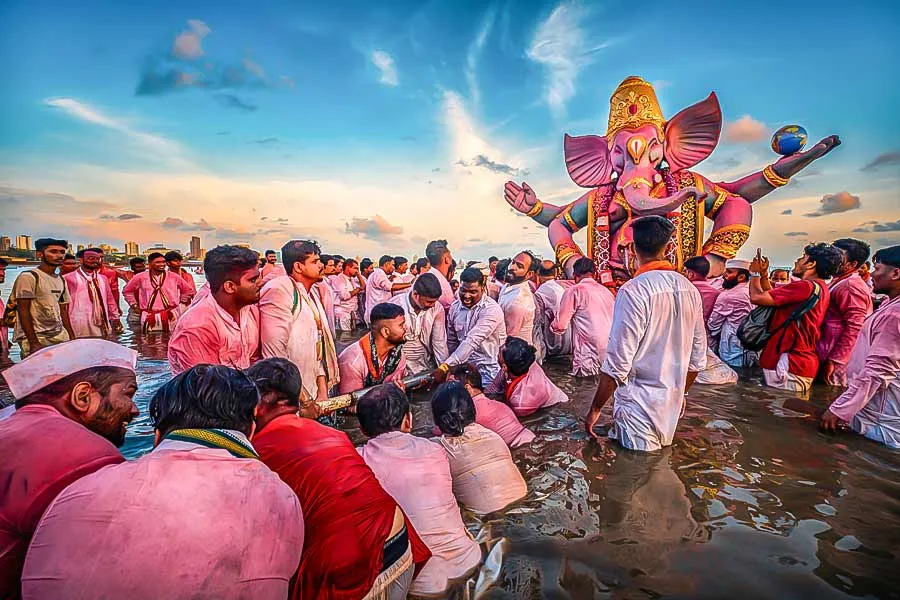
Farewell Rituals: Fishermen communities (Kolis) offer their traditional farewells as the idol arrives in Girgaon Chowpatty.
Why Is Anant Chaturdashi Important For Ganesh Visarjan?
Anant Chaturdashi is the tenth and last day of the festival of Ganesh Chaturthi:
Infinite Divine Energy Symbolism: On this day, Anant (avatar of Lord Vishnu) is worshipped, which means the infinity of the universe.
Fulfilment of Pledge: Immersion of Lord Ganesha on this day completes the ten-day solemn vow of devotees, symbolising harmony as divinity is restored to nature.
ALSO READ- What Do Different Postures of Ganpati Idols Symbolise?
What Happens During Mumbai’s Ganpati Visarjan Processions?
Visarjan's mood in the streets of Mumbai is exhilarating and extremely immersive:
Dhol-Tasha Pathaks: Performances by groups made up of hundreds of drummers performing rhythmic beats which lead the floats.
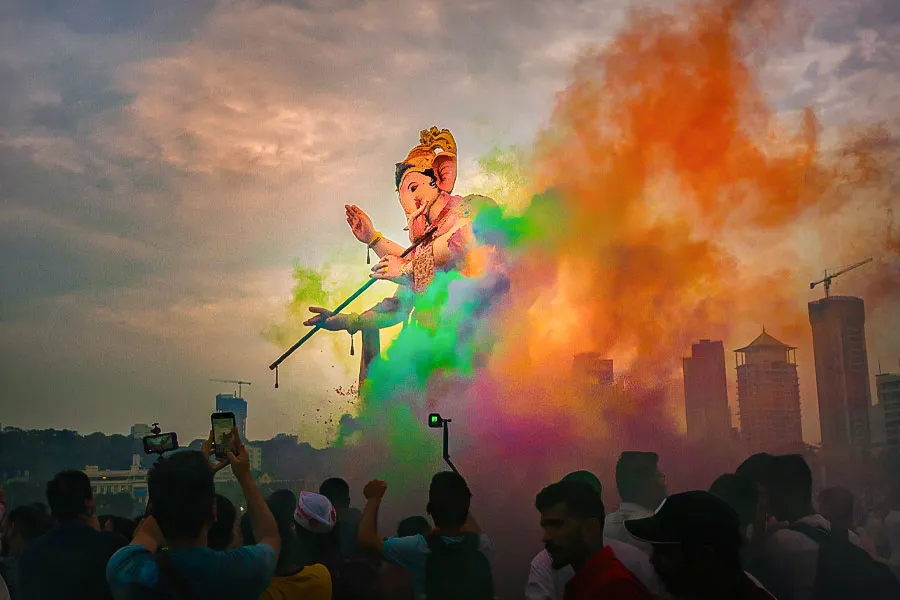
Gulal and Dance: The followers sprinkle orange powder (gulal) in the air and dance in the streets no matter what their age is.
Aarti at Crossing Points: Processions make a halt at important crossings where residents conduct an aarti.
Which Places In Mumbai Witness Grand Ganesh Visarjan Processions?
While immersion takes place at hundreds of artificial lakes and natural bodies of water throughout the city, significant coastal locations have the biggest crowds:
Girgaon Chowpatty (South Mumbai): The famous venue for immersion of major idols such as Lalbaugcha Raja, Ganesh Galli, and Tejukaya Ganeshotsav.
Juhu Beach (Western Suburbs): Gets huge crowds not only from suburbs but also includes stars from Bollywood and prominent mandals.
Dadar Chowpatty and Bandra Stand: Popular coastal sites where historic idols of neighbourhoods from Central and Western Mumbai are immersed.
Powai Lake and Aksa Beach: Major venues of immersion for mandals and localities in the interior suburbs of Mumbai.
Conclusion
Ganesh Visarjan of Mumbai is an ageless combination of historical significance, societal solidarity, and deep spiritual passion. What began as a social-political event by Lokmanya Tilak has now become one of the world’s most spectacular events on the streets, demonstrating how even as Bappa leaves for the year, the solidarity of Mumbai lives on forever.
ALSO READ- Why Is Ganesha Visarjan Considered A Farewell, Not A Goodbye? Know The Spiritual Belief
Image credits: Freepik
Stay tuned for more such stories at Her Zindagi.
- Q1: How long does the Lalbaugcha Raja Visarjan procession take?
- The procession typically takes between 20 and 24 hours, starting on the morning of Anant Chaturdashi and concluding the following morning at Girgaon Chowpatty.
- Q2: Who started the public Ganesh Visarjan processions in Mumbai?
- Lokmanya Bal Gangadhar Tilak transformed Ganesh Chaturthi into a grand public festival in 1893 to bring communities together during the Indian independence movement.
- Q3: Where is the best place to watch Ganesh Visarjan in Mumbai?
- Girgaon Chowpatty and Juhu Beach are the two most famous and grand locations to watch large idol immersions, though viewers should expect massive crowds.
Our aim is to provide accurate, safe and expert verified information through our articles and social media handles. The remedies, advice and tips mentioned here are for general information only. Please consult your expert before trying any kind of health, beauty, life hacks or astrology related tips. For any feedback or complaint, contact us at compliant_gro@jagrannewmedia.com.