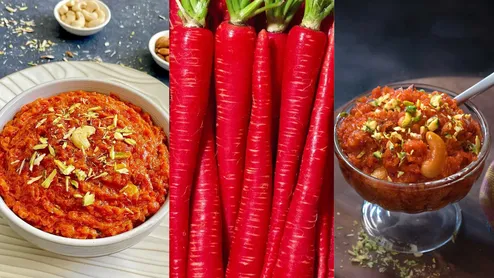
Once the first chill sets in across North India, mithai shops and home kitchens start smelling of ghee, milk and slow-cooked carrots. Gajar ka halwa is the winter dessert, and traditionally it is made with deep red carrots, not the orange ones you see in supermarkets all year.
Why Is Gajar Ka Halwa Traditionally Made With Red Carrots?
The red carrot, often called desi or Delhi gajar, is a different type from the orange carrot most of us grew up seeing in salads. It is longer, thinner and has a deeper red colour that carries into the halwa. When it is grated and cooked in milk and ghee, it gives the halwa its rich, reddish-brown look without any added colour.
There is also habit and availability. These carrots arrive exactly when winter weddings, family gatherings and festivals begin, so the dish and the season have been tied together for generations.
What Makes Winter Red Carrots Different From Orange Carrots?
The difference starts with colour. Orange carrots get their shade mainly from beta-carotene, a pigment that the body converts into vitamin A. Many red carrot varieties of the Asiatic type are coloured by lycopene, the same pigment found in tomatoes and watermelon.
Cooks also describe red carrots as juicier, with a slightly less woody core, which makes them easier to grate and cook down. In cae you are wondering, this is a culinary observation, not a lab finding.
Do Red Carrots Make Gajar Ka Halwa Naturally Sweeter?
Not necessarily, and it is better not to say so. Sweetness depends on the variety, the soil, the weather and how long the carrot has been stored. Cooks often say winter carrots taste sweeter, and cold weather can encourage sugar build-up in root vegetables, but there is no solid evidence that red carrots as a group are sweeter than orange ones.
What is more reliable is the texture. Red carrots tend to cook down into a soft, moist halwa. The sweetness in the final dish comes mostly from the sugar and khoya you add.
ALSO READ- Makki Ki Roti Breaking On The Tawa? Here's Simple Kitchen Trick For Soft, Crack-Free Rotis
5 Tips To Make Perfect Gajar Ka Halwa With Red Carrots
1. Grate, don't chop. Fine grating helps the carrots cook evenly and melt into the milk.
2. Cook them in milk first. Let the grated carrots simmer in full-fat milk on low heat until it reduces. Rushing this step is the most common mistake.
3. Add ghee generously. Pigments like lycopene are fat-soluble, so ghee brings out the colour and gives the halwa its gloss.
4. Sugar goes in late. Add it once the carrots are soft, otherwise the carrots can turn firm and the halwa takes longer.
5. Finish with khoya and dry fruits. Stir in khoya at the end for richness, then add cardamom and nuts.
Can You Use Orange Carrots Instead?
Yes. The halwa will be paler and may taste slightly milder, and orange carrots may need a few extra minutes to soften, but the method stays the same. Many households outside North India make it this way all year.
Final Word
Gajar ka halwa is not just a winter dessert, it is a winter ritual. And the red carrot is at the heart of it for its colour, its texture, and the way it arrives exactly when the season calls for it. You can absolutely make it with orange carrots, and it will still be delicious. But if you want that deep, rich, naturally red halwa that tastes like a North Indian winter, red carrots are worth waiting for. So this winter, when you see those long, deep red carrots in the market, bring home a kilo, take your time with the milk and ghee, and let the season do the rest.
(Image Credits: Pinterest)
To read more such stories, stay tuned to Her Zindagi.