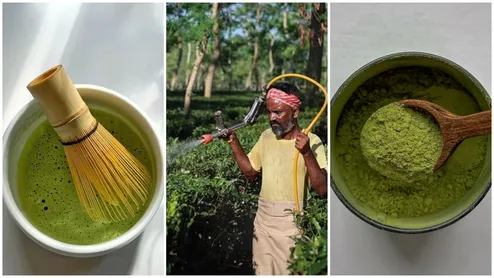
For many centuries, Assam has been known for its tea gardens. Everyone loves a bold, robust dark tea fresh brewing in the morning. However, with the changing times a new revolution is developing in the lush, green fertile valleys of the North-East India. It is a historic milestone for the domestic tea industry.
The Tea Transition: From Black Tea To Green Matcha
Traditionally, Matcha is a part of the Japanese culture. The finely ground powder made specially from the green tea leaves. Cultivating soft, green match leaves is a rigorous cultivation process. It involves harvesting of tea bushes before harvest in order to boost chlorophyll and L-theanine levels. Later the leaves are steamed, then de-steamed, and at last they are stone grounded to turn into a vibrant green powder.
While Assam tea gardens have focused on high volume of CTC, which stands for Crush, Tear, Curl. Today the innovative planters are investing in shade infrastructure and specialised machinery. By combining Japanese shading technique with Assam’s alluvial soil, the planters have successfully moved ahead in cultirvating matcha effectively.
Japanese Vs Assam’s Matcha
While Japan’s matcha is famous for its umami, and seasonal notes, Assam’s matcha is offers a different regional flavour. The climate also gives Assam’s matcha a smooth, rich body and naturally sweet finish.
Attribute | Japanese Matcha | Assam Matcha |
Dominant Flavor | Rich Umami, Grassy | Smooth, Earthy, Sweet Finish |
Growing Conditions | Cool, Temperate Climate | Warm, Humid Tropical Valley |
Primary Usage | Traditional Tea Ceremony | Lattes, Culinary |
Assam’s Economic Impact And Market Future
The arrival of commercial produced Indian Matcha marks a very important for domestic agriculture.
Lower Reliance on Imports: India has historically relied on expensive imports from Japan and China to meet growing consumer demand. Homegrown production delivers fresh, premium quality at a lower cost.
Higher Returns for Planters: Specialty tea commands higher price points, giving local growers stronger profit margins than standard bulk tea.
Agricultural Innovation: It highlights the adaptability of Assam’s tea bushes (Camellia sinensis var. assamica) and opens new avenues for global tea exports.
Conclusion
Assam’s venture into commercial Matcha is far more than a trend—it represents a bold step forward in Indian agricultural craftsmanship. As consumers across the country embrace mindful living, homegrown Assam Matcha is poised to become a staple in cups, lattes, and kitchens nationwide.
(Image Credits: Pinterest)
Stay tuned for more such stories at Her Zindagi.