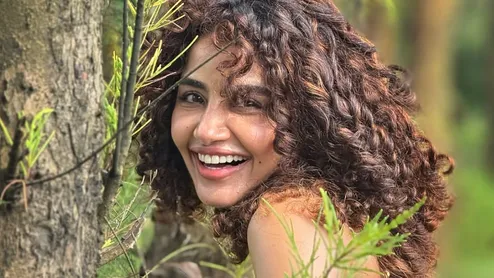
India is incredibly diverse in terms of physical appearance, and there is no blueprint for what an Indian looks like, despite common Western perceptions. But have you ever wondered why curly hair seems to be much more common among South Indians as compared to the rest of the country? Although curly hair is not just exclusive to South India, it is a feature you will predominantly notice across the region. What is the reason behind it?
What’s The Reason Behind Curly Hair Being Common In South India?
Here is why curly hair has been a dominant feature among many South Indians for centuries.
1. Genetics Across Centuries:
Indian hair types are diverse and vary from straight to 4C coils due to migration, local mixing, and climatic adaptations across the centuries. The biggest factor that indicates one's hair texture is genetics. Genes like TCHH, EDAR, WNT10A, and KAP cluster genes decide the shape of your hair follicle.
In South India, people have more oval or flat follicles instead of round ones. This means the hair grows out with a bend, aka curls or waves. According to Medium, the ancient Indian tribes like the Toda of Tamil Nadu and Santhals of Bengal traditionally had curly or wavy hair. It is a physical trait that reflects a mix of Dravidian and Austroasiatic genes from centuries.
Moreover, curly hair is also dominant. If one parent has it, there is a high chance that the kids will have it too.
ALSO READ- Is Hard Water The Reason Your Hair Feels Damaged? What Metro Girls Need To Know And How To Fix It
2. Climate Factor:
In the South Indian region, the weather is mostly hot and humid throughout the year. As per a Proceedings of the National Academy of Sciences (PNAS) study in 2023, tightly curly hair blocks the most heat and requires the least sweat to stay cool. The air gap in curls increases the distance from the scalp, providing UV protection and helping the body cool down.
India has no single 'look,' and that is what makes us unique. But if you have noticed more curls in South India, now you know the reason behind it. It is a beautiful amalgamation of heritage, genetics, and climate.
(Image Credits: anupamaparameswaran96/Instagram, Magnific, image only for representation)
To read more such stories, stay connected to Her Zindagi.
To read more such stories, stay connected to Her Zindagi.