
How This Barmer Border Village Became a Global Hub for Unique Embroidery
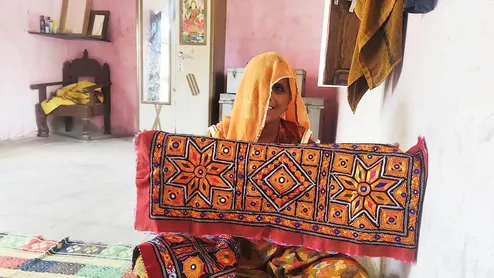
Barmer, a small village in the Thar Desert region of Rajasthan along the border with Pakistan, has turned into an international centre for handmade fabrics owing to its traditional Barmer embroidery, which comprises a variety of designs with detailed needlework and mirror work. This type of embroidery work has earned fame due to its beautiful designs and rich cultural heritage.
Why Is This Barmer Border Village Famous for Embroidery?
Barmer’s border villages, especially the ones inhabited by Meghwal and Sodha people, are renowned worldwide for their skill in making hand embroidery in the desert.
In the surroundings characterised by sandy and arid conditions, the colourful threads became a symbol of life and culture.
The specific embroidery design used to represent an individual’s caste, marital status, and village.
The artisans make the designs through eye movements without the aid of any stencils but through visual memory.
All are made from locally available materials, including natural dyes.
The History Behind Barmer's Embroidery Tradition
The history and origins of Barmer embroidery can be traced back to the migration of nomads in the Thar Desert and through the historic trade routes of the Silk Route.
Traditionally, embroidery was done by women as part of the dowry that the bride takes along during marriage (dahej). After the Indo-Pak war of 1971, the migratory communities introduced their unique stitching techniques from different regions like Sindhi, Kutchi, and Pakko to the city of Barmer.
What Makes Barmer Embroidery Unique?
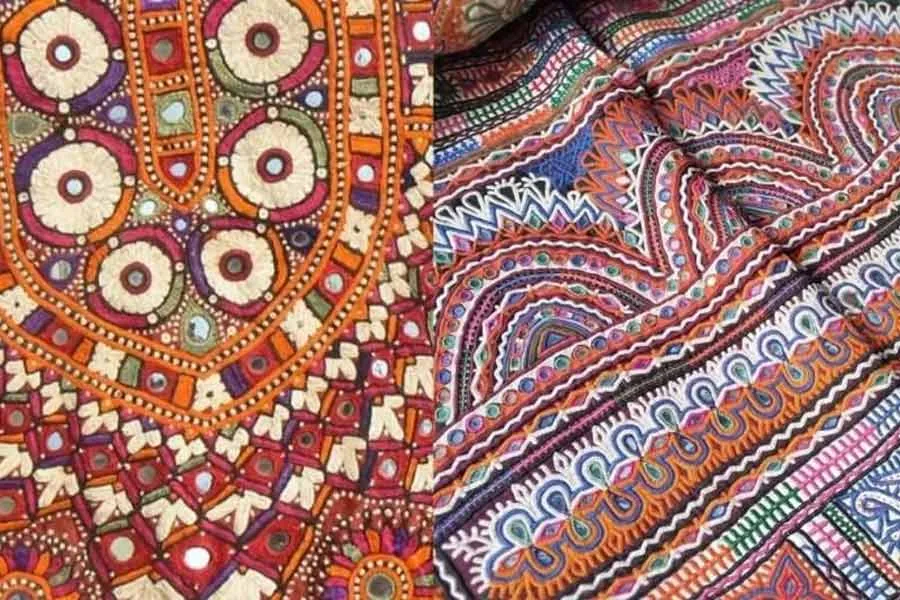
There are quite a few techniques unique to Barmer textiles which create the characteristic look and texture of the clothing produced there. The most commonly used basic elements include the Kachha and Pakko embroidery, which involves an alternation of thin chain stitches with filler stitches,s creating three-dimensional geometric shapes that can withstand regular wearing and not lose their shape. The addition of some shine comes from the Shisha (mirror) embroidery, where small glass mirrors are enclosed in tightly stitched buttonhole and/or lattice stitches.
As for the zero-waste tradition of the region, it would be better to illustrate it with the examples of Appliqué and Ralli technique where little bits of colored cloth are patched and sewn onto the base fabric to create contrasting mosaic-like patterns. Last but not least, Soof embroidery,ry which is highly intricate and time-consuming since the process involves counting the warp and weft threads on the fabric and working entirely from the reverse side in order to create the perfect symmetrical geometric motifs.
ALSO READ- 4 Rare Indian Handlooms That Take Up To A Year To Weave One Saree
How Local Artisans Keep The Craft Alive
Whereas the global menace posed by mechanised fast fashion on crafts cannot be ignored, those in Barmer have been able to evolve using self-help groups and non-governmental organisations.
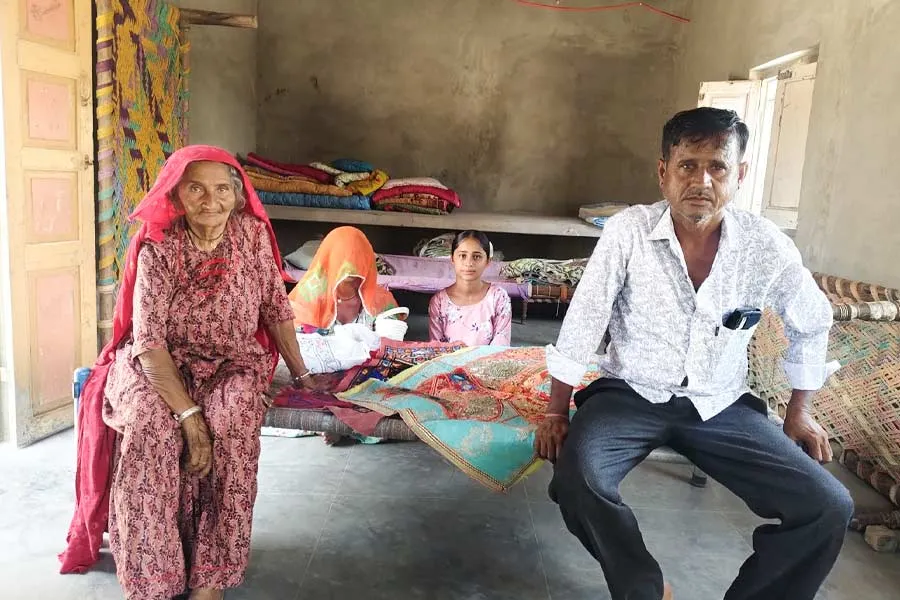
Many rural women are working from home, converting their craft at home into their means of earning a livelihood. Craft cooperatives supply quality raw material, pay them fair wages, and give access to the urban markets, thus avoiding middlemen exploitation and ensuring that the craft knowledge remains among the village girls.
Global Recognition Of Barmer Embroidery
In modern times, however, Barmer embroidery is no longer limited to the melas held in the deserts. Leading fashion designers and luxury home décor designers, along with fair-trade exhibitions all around the world,d purchase wall hangings, cushion covers, jackets, and handbags directly from Barmer. The desert fabrics are exhibited at international trade shows in Europe and North America and acclaimed as sustainable and ethical luxury.
Conclusion
It is through the transformation of the desert village into an international embroidery centre that Barmer has become the perfect example of the eternal charm of manual labour. In transforming the ancient traditions into sustainable commercial activity, Barmer's women keep sewing the story of their culture into world fashion.
ALSO READ- 7 Fashion Pieces Inspired By Disha Patani That Make Any Outfit Look More Expensive
Image credits: Instagram
If you liked this story, then please share it. To read more such stories, stay connected to HerZindagi.
- Q1: What is the most famous type of embroidery from Barmer?
- Barmer is best known for its dense Pakko embroidery, Soof work, mirror-work (Shisha), and traditional patch-worked Ralli quilts.
- Q2: Are Barmer embroidery products made by hand or machine?
- Authentic Barmer embroidery is 100% handcrafted by local women artisans without the use of machines or printed guidelines.
- Q3: Where can I buy authentic Barmer embroidery directly from artisans?
- You can purchase authentic items through rural artisan cooperatives, government handicraft expos (like Dilli Haat), or certified fair-trade craft platforms.
Our aim is to provide accurate, safe and expert verified information through our articles and social media handles. The remedies, advice and tips mentioned here are for general information only. Please consult your expert before trying any kind of health, beauty, life hacks or astrology related tips. For any feedback or complaint, contact us at compliant_gro@jagrannewmedia.com.