
4 Rare Indian Handlooms That Take Up To A Year To Weave One Saree
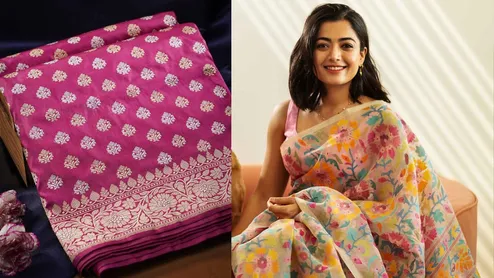
In the era dominated by fast fashion or luxury foreign brands, Indian Handloom Sarees continue to stand strong as timeless masterpieces one must preserve in the wardrobe for quiet luxury, precision, and heritage. While most machine-made garments require only a few hours or minutes to be produced, the rarest Indian Handloom Sarees are not prepared within few hours, but require months or an year of experience and expertise to weave one saree, preserving such old-centuary traditions like Double Ikat Patola of Gujarat, Jamdani weave of Bengal and many more is necessary, as they are passed through generations and hold rich textile legacy.
Rarest Indian Handlooms That Take Up To A Year To Weave
Here is a closer look at four exceptional handlooms from across India whose craftsmanship is worth every trend and is a masterpiece to behold.
Patan Patola, Gujarat
Widely regarded as one of the most technical weaving patterns in the world. Woven in Patan, Gujarat, it follows the ancient double ikat technique, where both warp and weft threads are individually dyed before weaving.
The meticulous design demands accurate precision. Even a slight mismatch in thread alignment can distort the design, forcing the weaver or artist to remake the whole weave.
- A single saree takes 8 months to a year, depending on the complexity of the design.
- Elephants, parrots, floral vines, and geometric patterns are classic motifs.
- Treasured as a family heirloom and considered one of the most valuable textiles in India.

(Patan Patola Saree, Credit: Kanaktala)
Banarasi Kadhua Saree
Banarasi sarees are famous worldwide for their representation and weaving techniques. The exclusive weaving style of Kadhua sarees makes it a standout in the market and handloom world.
In this weaving technique, each motif is woven independently instead of using continuous floating threads, creating a sharp, durable design, increasing the weaving time and firmness.
- Rich zari work requires exceptional precision.
- Elaborate saree designs for weddings or occasions may take up to 6 months or nearly a year to weave.
- Mughal floral vines, Kalga or bel motifs, Shikagah patterns, or birds are common motifs.
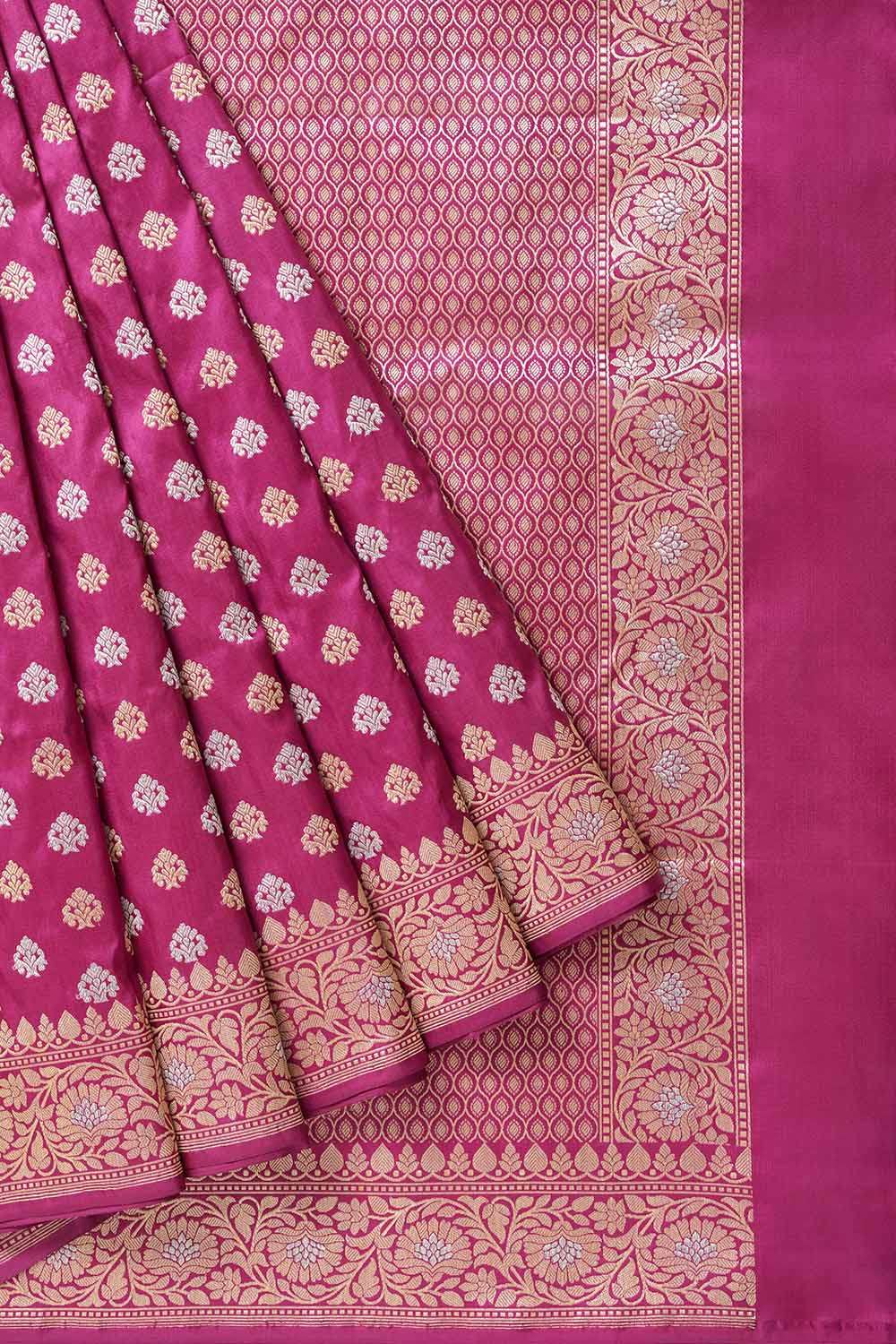 (Banarasi Kadhua Saree, Credit: Taniera)
Kanchipuram Silk Korvai Saree
The beautiful Kanchipuram silk sarees are widely recognized for their work and weaving style. The kovai technique makes it even more unique and rare, as the contrasting border and body are woven separately before being interlocked entirely by hand.
- Separate weaving of body and border.
- Intricate hand interlocking.
- Highly detailed sarees require an 8-12 month period to be prepared.
- Common motifs are temple borders, Rudraksha, Peacocks, or Checks.

(Kanchipuram Silk Korvai Saree, Credit: Lakshmi Boutique)
Jamdani, West Bengal
The delicate weave of Jamdani celebrates the feather-light texture and floating floral motifs which appear to be directly blooming on the fabric. Jamdani dates back to the Mughal Era and is found around West Bengal.
- Every motif is woven individually by hand.
- Jamdani usually takes 6 months to nearly a year.
- Two artisans work simultaneously on one piece.
- The popular motifs are lotus flowers, paisleys, Jasmine Buds, and Geometric butis.
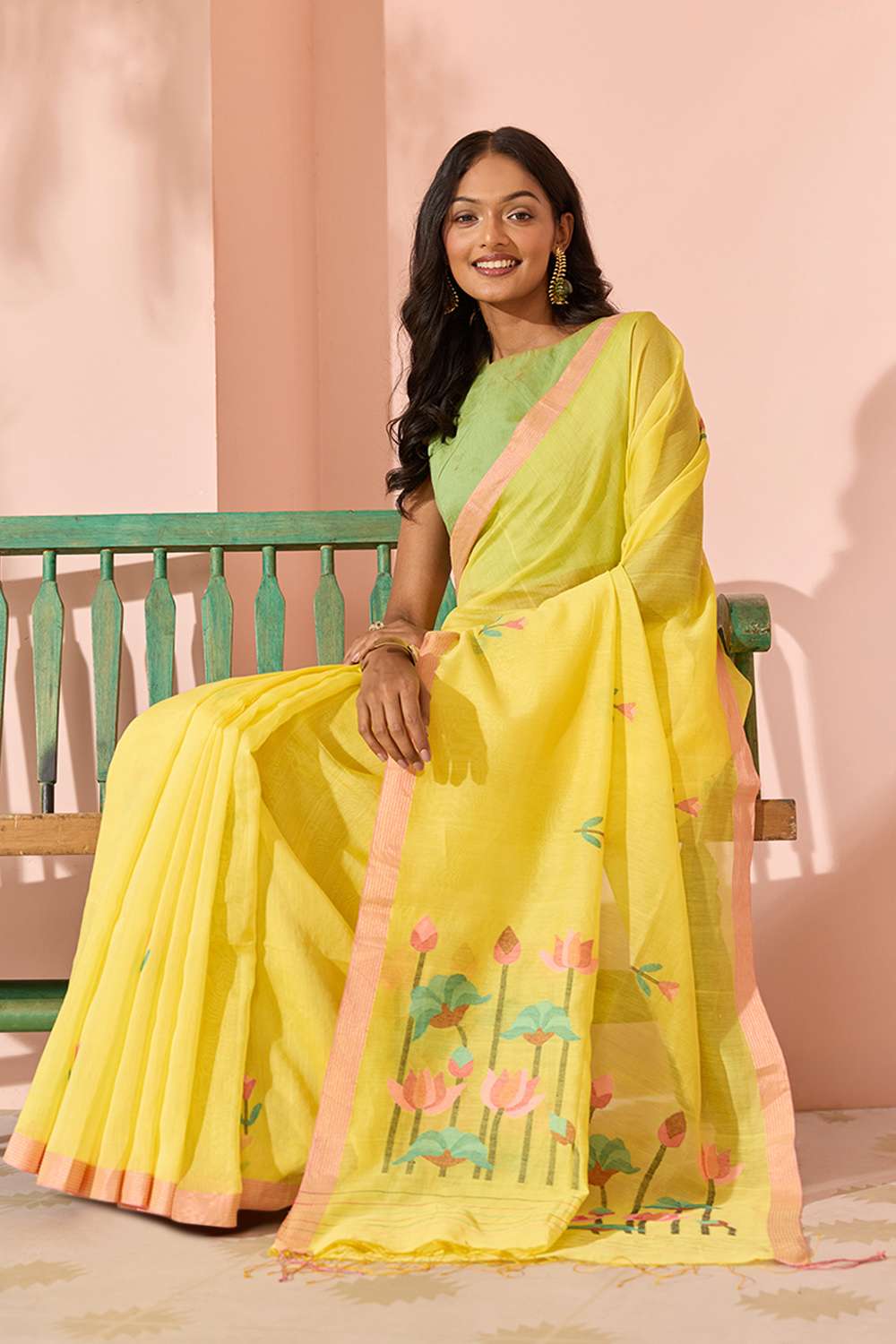
(Jamdani Saree, Credit: Taniera)
Preserving India’s Handloom Heritage
India’s traditions are more than fashion; they are the expression of craftsmanship, precision, and history preserved with each thread. Every saree that takes months to be prepared is the weave that represents the dedication of the artist to preserve the age-old techniques with the same consistency and help the younger generation learn about the fabrics.
Owning one of these rarest fabrics is not simply about wearing luxury, but also about knowing the traditional craftsmanship and supporting it.
(Image Credit: Taneira/Magnific/Lakshmi Boutique)
To read more such stories, stay tuned to Her Zindagi.
- How do you identify an authentic double-ikat Patan Patola saree?
- Genuine Patan Patola features identical colour and design clarity both on front and back sides.
- Why do rare handloom sarees take utpo 12 months?
- Master weavers manually dye and interlock every single thread of rare fabrics using complex hand techniques without automated machinery.
- What differentiates a Banarasi Kadhua Saree from a regular Banarasi Saree?
- Kadhua sarees feature hand-woven motifs without any loose, floating threads on the reverse side of the fabric.
Our aim is to provide accurate, safe and expert verified information through our articles and social media handles. The remedies, advice and tips mentioned here are for general information only. Please consult your expert before trying any kind of health, beauty, life hacks or astrology related tips. For any feedback or complaint, contact us at compliant_gro@jagrannewmedia.com.