
Why Garba Was Originally Created Only For Women: History, Sacred Meaning And Evolution
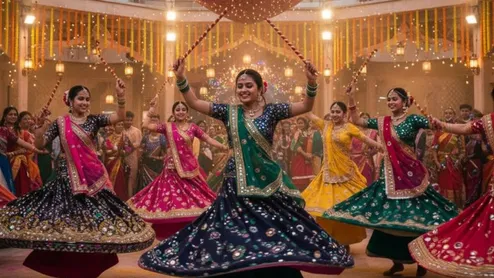
Every year on Navratri, people come together to celebrate the divine festival of nine days of welcoming Goddess Durga, gathering in circles with rhythms of clapping to Gujarati folk songs, moving to the beats of traditional instruments, which has lately evolved into roaming in circles with decorated interiors, stadiums or elaborate spaces with a live DJ, singers or audio sets to come together and celebrate the festive vibe of Navratri throughout the night. Today the festival of Navratri is not restricted to just Gujarat, but has a place in every calendar across India. Men, women and children participate in elaborate community celebrations with contemporary celebrations, vibrant outfits and festive cheer.
The history of Garba goes beyond its present-day essence and popularity among Indians. Traditionally, the dance is associated with women, Garba developed as a form of art to present to the feminine divine, with circular movements, songs and central lamps carrying layers of religious and cultural meaning.
But was Garba really created for women exclusively? The history of dance offers a more nuanced answer. While women have historically played a central part of the art form, the practice evolved across communities and evolved throughout the generations. Here is all you need to know about the deep significance, rituals and how it evolved throughout the regions and is presented in the current-day culture.
ALSO READ- Navratri Events In Pune 2026: Top 5 Places For Garba And Dandiya Nights Under ₹100
Was Garba Originally Performed Only By Women?
Women in traditional times gathered in the courtyards, neighbourhood spaces and temple grounds to sing devotional songs along with a dance performance to honour Goddess Durga. These gatherings offered a collective way to express faith, preserve folk and participate in the worship of Shakti.
Scholar Neelima Shukla-Bhatt, writing about Gujarat’s Navratri traditions, describes Garba as a circular dance performed by women around an image of the Goddess during the festival. The songs often portray the dancers as companions of the Goddess Ambika, connecting the act of dancing with devotion and a sense of spiritual closeness to the divine.
Historically, in rural Gujarat, Garba was a sacred space for village women to gather under the night sky, express their devotion, and socialise freely away from daily household duties.
Men did not participate in Garba. Instead, male dance traditions were distinct: men traditionally engaged in Dandiya Raas or Gop Raas, which involved wooden sticks representing the swords of Goddess Durga and the playful lore of Lord Krishna.
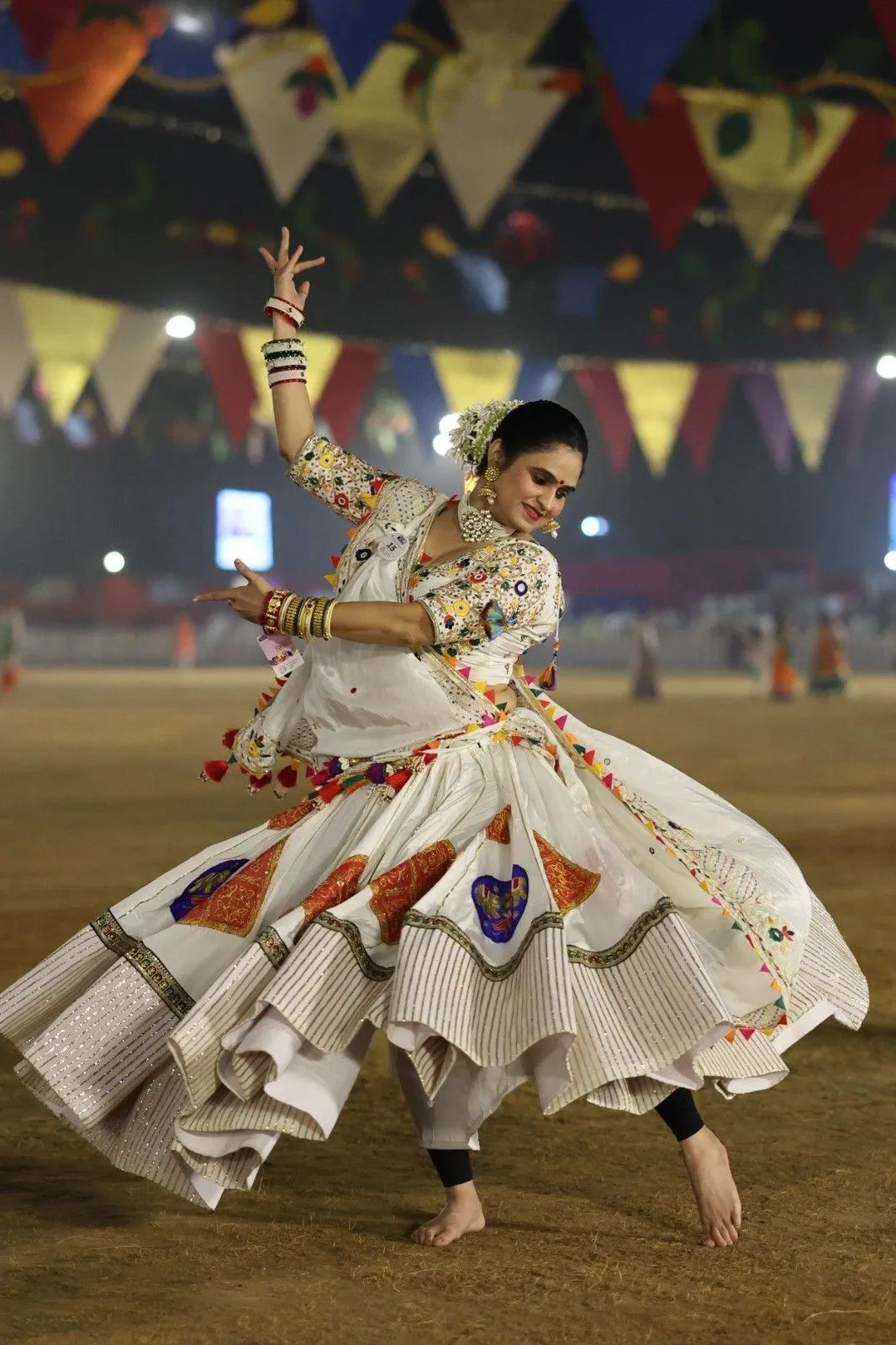
The Religious Significance Of Garba During Navratri
Garba is deeply rooted in the worship of the Goddess Amba, to celebrate the victory of divine light over the demon Mahishasura. From a spiritual perspective, Navratri marks the divine manifestation of Shakti—the primal energy that creates, sustains, and transforms the universe. Because women carry the innate power of creation and childbearing, traditional Hindu philosophy views women as earthly manifestations of Shakti.
What Does The Garbo Symbolise In Traditional Gujarati Culture?
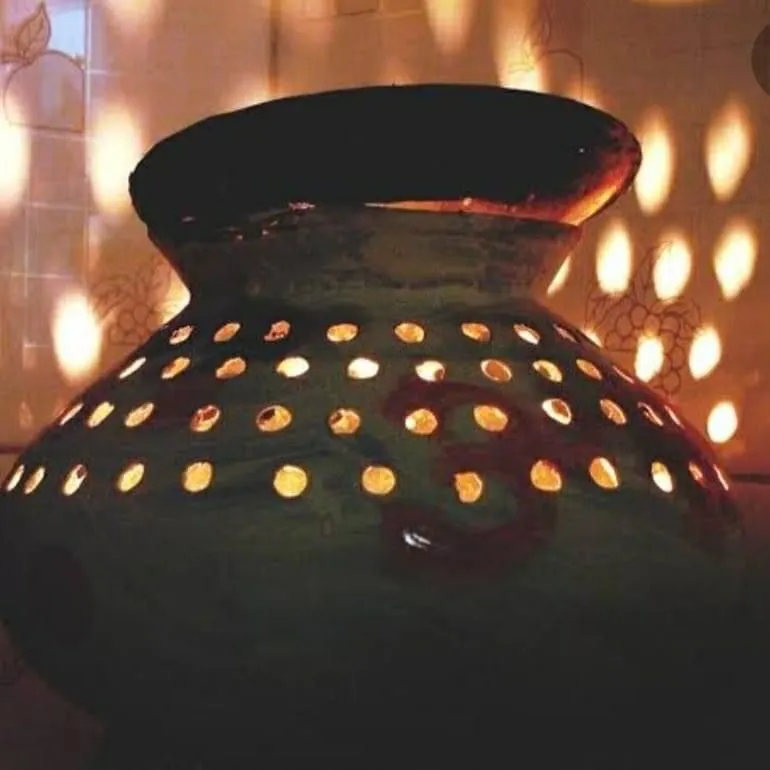
At the heart of every Garba circle sits a Garbo (Garbha Deep), deeply signifying the name of the dance. The word originates from the Sanskrit term Garbha, meaning womb.
- The Clay Pot: The earthen pot at the centre resembles the maternal womb and the temporary, fragile body created from the Earth soil.
- Inner Lamp: The glowing oil lamp in the middle represents the Atman (divine soul) residing within every living being.
- The Perforations: The small holes pierced in the pot allow the inner light to shine outward, symbolising divine consciousness through human senses.
As the women dance along the circles in counter-clockwise, it resembles the human life through continuous cycles of birth, rebirth, death, and growth, with the central light (goddess) remaining unchanged or fixed.
How Garba Evolved From A Community Ritual Into A Folk Dance
Garba was locally performed by village women coming together to perform traditional folklore songs without any loud instruments, using only hands and voices.
As families moved out of the villages to bigger cities like Ahmedabad, Vadodara, Mumbai and neighbouring societies brought diverse communities together. It took a major shift from just the courtyards to the grounds and open community places.
Over time, the line between the female-driven Garba and male-driven Dandiya Raas blurred, with both starting to perform together, merging into a unified evening celebration where both styles performed one after the other.
ALSO READ- Navratri 2026: Top Dandiya Nights And Garba Events In Delhi For Every Woman to Enjoy
How Modern Garba Nights Have Changed The Tradition
The Garba form today stands as one of the largest dance festivals in the world, recognised on the UNESCO Representative List of the Intangible Cultural Heritage of Humanity. However, modern venue culture has transformed the original format significantly:
| Aspect | Traditional Garba | Modern Garba Nights |
| Participants | Exclusively Women | Everyone (Men, Women, Children) |
| Central Focus | Garbha Deep (Clay Pot & Lamp) | Central Music Stage & DJ Setup |
| Music Source | Live Acoustic Female Singing & Claps | Orchestras, Amplified Dhol, Pop Fusion |
| Venue | Village Courtyards & Pol Streets | Ticketed Stadiums & Commercial Grounds |
| Attire | Simple Traditional Chaniya Choli | Designer Heavy Mirror-Work Fashion |
Garba today is no longer a form performed only by women of the village in the courtyard, the evolution of the womb of a woman has seen a drastic change over time, from mirror-cut heavy chaniya choli to big grounds, celebrations, songs and live music or DJs.
(Image credit: Instagram)
Stay connected to read more such interesting stories on Her Zindagi.
Our aim is to provide accurate, safe and expert verified information through our articles and social media handles. The remedies, advice and tips mentioned here are for general information only. Please consult your expert before trying any kind of health, beauty, life hacks or astrology related tips. For any feedback or complaint, contact us at compliant_gro@jagrannewmedia.com.