
Why Do Indians Draw Rangoli At Their Doorsteps On Diwali? The Cultural Significance Explained
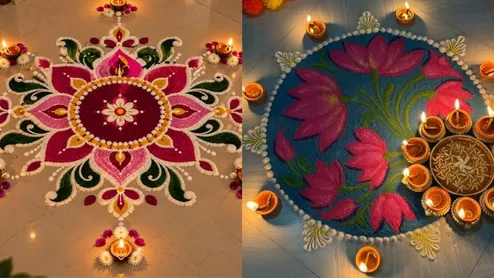
As the festival of lights approaches, homes across India undergo a breathtaking transformation. Homes are adorned with vibrant geometric patterns, floral motifs, and rich pigments of Rangoli. The practice of creating Rangoli at the doorstep is one of the most cherished and recognisable Diwali traditions.
The word Rangoli is derived from the Sanskrit word ‘Rangavalli’, which translates to ‘rows of colours’. Rangoli is far more than a decorative festive art form. It is a sacred ritual deeply interwoven with spirituality, hospitality, ancient science, and ecological balance.
The Ancient Roots of Rangoli
The history of Rangoli dates back to one of the earliest treatises on Indian art - Chitralakshana. References to floor art can be found in ancient scriptures like the Ramayana and Mahabharata. Legend says that when Lord Rama returned to Ayodhya after 14 years of exile, the people of Ayodhya decorated the entire kingdom with patterns made of coloured powders and flowers to welcome him - the first Diwali.
Another legend from the Puranas tells of a priest's son who died, and Lord Brahma asked the priest to draw a portrait of the boy on the floor to bring him back to life, thus creating the first Rangoli. The art form is known by different names across India - Kolam in Tamil Nadu, Muggu in Andhra Pradesh, Alpana in West Bengal, Chowk Purana in Uttar Pradesh, Mandana in Rajasthan, and Aripan in Bihar- but the soul remains the same.
Why Do Indians Draw Rangoli At Their Doorsteps On Diwali?
1. To Welcome Goddess Lakshmi: Diwali is primarily the festival of Goddess Lakshmi, the goddess of wealth and prosperity. It is believed that a clean house and a beautiful Rangoli at the entrance invite the Goddess, as it shows that the home is welcoming and ready to receive her blessings. The intricate patterns are said to captivate her and prevent her from leaving.
2. To Ward Off Evil: The vibrant colours and geometric symmetry are believed to trap negative energy and the evil eye, or 'buri nazar'. The unbroken lines of the Rangoli create a protective barrier around the home.
3. A Gesture of Hospitality: Rangoli is an 'Atithi Devo Bhava' - a warm, colourful welcome for guests, family and positivity. It signifies that the home is open, joyful, and full of celebrations.
4. The Science and Ecology Behind It: Traditionally, Rangoli was made using rice flour, turmeric, kumkum, dried leaves, and flower petals. This served as food for ants and small insects, promoting the concept of co-existence and Ahimsa. The natural powders also acted as insect repellents.
ALSO READ- Diwali 2026 Decor Guide: How To Use AI To Decorate Your Living Room (With Prompts)
Colours, Patterns, and Motifs: Decoding the Language of Rangoli
Every element in a Rangoli has a meaning
Colours: Red signifies strength and energy, yellow stands for brightness and knowledge, blue represents calmness, green is for nature and new beginnings, and white denotes purity and peace.
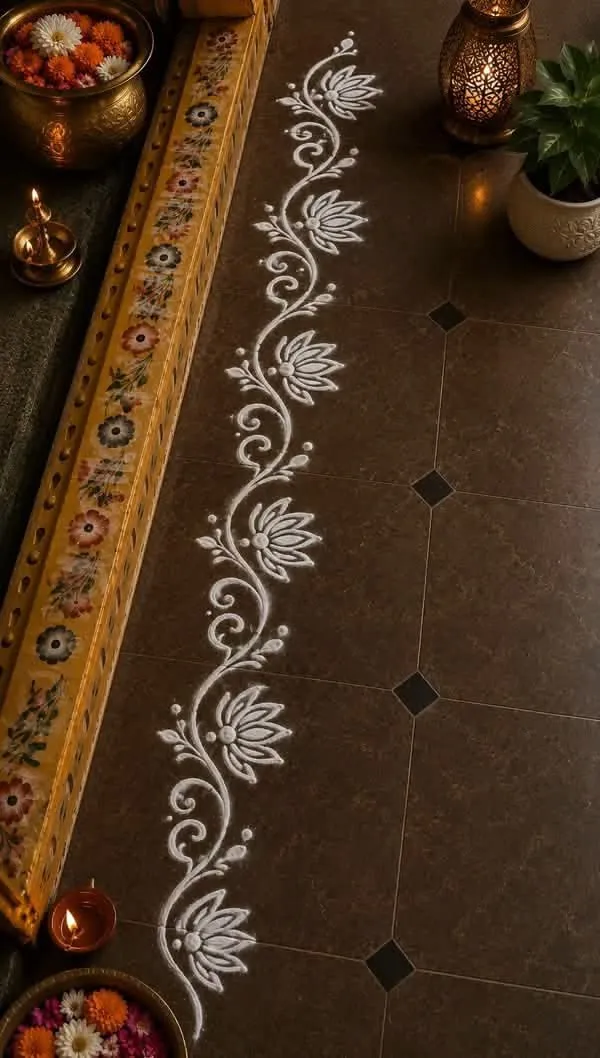
Patterns and Motifs: Lotus Flower: Represents Goddess Lakshmi and prosperity.Peacocks and Parrots: Symbolise beauty and knowledge.
Diyas and Kalash: Denote light over darkness and abundance.
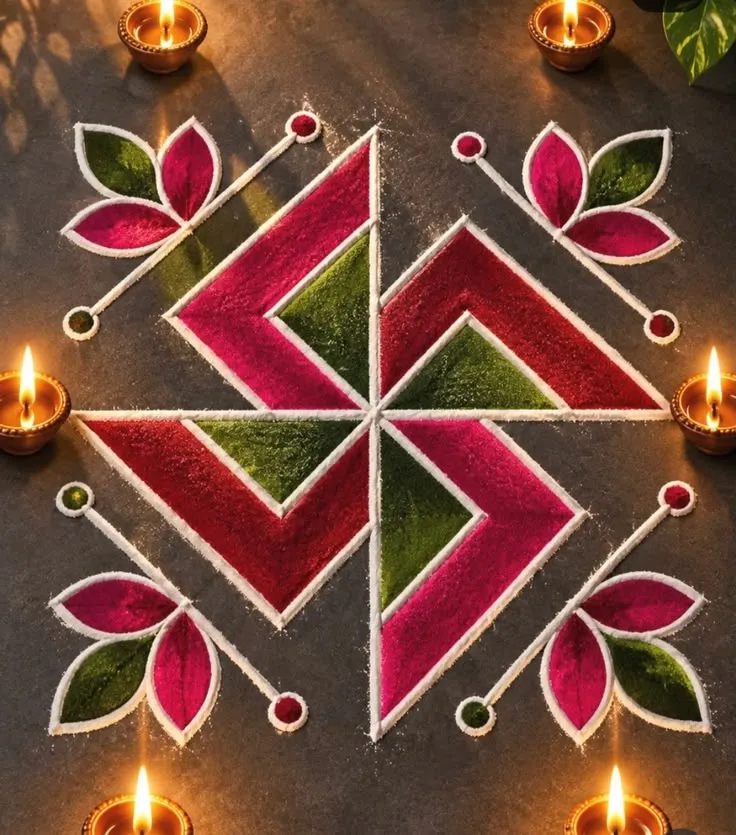
Geometric Patterns - Circles and Triangles: Represent the cyclical nature of life, infinity, and the cosmos.
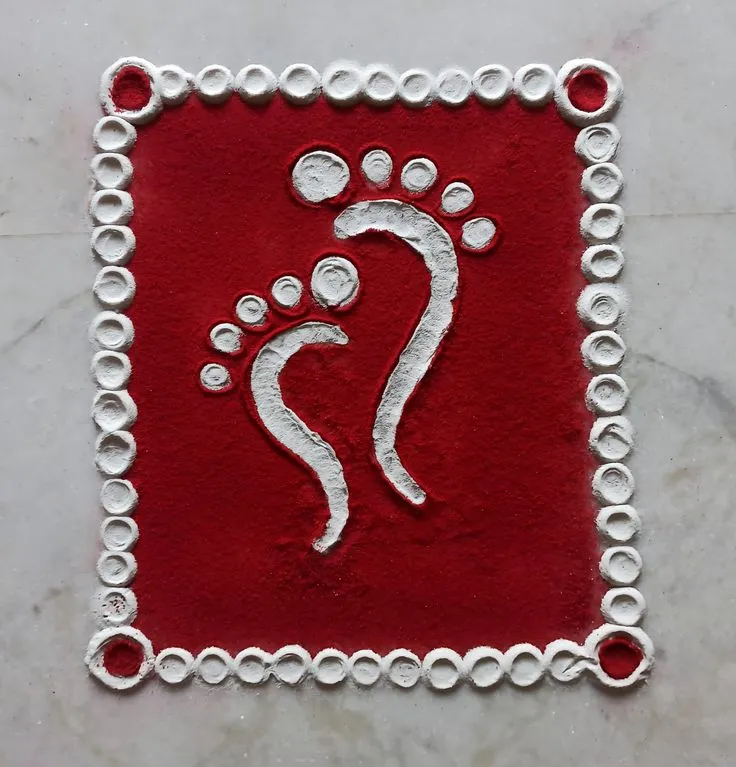
Footprints: Small footprints of Goddess Lakshmi drawn entering the house signify her arrival.
Dots and Lines: In Kolam, the dots (pulli) are obstacles of life, and the lines are the journey that goes around them with grace.
ALSO READ- Can You Reuse Old Diyas For Diwali Puja? 3 Easy Ways To Give Them A Festive Makeover
The Cultural Impact of Rangoli Today
Today, Rangoli has transcended the doorstep. From being a daily morning ritual done by women, it has become a global art form. In 2026, we see Rangoli evolving with 3D designs, portrait Rangolis, floating flower Rangolis in water-filled urlis, and even eco-friendly Rangoli made with stencils and organic colours. In essence, when you draw a Rangoli this Diwali, you are not just decorating your house; you are continuing a thousands-of-years-old tradition of welcoming light, life, and Lakshmi into your life.
(Image Credits: Pinterest)
Stay tuned to read more such stories on HerZindagi.
- What does Rangoli mean and why is it drawn on Diwali?
- Derived from 'Rangavalli ', meaning rows of colours, Rangoli is drawn on Diwali to welcome Goddess Lakshmi, ward off evil, and invite prosperity and positivity.
- What materials were traditionally used to make Rangoli?
- Traditionally, Rangoli was made with eco-friendly materials like rice flour, turmeric, kumkum, sindoor, and flower petals to feed insects and act as a natural repellent.
- What do different Rangoli motifs signify?
- Lotus denotes prosperity, peacock signifies beauty, diya symbolises light over darkness, and Lakshmi footprints represent the arrival of the goddess of wealth.
Our aim is to provide accurate, safe and expert verified information through our articles and social media handles. The remedies, advice and tips mentioned here are for general information only. Please consult your expert before trying any kind of health, beauty, life hacks or astrology related tips. For any feedback or complaint, contact us at compliant_gro@jagrannewmedia.com.