
International Day of Persons with Disabilities: 10 Disabled Women Share the One Change They Want in the World
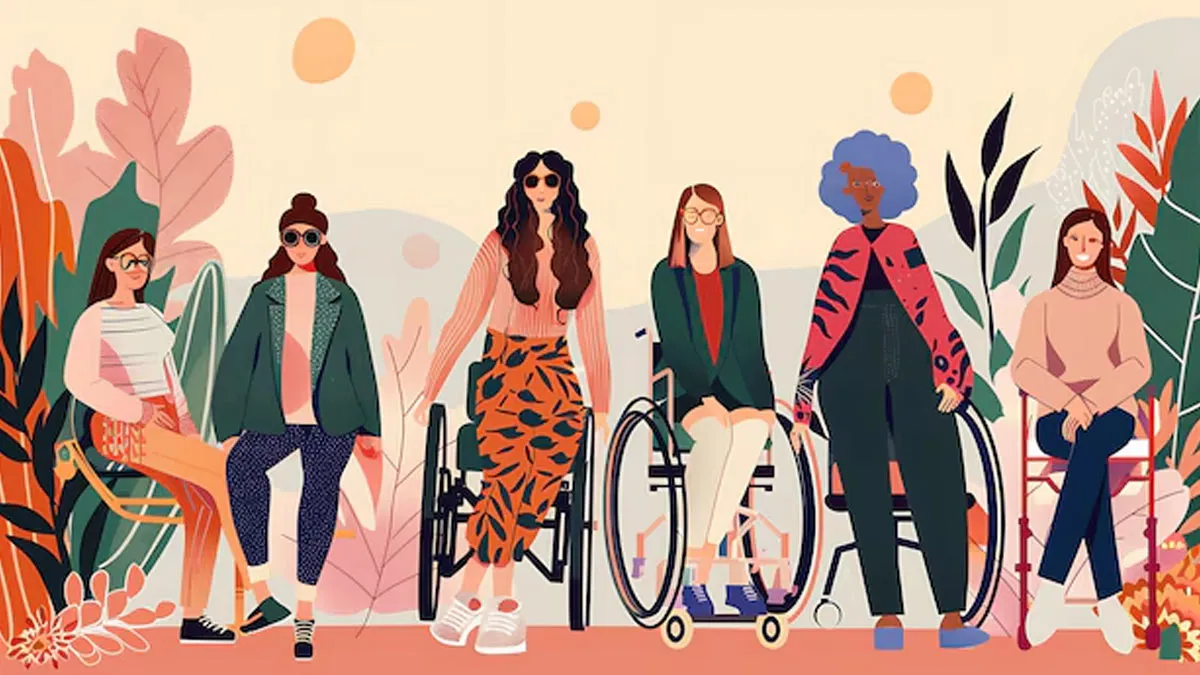
On paper, the International Day of Persons with Disabilities is about observance. In practice, it is about imagination, the radical kind that asks society to see disabled people not through pity or tokenism, but through power, agency, and the ordinary right to belong.
Across India, disabled women are rewriting what inclusion looks like: in classrooms, courtrooms, craft studios, stadiums, boardrooms, and national policy tables. Their disabilities differ; their demands converge. Each woman, in her own way, is asking for a world that remembers she exists and designs itself with her in mind.
10 Disabled Women Share The One Change They Want In The World
These are their stories, their advocacy, and the one thing they’d change if the world would only listen.
1. Shafali Chadha, 28, Communications Manager, Delhi, Visual Snow Syndrome
Shafali Chadha’s journey toward inclusion began before she knew the vocabulary for it. As a young teacher, she had a deaf child in her classroom, a child she adored but didn’t know how to teach because she had never been trained to.
Years later, when she woke up with thousands of flickering dots across her vision, a rare neurological condition called Visual Snow Syndrome, the theory became a lived reality. During her M.Ed at Delhi University, Shafali immersed herself in disability studies, researching how families and teachers navigate assessments and pushing organisations, from Cambridge’s ReachSci to grassroots nonprofits, to make their programmes accessible.
“People think disability is the barrier,” she says. “But the real barriers are the systems that were never designed with us in mind.”
What she’d change:
“I want the world to stop imagining there’s one correct way to have a body or mind. I don’t want special treatment, I just want a world that remembers I exist and doesn’t make me justify my needs every time.”
Don't miss: How Offices Can Build Trust between People with Disabilities and Able-Bodied Individuals In Work Environment
2. Rupa Dhanjibhai Bhanushali, 35, Gold Medalist, Engineering Design, National Abilympics, Gujarat, Locomotor Disability
At the National Abilympics 2025, all eyes were on a single mother from Gujarat who travelled to Delhi with her child on her hip and grit in her stride. Rupa Bhanushali won Gold in Engineering Design, one of the most technically demanding ICT categories, a triumph built on late nights mastering industrial design software.
For Rupa, engineering began as a way to create stability for her son. Today, it’s a stage where she breaks stereotypes in a male-dominated technical field.
What she’d change:
“I want a world where disability doesn’t automatically mean ‘less capable.’ Believe in us, give us equal access, equal space, equal respect, and we’ll show you that our talent needs no special treatment, only opportunity.”
3. Sonali Shinde, 24, Bronze Medalist, Crochet, National Abilympics, Maharashtra, Hearing Impairment
Crochet became Sonali’s language long before she learned the vocabulary for disability. Born with a hearing impairment, she understood patterns through touch, observation, and movement. At the 2025 Abilympics, she won Bronze, her intricate work standing out for precision and imagination.
She dreams of building a micro-business, creating livelihood pathways for disabled women through craft, a sector where talent quietly thrives without recognition.
What she’d change:
“Communication shouldn’t be a barrier. I want a world where people don’t assume I have nothing to say just because I say it differently.”
4. Dr Alma Chopra, Life Coach, Motivational Speaker & Founder, Almawakening Foundation, Gurugram, Cerebellar Ataxia
Before she became a motivational speaker and empowerment advocate, Dr Alma Chopra was a woman fighting to reclaim dignity in a world unprepared for difference. Her cerebellar ataxia affects her balance, speech, and movement, but she insists, “it never touched my spirit.”
Through the Almawakening Foundation, she campaigns for accessible environments, inclusive opportunities, and the belief that people with disabilities deserve to be seen beyond their diagnoses.
What she’d change:
“I want the world to look at us with respect, not pity. Accessibility should be a right, not a favour.”
5. Shruti Tomar, 45, Freelance Lifestyle Writer, Hyderabad, Post-Haemorrhage Paralysis
A sudden brain haemorrhage in 2016 left lifestyle writer Shruti Tomar paralysed on her left side. Years of physiotherapy restored her ability to walk, though her left hand remains non-functional. She has not stepped into formal advocacy yet, but her writing, whimsical, stylish, unhurried, resists one of the world’s oldest stereotypes: that disabled women are defined only by struggle.
What frustrates her most is the gaze, the pitying, lingering stare that flattens experience into tragedy.
What she’d change:
“I wish people would remember that a disabled person has a heart and mind that feels deeply. As Christopher Reeve said, some people with full bodies are more paralysed than I am.”
-1764755891943.jpg)
Don't miss: How Companies Can Ensure Accessibility For People With Disabilities: Expert Tips Given Inside
6. Gauri Gupta, 25, Legal & DEI Professional, Noida, Spina Bifida
For Gauri Gupta, a wheelchair user with spina bifida, the biggest barrier isn’t infrastructure; it’s silence. Decisions are routinely made without disabled people in the room, she says, resulting in ramps that feel like afterthoughts and workplaces built for a single body type.
“Access isn’t a fix,” she says. “It’s a value.” Her advocacy is rooted in everyday conversations: changing how we plan, design, and imagine public space.
What she’d change:
“When disability becomes part of everyday dialogue, access becomes structural. What it unlocks is agency, the ability to belong without shrinking.”
7. Dr Sangita Thakur, 56, Founder & CEO, Ashtavakra Accessibility Solutions, Delhi, Spinal Muscular Atrophy & Profound Hearing Loss
With over 30 years in communications and a lifelong experience with spinal muscular atrophy, Dr Sangita Thakur now leads one of India’s most influential disability-led enterprises. Through Ashtavakra, she dismantles barriers across policy, public spaces, digital design, architecture, and corporate ecosystems.
She has conducted capacity-building workshops nationwide, pioneered design thinking in accessibility, audited major national institutions, and anchored platforms like the Zero Project India Conference.
Her driving principle: accessibility cannot be retrofitted; it must be foundational.
What she’d change:
“End the global habit of remembering disabled people last. Accessibility should be the starting point of every design, with disabled people at the table.”
Don't miss: National Parents Day: How Is Parenting For Disabled Children Different?
8. Dr Deepa Malik, Padmi Shri, Khel Ratna, India’s First Woman Paralympic Medalist, Board of Directors at AssisTech Foundation, Spastic Paraplegia
For over 26 years, Dr Deepa Malik has lived with chest-below total paralysis. For just as long, she has challenged India’s understanding of disability through sport, policy, activism, and grassroots work.
As co-founder of the Wheeling Happiness Foundation, as a member of the Five-Year Planning Commission, and as India’s first Paralympic woman medallist, she has used every platform available to push for structural change.
What she’d change:
“Universal accessibility of infrastructure, of mindsets, of opportunities. Equality should not depend on a person’s body.”
9. Ghazal Khan, 30, CEO, International Council of Wheelchair Cricket, Agra, Trauma Disability (Post-Accident)
Ghazal Khan does not identify with physical disability, but she carries the aftermath of a near-fatal accident: 9 days in a coma, 20 days in ICU, a collapsed sense of self, and recent paralysis triggered by severe migraine linked to brain injury.
Instead of retreating, she transformed her second life into purpose. As one of the most prominent leaders in disability cricket globally, she has built international platforms for wheelchair and standing disability athletes, turning sports into a vehicle for dignity and equity.
What she’d change:
“Mindsets. Disability is not weakness; society’s perception is. I want the world to see People with Disabilities as achievers, not objects of sympathy.”
10. Sminu Jindal, 52, Managing Director, Jindal SAW Ltd, Delhi, Reduced Mobility
A childhood accident left Sminu Jindal a wheelchair user. That experience — watching elders struggle with stairs, mothers navigate prams, travellers juggle luggage — led her to a simple insight: accessibility benefits everyone.
Through Svayam, she has transformed national monuments like Qutub Minar, supported para-sport infrastructure, collaborated with governments, and led India’s first National Summit on Accessibility in partnership with CII and UNESCO. Her vision reframes disability as part of the universal human experience.
What she’d change:
“A mindset shift from disability to reduced mobility. Accessibility must be treated as essential infrastructure, a cornerstone of policy, not an afterthought.”
-1764755907946.jpg)
Image courtesy: Freepik
For more such stories, stay tuned to HerZindagi.
Our aim is to provide accurate, safe and expert verified information through our articles and social media handles. The remedies, advice and tips mentioned here are for general information only. Please consult your expert before trying any kind of health, beauty, life hacks or astrology related tips. For any feedback or complaint, contact us at compliant_gro@jagrannewmedia.com.