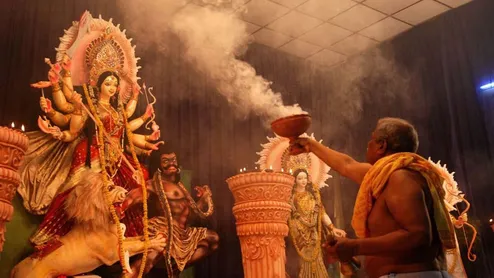
As the autumn air turns crisp, and we enjoy the fragrance of the shiuli flowers, millions of Indians along with the global Bengali diaspora prepare for the arrival of Goddess Durga. This transformation in nature signals the dawn of Mahalaya, the sacred day that heralds the arrival of Devi Paksha (the fortnight of the Goddess) and sets the stage for Durga Pujo.
Mahalaya is not merely a date on the calendar, it is a sensory and an emotional experience. From the legendary 04:00 AM radio broadcast of Birendra Krishna Bhadra’s Mahishasuramardini echoing in Bengali homes, Mahalaya embodies spirituality and gratitude and festive anticipation.
Mahalaya 2026: Exact Date And Auspicious Timings
Mahalaya marks the final day of Pitru Paksha and falls on Sarva Pitru Amavasya. In 2026, Mahalaya is on 10th October. The Devi Paksha or the Sharad Navratri starts from 11th October 2026.
Mahalaya Auspicious Muhurat And Tithi Timings
Mahalaya is known for two auspicious days, the first one is performing Tarpan, i.e. the prayer for the departed ones on their journey during the morning hours. The second event involves invoking Goddess Durga to begin her journey from the Kailash to Earth.
Event |
Date
Auspicious Timings
Amavasya Tithi Ends
10th October 2026
Late Afternoon/ Evening
Kutupa Muhurat (for Tarpan)
10th October 2026
11:45 AM - 12:30 PM
Rohina Muhurat
10th October 2026
12:30 PM - 01:15 PM
Aparhana Kaal (Ancestors Ritual)
10th October 2026
01:15 PM - 03:30 PM
The Mythological And Cultural Significance of Mahalaya
The word Mahalaya is derived from two Sanskrit words: Maha (great) and Alaya (abode). It translates to Great Abode symbolising Goddess Durga’s arrival to her earthly home.
Mahalaya stands at the intersection of two spiritual cycles.
First is concluding of Pitru Paksha, which is the final opportunity to pay homage to our departed ones. And the second is initiating Devi Paksha. This day marks the auspicious fortnight dedicated to Goddess Durga.
The Legend Of Mahishasuramardini
According to the Hindu Mythology, Mahishasura was a demon who obtained a boon (vardaan) to be invincible to any man or God. He became so drunk on power that he started defeating Devas and threw them out of heaven. Unable to fight him back, Brahma, Vishnu, and Shiva created Goddess Durga by combining their cosmic energies.
With all the weapons and power given by the Gods, Goddess Durga fought Mahishasura for nine days and nights, and on the tenth day, which is Vijayadashmi, she finally defeated him.
Know About The Sacred Ritual Of Chakshu Dan On Mahalaya
In Kumartuli, West Bengal which is the famous potters' quarter in Kolkata. Artisans work tirelessly for months to craft clay idols of Durga and her four children (Lakshmi, Saraswati, Ganesha, and Kartikeya).
On the day of Mahalaya, senior artisans perform Chakshu Dan. This ritual means ‘painting the Goddess's eyes’. In complete silence and devotion, the eyes are rendered, symbolically breathing life into the clay image and inviting the Divine Mother to reside in the idol and bless everyone.
When Does Durga Pujo Officially Start?
Mahalaya stands for spiritual invocation of Goddess Durga, the grand festivities of Durga Pujo follows a calendar of six days of Devi Paksha.
Date |
Day Of Devi Paksha
10th October 2026
Mahalaya
11th October 2026
Pratipada
16th October 2026
Maha Shashthi
18th October 2026
Maha Saptami
19th October 2026
Maha Ashthami
20th October 2026
Vijay Dashmi
Conclusion
Mahalaya is a very important day for celebration. It increases the respect for our roots and also for the present. As Birendra Krishna Bhadra’s voice is moving in your home with ‘Ya Devi Sarvabhuteshu Shakti-Rupena Samsthita’, Mahalaya reminds us about the victory of good over evil forces. It also celebrates the feminine energy that defines Durga Pujo.
(Image Credits: Pinterest)
Stay tuned to read more such stories on Her Zindagi.