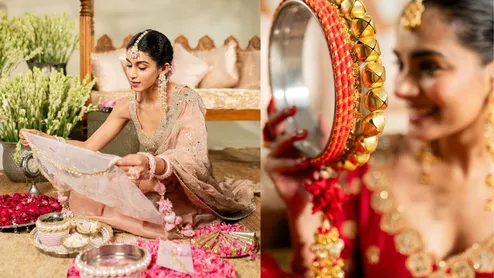
Karwa Chauth is one of the most significant festivals for married women in India. On this day, women observe a strict nirjala fast (without water) from sunrise to moonrise. They fast for the long and healthy lives of their husbands.
Can Unmarried Women Fast For Their Partners?
Traditionally, the fast is observed by married women, but in recent times, many unmarried women have also started to fast for their fiancés or partners. So, yes, unmarried women can fast for their husbands, but it comes with some rules and regulations that you need to follow.
Rules And Rituals For Unmarried Women Observing Karwa Chauth
Hindu scriptures say Karwa Chauth's strict Nirjala fast is ideally for married women. Unmarried girls are not required to keep a strict fast.
1. Keep a Phalahar fast, not Nirjala: Unmarried women can eat fruits and consume water, juice, or other energy-boosting drinks. If your marriage is fixed or you are engaged, you may choose to keep the full Nirjala fast for your future husband.
2. No Sargi compulsion: Sargi - the pre-dawn meal of fruits, sweets, mathri, dry fruits, and paratha given by the mother-in-law - is a ritual for married women. Since unmarried girls don't receive Sargi, there is no compulsion, but you should have something light before sunrise.
3. Who to worship: While married women worship Shiva, Parvati, Ganesha and Kartikeya and the moon, unmarried girls should mainly worship Lord Shiva and Goddess Parvati - the ideal divine couple - and Karva Mata. Pray for a good groom and a harmonious married life, and listen to the Karwa Chauth Vrat Katha.
4. Dressing up is allowed: Like married women, unmarried girls can also apply henna, wear traditional attire, sindoor is not required, and adorn themselves with jewellery and bangles.
5. Different ways to break the fast: Married women break the fast after sighting the moon through a sieve (chalni) and offering Arghya. Unmarried women don't have to follow this strictly. They can break their fast by offering Arghya to the stars or the Pole Star (Dhruva Tara) in the evening, without using a sieve. There is no need to wait till moonrise.
6. Don't exchange thalis: Unmarried women should not sit in the same circle with married women during the puja and do the thali-exchange ritual (fera).
Conclusion
In essence, the intention behind the fast matters. For married women, it is for the husband's longevity; for unmarried women, it is a prayer for a loving and compatible life partner. If you have any medical condition, opt for a partial fast and consult an elder before observing.
(Image Credits: Pinterest)
Stay tuned to read more such stories on HerZindagi.