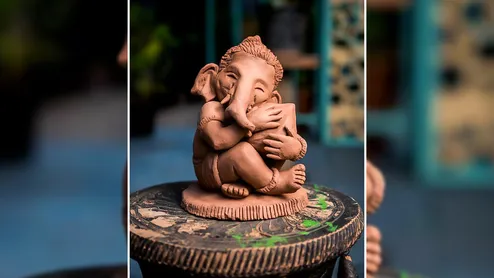
With Ganesh Chaturthi around the corner, houses and streets are brimming with preparations for welcoming Lord Ganesha. Although nowadays markets have begun to sell idols made up of POP, metals, and resins, the age-old tradition insists on making the idol of Ganesha using natural river mud (shaddu mati). And this old tradition is not just limited to art; rather, it embodies great spirituality and philosophy within it.
Ganesh Chaturthi 2026: Why Were Ganesh Idols Made From Clay?
The importance of the use of clay lies in the fact that it enables the devotee to come directly in contact with Mother Earth (Bhumi). The clay is a symbol of purity, humility, and the first principle of life. The river clay dissolves in the water body very easily without causing any kind of damage to the aquatic plants and animals.
What Is The Religious Significance Of Clay Ganesh Idols?
According to the Hindu scriptures, the deity Goddess Parvati created Lord Ganesha from the paste of turmeric and soil from her body to safeguard her abode. Hence, the creation of Lord Ganesha from the soil implies the sanctity of the birth of Lord Ganesha.
In the Prana Pratistha ceremony conducted on the occasion of the Ganesh Chaturthi festival, divine consciousness is bestowed in the clay idol of Lord Ganesha. Since soil is one of the fundamental elements used in creation, it serves as the purest medium for divine consciousness.
What Does The Clay Ganesh Idol Symbolise?
The statue of the god made from clay represents the temporariness of all matter in the universe. The aesthetic object created by devotees becomes worshipped with devotion and then is immersed in the water after some time. In such a way, the spiritual meaning of non-attachment (vairagya) is perceived by devotees. This is the philosophy that means that everything coming from the Earth will go to the Earth.
What Is The Connection Between Clay Ganesh Idols And Visarjan?
The power of God through the melting of the clay statue in water goes back to nature, and the clay itself joins Mother Earth once again.
In ancient days, the clay that sank in the lakes and rivers of that area was helpful for the soil in farms during monsoon time. Nowadays, the clay statues have made it easier for people to perform visarjan inside their houses using buckets or water tanks.
ALSO READ- Janmashtami 2026: Why Is Krishna's Birthday Being Celebrated On Both 4th and 5th September This Year
Conclusion
The use of natural clay to make Ganesh idols is an example of the traditional knowledge of Indians in which spirituality and environment have been connected perfectly.
Image credits: Freepik
Stay tuned to read more such stories on Her Zindagi.