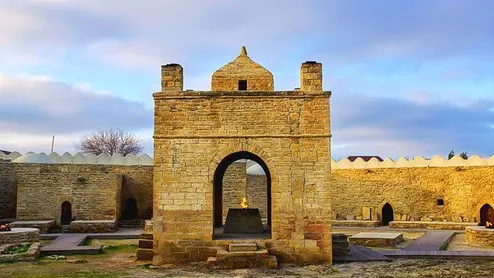
Atesgah, the fire temple on the windswept peninsula of Absheron, located near Baku, Azerbaijan, is a castle-like structure wherein the natural gas emanating from below ground sustained the continuous flames in this place for thousands of years. Although connected to Zoroastrian worship of the fire through historical records, upon exploring the interiors of the stone chambers within this structure, one can find an interesting link to the culture of India. The most famous inscription within this temple starts with the invocation: ‘श्री गणेशाय नमः’ (Shri Ganeshaya Namah).
Silk Road Traders and the Indian Diaspora in Baku
During the 17th and 19th centuries, Baku became a major commercial centre on the sea and land trade routes between Northwestern India (Multan and Sindh of the then India) and Persia and Russia.
The Multani Merchant Community: Indian businessmen, investors, and pilgrims resided in Baku, trading in cloth, silk, spices, and jewels.
The Sacred Fires of Surakhani: The eternal burning natural gas flames of Surakhani signified the divine form of Jwala Ji for the Hindu and Sikh travellers.
The Building of Ateshgah: Rich Indian merchants of Hindu and Sikh communities constructed this pentagonal building during the 17th and 18th centuries and included hujras for ascetics, monks, and traders.
ALSO READ- Who Is Jamuna Tudu? The 'Lady Tarzan of India' Who Protected Forests From Illegal Logging
The Inscriptions: Lord Ganesha, Shiva, and Jwala Ji
The temple boasts of more than ten preserved stone inscriptions placed on top of the doors of guest rooms. These inscriptions are very important and reveal many dates and donors of the past:
Invocations to Ganesha and Shiva: Many inscriptions start off with hymns in Sanskrit with the use of ‘Om Shri Ganeshaya Namah’ (Salutations to Lord Ganesha, remover of obstacles) and paying tribute to Lord Shiva.
Tribute to Goddess Jwala Ji: The inscriptions invoke blessings of Jwala-ji and refer to Baku gas flames as those of the holy Jwala Devi temple in Himachal Pradesh, India.
Dates in Vikram Samvat Era: The dates of donations are recorded according to the Vikram Samvat era (between the 1700s and early 1800s) and the names of the merchants from Multan, Lahore and Delhi.
Sikh inscriptions: Besides Devanagari inscriptions, there are also Gurmukhi inscriptions containing verses from Japji Sahib.
Conclusion
The Devanagari script ‘Shri Ganeshaya Namah’ found on the Ateshgah Fire Temple reveals much about the long history of peaceful commerce and spirituality that took place there. Being preserved as a UNESCO nomination as a state historical reserve, Ateshgah is a living proof of the Indian merchants and pilgrims who once found their home near the Caspian Sea.
Image credits: Instagram
Stay connected to read more such interesting stories on Her Zindagi.