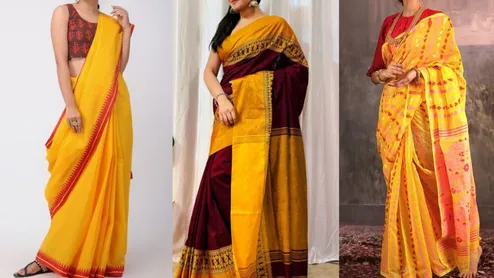
With Chhath Puja 2026 just around the corner, the ghats of UP, Bihar, Jharkhand, and many other states will turn into a sea of beautiful yellow and red due to stunning sarees. But Chhath is not a 30-minute puja. It is standing in cold water, climbing wet ghat steps, and sitting on the ground for hours. That is why, for Chhath, a light cotton saree in yellow and red is not just traditional; it is the smartest choice.
How To Drape Cotton Red And Yellow Sarees Comfortably For Ghat Visits
In this guide, we show you how to drape your cotton saree comfortably for Chhath ghat visits, so you can focus on puja.
Step 1: Petticoat or Inskirt
Wear a cotton drawstring petticoat, tied tightly at the waist. Avoid a satin petticoat as it slips. Tie it a little higher than usual so the saree does not touch the wet ground.
Step 2: Tuck and Pleats
Tuck one end on the right side; make 5-6 small pleats. Cotton pleats open easily, so pin them once with a small safety pin from the inside.
Step 3: Drape Around
Take the saree around your waist once and tuck it fully. Keep the lower border 1 inch above your ankle and this is the most important ghat hack so you don't slip on wet steps.
Step 4: Pallu
Instead of taking the pallu over your left shoulder to the back, bring it from your right waist, over your right shoulder, and let it fall in front.
What Are The Things You Need To Keep In Mind After Wearing Saree?
- Wear flat juttis and keep saree length short.
- Sit with pleats to one side, not in front. It will not crush.
- Carry a small cotton gamchha in same colour as backup pallu.
- If you plan to take a dip in river, wear a second plain cotton saree underneath or carry a quick-dry petticoat and a dry blouse to change.
The yellow-and-red cotton saree is not just a tradition, it is the smartest outfit for a ghat visit. It is light, breathable, auspicious, and beautiful in photos.
(Image Credits: Pinterest)
To read more such stories, stay tuned to Her Zindagi.
To read more such stories, stay tuned to Her Zindagi.