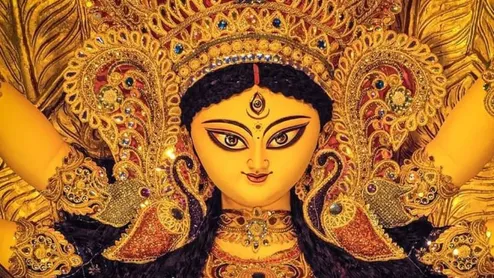
When Maa Durga arrives during Durga Puja, her elaborate shringaar captivates the onlookers. From the towering golden Mukut to the long, layered Sita Haar, the adornments will leave you in absolute wonder and will make you praise the hard work of Indian artisans even more.
In today's segment of The Jewellery Archive, let's trace the adornment of Maa Durga and the art behind them. Know what materials are used, how artisans create them
How Artisans Create Maa Durga’s Elaborate Puja Adornments
Artisans begin the preparation of creating Maa Durga's idol months and even half a year before the festival. It tells the story of Bengal's 400-year-old craft, which is both fascinating and practical. Artisans of Kumartuli create these adornments using everything from German silver foil to thermocol and shola pith.
A look into Daker Saaj
Daaker Saaj is a traditional Bengali style of ornamentation used to decorate Maa Durga idols. The word 'daak' means mail or post in Bengali, and it has an interesting connection to Germany. The name was given because the shiny silver materials and foils used for the decoration were originally imported by post from Germany.
It is made from silver foil and silver sequins, layered on thermocol, mica, and glowing materials. The foil would shimmer under oil lamps even before electricity, giving the Goddess an otherworldly glow.
What is Sholar Saaj?
Another art used to create the crown and other jewellery of Maa Durga is Sholar Saaj, which is made from Sholapith, a milky-white, soft plant core that grows in marshy lands of Bengal.
The Jewellery Breakdown:
1. Mukut (Crown or Headgear)
According to Vedic Vaani, the mukut of Maa Durga's idol is made in copper with Gold polished and artificial gemstone studded on it. It represents power, legitimacy, victory, triumph, honour, glory, immortality, righteousness, and resurrection. Some affluent or high-profile pandals use precious metals like gold or silver filigree too.
2. Maangtika
Maangtika is placed on the forehead along the parting of the hair, symbolising grace and auspiciousness. It also uses a similar method to the mukut.
3. Sita Haar and Other Necklaces
Sita Haar is a long layered necklace women usually wear. Maa Durga also wears this to represent power and legitimacy. She is also seen wearing beautiful Chandrahar, Choker and Hasuli. Saat Noli Haar is also made for Maa Durga, which is a classic multi-string gold necklace typical of traditional Bengali heritage jewellery.
4. Face and Hair Adornments:
For flowing hair for chul, jute is mostly used to craft the idol's long and beautiful hair. Meanwhile, to decorate the hair, shimmering chumki (sequins) are used along with other ornaments. For the nath, a large, traditional circular or studded nose ring is used to enhance the regal and divine appearance of the Goddess. Wide earrings are also used to adorn the ears.
What is Chandi Medha?
Chandi Medha is a magnificent, handcrafted silver filigree backdrop or tableau used to adorn the idol of Goddess Durga during festive celebrations. This is most popular in Cuttack, also called Odisha.
The art used to create the Chandi Medha is called Tarakashi, which is a 500 years old art form done by local artisans on the eastern shores of Odisha. To make tarakshi jewellery, delicate and intricate work is done on silver, where fine, hand-drawn metal wires are twisted, shaped and soldered into lace-like patterns. The 'tarakashi' comes from taar, which means wire and kashi, which means artwork or inlay.
Tarakashi is called silver lace jewellery and even woven moonlight as artisans use very thin and fine silver wires that are twisted into delicate and web-like patterns to make them resemble like lace fabric.
At Chandni Chowk, the entire crown and accessories of one of the idols of Goddess Durga are made of silver.
Maa Durga's jewellery is not just ornamentation, it is faith hammered into foil. From real gold to German post to thermocol, the craftsmanship of making Maa Durga's idol has survived across decades. When you see her next, look closely at the mukut, that's not just glitter, that's 400 years of Bengal's devotion.