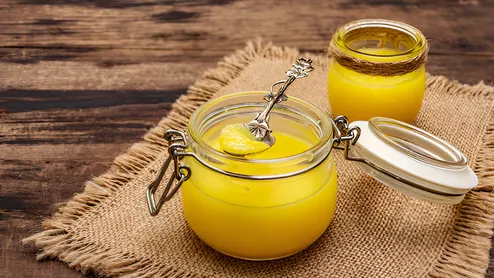
Ghee is a very important part of Indian kitchens. It is used to enhance the flavour of everyday recipes and is valued for its rich aroma. In the earlier days, ghee was traditionally made at home by the slow-churning process, but today things in cities have changed. People want to add desi ghee to their diets but with so many brands in the market, it is difficult to identify pure desi ghee. Understand how to identify real vs. fake desi ghee, common adulteration in ghee, and simple steps at home that can help us identify how to spot real desi ghee.
Understanding Desi Ghee: What Makes it 'Pure'?
The quality of ghee depends on the quality of milk that is being used to make ghee. Pure desi ghee is made from fresh milk, which has a rich aroma, flavour, and better nutritional value. Making desi ghee requires care at the initial stages. True pure ghee is made using the Bilona method where curd is churned to extract butter, which is then slow-heated. It is naturally granular, aromatic, and golden-yellow in colour. If it's made from A2 cow milk, it is even richer in nutrients.
Why Ghee Adulteration is a Problem (and What They Add)
With high demand and high price, ghee is one of the most adulterated foods in India. Common adulterants include vanaspati / dalda, refined vegetable oils, palm oil, starch, and even animal fats. Brands do this to increase quantity and reduce cost, but it compromises both taste and health.
The Simple Home Tests: How to Visually Inspect Your Ghee
- Colour & Texture: Pure desi ghee is golden-yellow with a slightly grainy texture. Fake ghee often looks stark white or has a uniform, oily, non-granular texture.Aroma: Real ghee has a rich, nutty, pleasant aroma. Adulterated ghee smells flat, oily, or has no aroma at all.
- Solidify Test: Keep a spoonful of ghee in the fridge. Pure ghee solidifies quickly and uniformly. If it separates into layers or stays liquid, it may be mixed with oil.
- Heat It Up: Practical Warming Tests for Ghee Purity. This is the most reliable home test. Take one teaspoon of ghee in a pan and heat it. Pure desi ghee will melt immediately and turn slightly brownish, with a rich aroma. If it leaves a lot of residue, turns dark quickly, or produces excessive smoke, it likely contains vanaspati or other fats.
Pure ghee also crackles slightly if there is any moisture, but fake ghee melts without any sound.
Chemical-Free Methods: Water, Iodine, and Other At-Home Checks
- Palm Test: Rub a little ghee on your palm. Pure ghee melts with your body heat instantly. Adulterated ghee with vanaspati will leave a waxy coating.
- Water Test: Melt ghee and pour it into a glass of water. Pure ghee will settle at the bottom or remain separate, while adulterated ghee with oils may form a separate oily layer on top.
- Iodine Test (for starch): Add a few drops of iodine solution to melted ghee. If it turns blue/purple, it indicates the presence of starch.
Beyond the Tests: Tips for Buying Authentic Desi Ghee
Always check for FSSAI certification, read the ingredient list - it should say 100% milk fat, and buy from trusted brands that mention the source of milk and method of preparation like Bilona. Avoid ghee that is priced too low compared to the market average. If possible, buy from local farms or brands that offer lab-test reports.
The Health Implications of Consuming Fake Ghee
Consuming adulterated ghee regularly can lead to digestive issues, increased bad cholesterol, weight gain, and long-term heart health risks due to trans-fats from vanaspati. Pure desi ghee, when consumed in moderation, aids digestion, boosts immunity, and is a good source of healthy fats - benefits you lose completely with fake ghee.
(Image Credits: Magnific)
Stay tuned to read more such stories on HerZindagi.