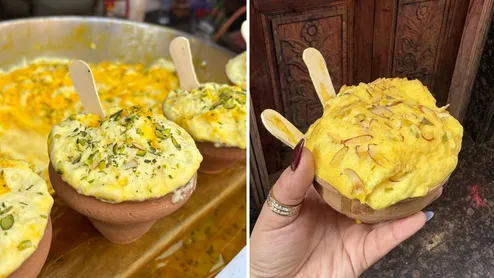
Walk through the lanes of Old Delhi on a cold morning and you will spot vendors guarding wide pots piled with something that looks like a cloud. That is daulat ki chaat. Despite the name, it is not chaat in the usual tangy, spicy sense. It is a sweet, foamy treat that disappears on your tongue almost before you can taste it.
What Is Daulat Ki Chaat?
Daulat ki chaat is a winter dessert made from nothing more than milk, cream and a lot of patience. The milk is chilled and whisked until it turns into a light, airy froth, then sweetened and flavoured with kewra, khoya or mawa. It is served in a dona or an earthen pot with crumbled malai or chenna, saffron and chopped nuts on top.
Traditionally, the milk was left out overnight so the cold air and dew could chill it, and then it was churned by hand for hours. It is said to have been served in Mughal courts, and the name hints at that: a dish rich enough to be called "wealth". Today you can still find it in the lanes of Old Delhi, but only in the cold months, usually from around Diwali till Holi.
Where To Find The Best Daulat Ki Chaat In Delhi?
Most of the action is in the lanes of Chandni Chowk and the markets around it.
1. Dariba Kalan and Sitaram Bazaar: Babu Ram is a name people often swear by here. His stall comes up in the winter months, and the chaat is known for its feather-light froth and the flavour of kewra and khoya.
2. Dhani Ram Rakesh Gupta, Sitaram Bazaar: A tiny shop tucked into narrow lanes near Chawri Bazaar, serving daulat ki chaat only between Diwali and Holi. It is a bit of a hunt to find, so ask around. UPI is accepted, but seating is just a small stool.
3. Khemchand, behind Paranthe Wali Gali: Operating since 1912, this is widely considered the original and are known for a creamy take on the dessert.
4. Jaspal Daulat Ki Chaat, Nai Sarak: Known for its fresh and creamy texture. It is highly rated by locals.
Daulat Ki Chaat Origin
Its exact origin is unknown. It is believed to have been a favourite of Mughal royals, and the name Daulat means wealth. Other accounts say it came from Afghanistan, or was first made from mare's milk by the Botai tribe of Kazakhstan.
Things To Check Before You Buy Daulat Ki Chaat
1. Look at the froth: It should look airy and hold its height. If it is flat, runny or watery, move on.
2. Check the stall: Is it covered? Is the milk kept cold? Are the dona or earthen pots clean? Old Delhi stalls are not fancy, but a few seconds of looking tells you a lot.
3. Ask what goes in: Some vendors go heavy on sugar or use dull, stale toppings. Fresh malai, pistachios and a hint of kewra are what you want.
4. Eat it there: Do not carry it home for later. It is meant to be had right away, in small bites, since it is rich.
Final Word
Daulat ki chaat is not something you can plan too much for as it appears only in winter, melts in minutes, and is best eaten standing in a cold Old Delhi lane. If you are in Delhi between November to February don't miss it.
Stay tuned to read more such stories on Her Zindagi.