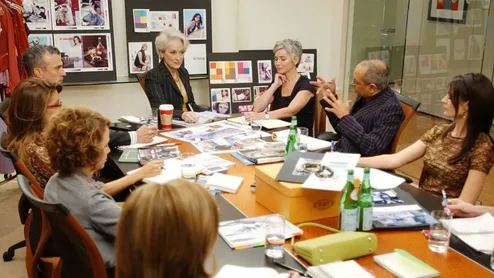
For decades, women have been entering the workforce in greater numbers, outperforming in education, and even climbing the early career ladder. Yet at the top, the number of women holding the higher ranks reduces dramatically. In 2026, the question is no longer whether women are qualified to lead but it is why they are still not getting the chance. The stats for the correlation of Indian workforce and women are even worse.
What does the data say about women in the workforce and top management?
According to the World Economic Forum's Global Gender Gap Report 2025, women hold only 28.1% of senior leadership positions worldwide. In 2015, that number was 25.7%, and there has been a minor gain of only 2.4 percentage points in a decade.
The report also emphasises a critical disconnect: the educational gender gap is now 95.1% closed, with women surpassing men in tertiary education in many countries, yet only 29.5% of senior managers with tertiary education are women. As the WEF puts it, education is no longer the barrier — access to opportunity is.
The report also emphasises a critical disconnect: the educational gender gap is now 95.1% closed, with women surpassing men in tertiary education in many countries, yet only 29.5% of senior managers with tertiary education are women. As the WEF puts it, education is no longer the barrier — access to opportunity is.
In another report by The Grant Thornton International Women in Business 2025, it tells the same story for mid-market companies, which make up 90% of businesses globally. Women hold only 34% of senior leadership positions, an increase of only 0.5 percentage points from 2024. The tragic part of the report estimates that gender parity in senior management won't be achieved until 2051.
Are women being indirectly discriminated against in the workforce?
The McKinsey & LeanIn.Org Women in the Workplace 2025 Report covered 124 companies employing 3 million people and surveyed 10000 employees. The report revealed that for every 100 men promoted to manager, only 93 women are promoted. For women of colour, it drops to 74 women per 100 men.
Representation falls even further from 48% at the entry level to 29% in top management, according to McKinsey's 2025 data. The report also stated that women hold 29% of C-suite roles, and this has remained unchanged for the past 11 years.
What's the situation of women in the workforce in India
Before International Women's Day 2025, LinkedIn released data showing that women made up 28% of India's workforce in 2025, positioning the country among the bottom 10% globally. At the senior end, the picture becomes worse as women held just 18% of top leadership roles last year. This is far below both their overall workforce share and the global median of 31%.
Even at entry level, the picture does not seem rosy as women account for 36% of the workforce in India. Another worrying trend has emerged according to the data from the 11th edition of Best Companies for Women in India (BCWI), in which 387 companies participated. This found that women's share of corporate executive roles has fallen to 16.7%.
Why are women vanishing from the workforce?
Domestic responsibilities, gender bias and limited access to networking and mentorship are top barriers for women, creating big hindrance for them to move higher in the workforce. According to Avtar and Great Place To Work India 2025, 21% of women report lacking access to leadership development programs and 22% struggle with work-life balance due to inflexible schedules.
Co-Founder of SUGAR Cosmetics Vineeta Singh also shared her own experiences and sexist encounters while building a business. She shared, I have had various types of sexist encounters, starting with the fact that I was told we don't invest in women-founded companies. So only when your husband joins the business, we will give you the cheque."
The absence of women in the top management is not because they cannot lead; it's because they are expected to manage the home without support, fight bias without sponsorship, and build networks without access.
(Image Credits: Pinterst, Magnific)
To read more such stories, stay tuned to Her Zindagi.
To read more such stories, stay tuned to Her Zindagi.