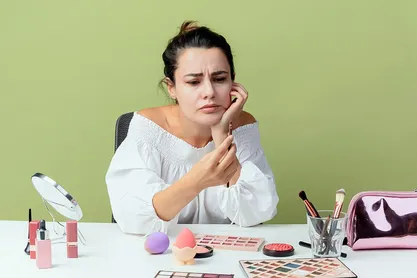
A proper skincare routine helps to keep skin in a good condition but it does guarantee breakouts that are connected to makeup. Dr. Dr Ajay Rana, Founder & Director, ILAMED, and President of the Indian Society of Aesthetic Medicine (ISAM) explains that makeup causes acne because of three reasons. First, the way it is made: ingredients used, second how it is put on and how it is taken off and last, how it works on a person’s skin.
Usually makeup creates a situation which causes blocked and swollen hair follicles and this is often called Acne Cosmetica. It usually shows up as skin-coloured bumps, blackheads, whiteheads or red pimples on places where makeup is often put.
How Can Daily Makeup Cause Acne?
Acne occurs when much oil and dead skin cells block the hair follicle that is attached to an oil gland in your skin. Some foundations, cover-ups, primers and thick creams can add to this blockage in skin that is oily or has acne. Products that are marked as non-comedogenic are less likely to block pores. The label is not a sure thing. A product that works for one person might make acne worse for another or cause irritation for someone else.
Hidden Makeup Habits That May Trigger Breakouts
Makeup mixes with oil, sweat, dead skin cells and dirt during the day. Leaving it on all night can make the blockage and irritation longer. Brushes and sponges can also collect oil, leftover product and tiny germs if they are not cleaned often. Sharing makeup or touching the face much can add more germs. On the side scrubbing too hard using strong soaps and washing too much can harm the skin and make redness and inflammation worse.
Skin Reactions After Makeup
Reactions like burning, itching, peeling or swelling after using a product might mean irritant or allergic contact dermatitis instead of acne. Folliculitis can also look like a breakout. Please contact a doctor when the problem shows up.
What To Do If You Have Acne?
The first and foremost thing to do is: Pick light oil-free non-comedogenic makeup and don’t try new products every time. Take off makeup gently before bed using a cleanser then use a moisturiser that matches your skin type. Make sure you clean brushes and sponges often, let them dry completely, avoid sharing makeup and throw away items that smell different, look different or feel different.
ALSO READ- Can Boosters Really Give You “Glass Skin” Look? Dr. Ajay Rana Explains What They Actually Do
When To Meet Your Dermatatologist
You should talk to a dermat if breakouts keep happening are painful, itchy, spreading or leaving marks or scars. A professional can check the makeup and skincare routine, and suggest a treatment if needed. Remember: The goal is not to stop wearing makeup but to choose the products carefully and use them in a clean way so that they treat your skin the right way.
Conclusion
Managing Acne Cosmetica doesn't mean giving up makeup entirely, but rather making smarter product choices and practicing hygienic application and removal habits. By listening to your skin and consulting a dermatologist when needed, you can enjoy wearing makeup while keeping your complexion clear and healthy.
(Image Credits:Magnific)
Stay tuned to read more such stories on Her Zindagi.