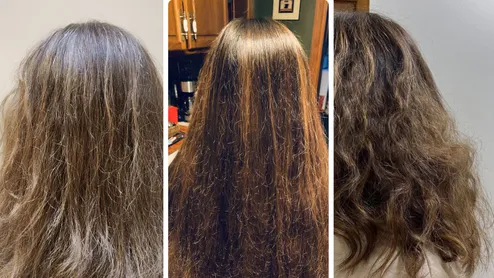
You have changed your shampoo twice. You oil your hair every Saturday night. Still, it feels rough, looks dull and breaks easily. Before you blame the product, look at what comes out of your tap. In most parts of Delhi NCR the water is hard, and that hardness slowly coats your hair, blocks moisture and makes every shampoo and oil less effective.
Why Is Delhi-NCR Water Considered Hard Water?
Hard water has a high amount of dissolved minerals, mostly calcium and magnesium. Much of Delhi-NCR depends on the Yamuna and groundwater, and both carry a heavy mineral load. In many homes, the TDS reading goes past 500 ppm, which is the acceptable limit set by BIS for drinking water. It differs from area to area, so your neighbourhood's water may be better or worse than someone else's.
ALSO READ- Silk Pillowcase Vs Cotton Pillowcase: Which One Should You Choose For Healthy Skin And Hair?
How Does Hard Water Affect Your Hair?
Those minerals do not rinse off fully. They settle on your strands and scalp, much like the white scale on your bathroom tap. Over time, hair turns dry, stiff and tangled. Shampoo does not lather well, so you end up using more of it. Colour fades faster, and hair looks flat because of the buildup.
Amidst all of this the scalp suffers too. The residue can leave it itchy and flaky, and that makes hair snap more easily near the roots.
Signs Your Hair Problem Could Be Linked To Water
Hair feels waxy or heavy: Even right after washing, your hair feels flat, sticky or like there is something still stuck on it.
Conditioner does not work: No matter how much conditioner or hair mask you use, your hair still feels dry. That's because hard water minerals leave a thin layer on your hair that does not let moisture go inside.
Hair feels rough and gets tangled: Your hair feels dry like straw, rough to touch, and gets tangled very easily. This happens because of mineral and chlorine build up.
Hair breaks in the middle: Your hair snaps easily while combing, and you see small broken pieces without the root. This is because your hair has lost its softness and become too dry.
Hair colour fades or turns brassy: If your hair is coloured or bleached, the colour fades fast or starts looking orange, dull or slightly greenish because of copper and chlorine in the water.
Itchy scalp and dandruff: The minerals and high pH of the water can block your scalp and irritate it, which makes your scalp itchy and flaky.
Hair feels better somewhere else: When you wash your hair at a different place like another city or at the gym, your hair suddenly feels softer and falls less. That's a clear sign your home water is hard.
Does Hard Water Really Cause Hair Fall?
Here is the tricky part. Hard water clearly makes hair brittle, and many people mistake that breakage for hair loss. Some dermatologists, however, say there is little proof that it changes how fast hair falls from the root. Their view is that it makes shedding look worse, while the real triggers are usually stress, low iron or vitamin levels, hormones, pollution and genetics.
So hard water may not be the only villain. But it can make every other hair problem harder to fix.
How To Protect Your Hair From Hard Water In Delhi-NCR?
1. Install Shower Filter
It is the easiest and cheapest fix. It costs much less than hair treatments and removes a lot of hardness from the water. If possible, get a water softener for your whole house. It helps with both hair and skin. If the tap water is very hard, do a final rinse with filtered or RO water. It makes a big difference.
2. Use Clarifying or Sulphate Free Shampoo
Use a sulphate free shampoo for regular washes. It is milder on your hair. Once in two weeks, you can also use a clarifying shampoo to clear all the mineral build up. Do not use it more than that because it can make your scalp dry.
Always use a good conditioner after shampoo and apply a hair mask once a week. Wash your hair with lukewarm water as hot water makes dryness worse.
3. Apple Cider Vinegar
Use a sulphate free shampoo for your regular washes, as it is much milder on your hair. Once every two weeks, use a clarifying shampoo to clear all the mineral build up, but do not use it more often than that because it can make your scalp dry. Always use a good conditioner after shampooing and apply a hair mask once a week to keep your hair soft and nourished.
When Should You See A Dermatologist?
If hair is coming out from the root in large amounts, your parting looks wider, or the shedding goes on for two to three months after you fix the water, get it checked. A doctor can test for iron, vitamin D and thyroid issues. Better water can help your hair, but it cannot treat what is going on inside the body.
(Image Credits: Pinterest)
Stay tuned to read more such stories on Her Zindagi.