
Tales Of Jhumkas: Origin Of Tamil Nadu's Temple Earrings And How They Took Over Fashion Runways
Temple of Jhumkas
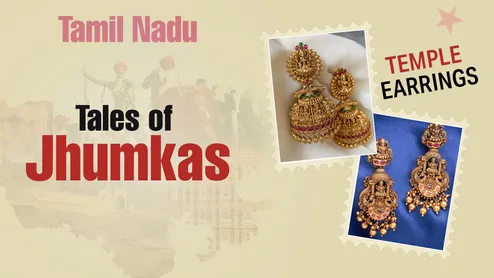
Walk into any South Indian wedding and you will spot them: bell-shaped gold jhumkas with ruby-red stones, swinging with every step. Temple jhumkas have been part of Tamil Nadu's jewellery story for centuries. They started inside sanctums, moved onto dance stages and now show up in Instagram reels. Here is how that journey happened.
Why Temple Jhumkas Were First Made for Deities?
Temple jewellery got its name because it was originally made to adorn the idols. In Tamil Nadu, deities were decked in gold ornaments, from crowns to earrings, during daily rituals and festivals. Royal patrons and temple trusts commissioned these pieces as offerings, and goldsmiths worked from a fixed set of motifs: lotus petals, peacocks, Lakshmi and mythical creatures like the yali. The earrings worn by women today borrow directly from these designs.
The Sacred Geometry Behind the Bell: What a Traditional Jimiki Symbolises
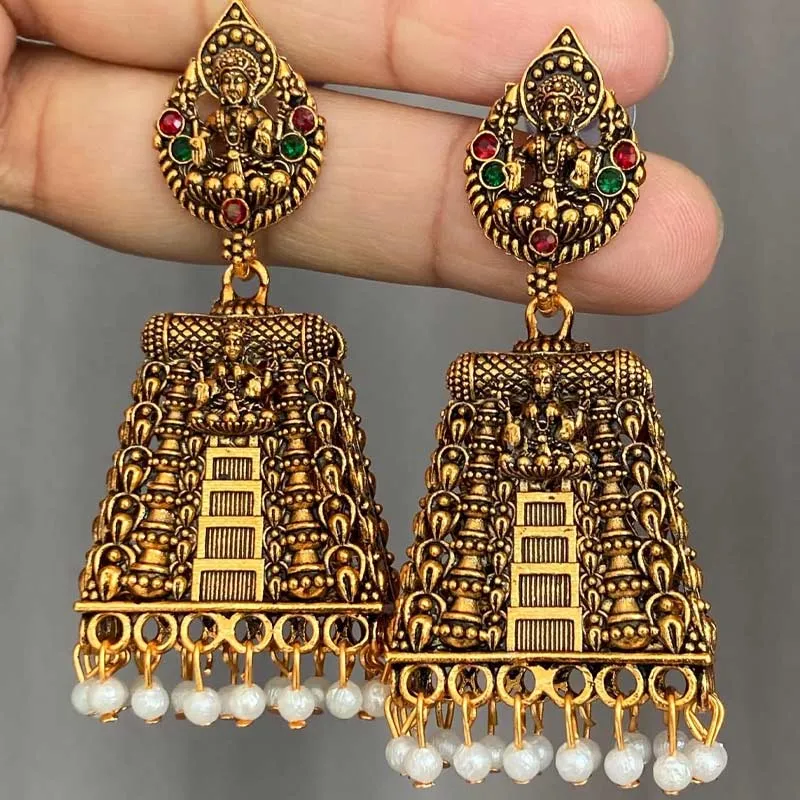
The jimiki, the classic bell-shaped earring, is built on a dome. Many people read the shape as a lotus bud or a temple bell, and both link back to ideas of purity and the divine. The structure is simple: a flat top often set with stones, a hollow dome below and small hanging pearls or beads along the rim. The symmetry is deliberate. Every petal and bead is placed to keep the design balanced, which is why a good temple jhumka looks heavy in detail but sits light on the ear.
ALSO READ- Tales of Jhumkas: How Kutch Mirror-Work Earrings Are Made And How To Spot Real Silver Over Fakes
How Bharatanatyam Dancers Brought Temple Jhumkas Into the Spotlight?
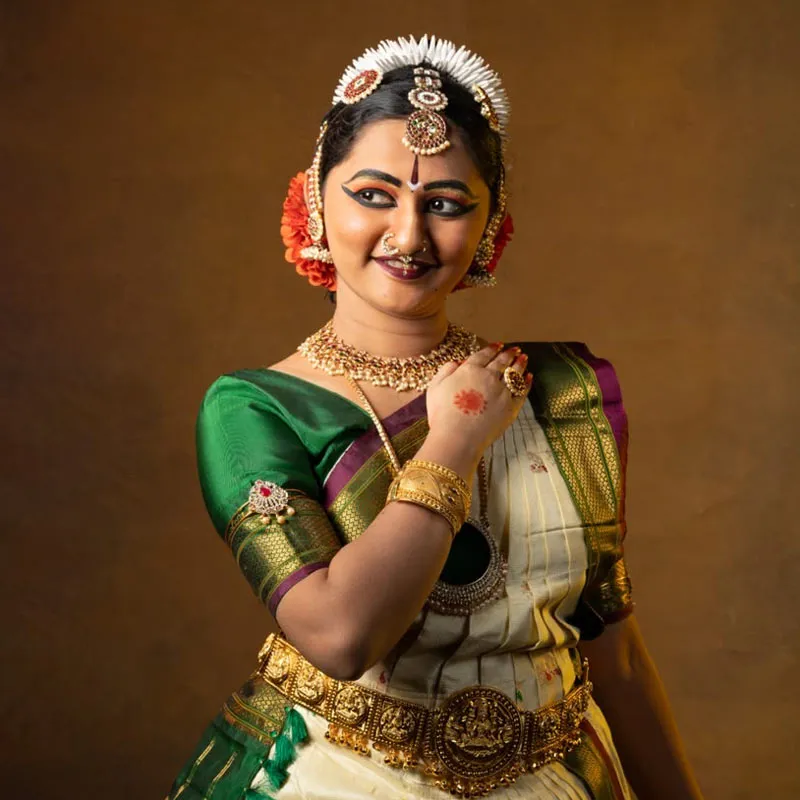
Bharatanatyam has its roots in temple traditions, so it makes sense that dancers carried temple jewellery out into the world. A dancer's costume is incomplete without it. The jhumkas also do a job on stage: they catch the light and frame the face, so expressions stay visible from the last row. As Bharatanatyam spread across India and abroad, audiences began noticing the jewellery, and jewellers started making lighter versions for everyday wear. Many brides now choose the same style for their wedding.
Kemp Stones, Nakshi Work, and Gold Leaf: Inside the Craft of Nagercoil Artisans
Nagercoil in Kanyakumari district is widely known as a hub for temple jewellery. Artisans here still make pieces by hand, often on a silver base with a gold finish, which keeps them wearable and affordable. Three things define the craft:
- Kemp stones: The deep red stones that give temple jewellery its signature look. Pearls and green stones usually sit beside them.
- Nakshi work: Fine engraved or embossed detailing that gives the metal its figures and patterns.
- Gold finish: A polish that gives the piece the glow of traditional gold work.
One earring can take days to finish, since each part is shaped, set and assembled separately.
ALSO READ- Tales Of Jhumkas: Why Kashmiri Brides Wear The Dejhoor; The Sacred Story And Modern Revival
How Gen Z Styles/Can Style Temple Jhumkas Today?
Temple jhumkas are no longer limited to silk sarees. Here is how younger buyers wear them:
- With a kurta set: Pair small or medium jhumkas with a plain cotton or linen kurta for college or office.
- With Indo-western outfits: A crop top with a long skirt or a saree-style drape looks sharp with one statement pair.
- Keep the rest minimal: If the earrings are the hero, skip the necklace or wear a thin chain.
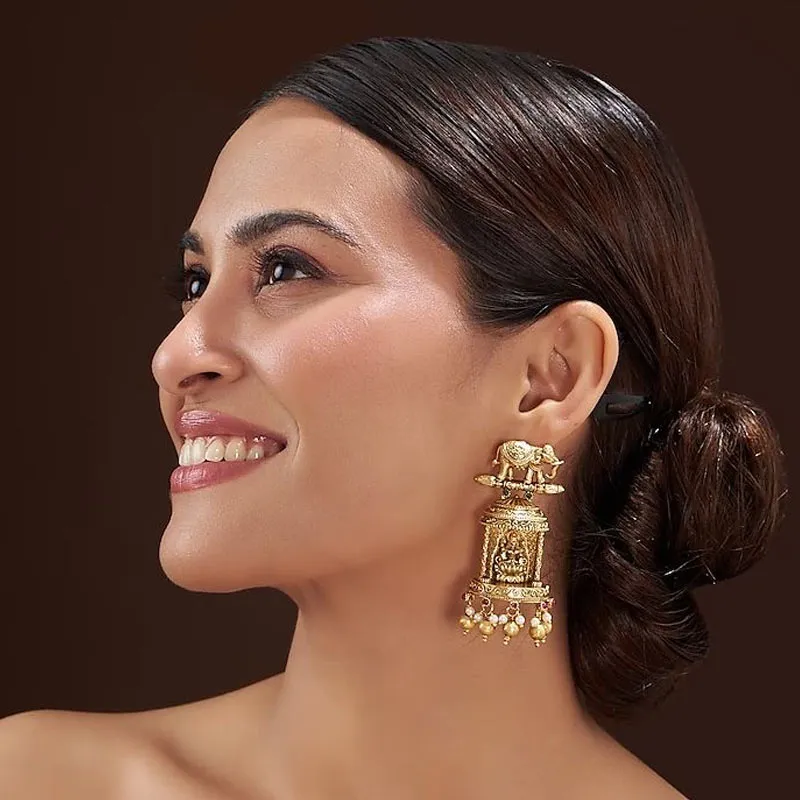
- Pull your hair back: A sleek bun or high ponytail shows off the jhumkas properly.
The Takeaway
Temple jhumkas carry faith, craft and dance history in a few grams of metal. Whether you wear them to a wedding or with a simple kurta on a Monday, you are wearing a design that has been refined for generations.
(Image Credits: Instagram/Pinterest)
To read more such stories, stay tuned to Her Zindagi.
- What is the origin of Jhumka earrings?
- Jhumkas originated in Tamil Nadu and South India as part of temple jewellery, worn by temple dancers and deities.
- Why are Jhumkas called temple jewellery?
- Because they were first made to adorn idols of gods and goddesses in South Indian temples.
- Are Jhumkas still in fashion today?
- Yes, Jhumkas have moved from temples to modern fashion.
Our aim is to provide accurate, safe and expert verified information through our articles and social media handles. The remedies, advice and tips mentioned here are for general information only. Please consult your expert before trying any kind of health, beauty, life hacks or astrology related tips. For any feedback or complaint, contact us at compliant_gro@jagrannewmedia.com.