
Village Courtyards To Fashion Labels: How Women Artisans Are Turning Embroidery Into Careers
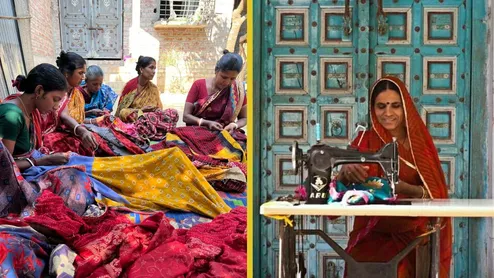
Women in India, especially in rural areas, have been taught embroidery as a means of household work. But that same needlework is their paycheck and their power. In many villages, women artisans who once stitched only for their families are now stitching for top fashion labels like Anita Dongre, FabIndia, and even international brands. Know how the skill of embroidery has turned into a full fledged career.
How Embroidery Has Turned Into A Career For Women Artisans:
If we take the example of Chikankari of Lucknow, it was once done by women sitting together under a neem tree and has now become a Rs 5000 crore industry. In Kutch, Gujarat, the vibrant Kutchi and Suf embroidery done by Rabari women is now on the ramps. A single hand-embroidered jacket that takes 45 days to make now sells for Rs 25,000, and the money goes directly to the artisan.
There are several success stories as well of women who changed the course of their lives with their skills. Pabiben Rabari invented a signature style called Hari Jari and launched the global online brand Pabi Bag, which now employs over 300 women. The brand also secured Rs 50 lakh investment from Shark Tank India.
ALSO READ- Planning A Baby? 4 Financial Realities Most Women Only Learn After Having A Child
Meanwhile, Razia Sultan from Jammu and Kashmir trained under the government-backed Karkhandar skill development scheme and further launched an independent crewel embroidery and chain-stitch unit.
These skills from every corner of India has made brands wake up, making slow fashion and handcrafted items trending for Diwali 2026. Customers want to know who made their clothes, and that story is what makes a Rs 10,000 kurta worth it.
ALSO READ- Why Are Women Still Missing From Senior Leadership? What The Numbers Say About Modern Career Growth
According to industry stats, over 56% of all handicraft artisans in India are female. Earlier, a woman got Rs 20-25 per day from a middleman. Non-profit organisations like SEWA Trade Facilitation Centre have also been beneficial for women, bridging the gap and connecting rural women producers to It bridges informal rural women producers directly with national and global markets, cutting out exploitative middlemen and helping artisans gain fair wages.
Now, through SEWA centres, a woman artisan can earn Rs 5,000 to Rs 10,000 per month and save in her own bank account.
From courtyards to clothing labels, Indian women artisans have turned age-old embroidery into thriving careers. Supported by non-profit organisations and conscious brands, they are earning, leading and inspiring. Their needlework is no longer just craft; it is financial freedom and identity.
(Image Credits: Pinterest)
To read more such stories, stay tuned to Her Zindagi.
Our aim is to provide accurate, safe and expert verified information through our articles and social media handles. The remedies, advice and tips mentioned here are for general information only. Please consult your expert before trying any kind of health, beauty, life hacks or astrology related tips. For any feedback or complaint, contact us at compliant_gro@jagrannewmedia.com.