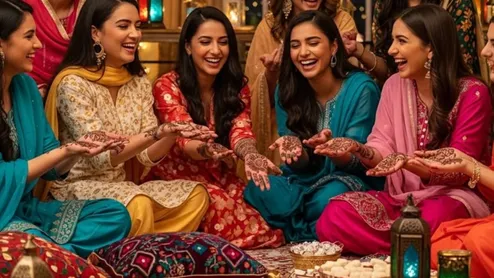
In an era defined by fast-paced corporate careers, financial independence, and progressive perspectives, the sight of educated, modern women observing rigorous day-long fasts on festivals like Karwa Chauth, Vat Savitri, Teej, or Chhath often draws curiosity. Observers frequently wonder why women who lead meetings, run businesses, and advocate for equality continue to adhere to ancient fasting rituals.
The reality is far more nuanced than simple compliance or outdated compulsion. For the modern urban woman, observing a festive fast is no longer about submission; it has transformed into a deliberate, conscious choice rooted in personal faith, shared relationships, emotional connection, and cultural identity.
1. From Obligations To Choices
Decades ago fasting was known as a strict social expectations, a women after marriiage was expected to pray and keep fast for the longevity of the male breadowner, framed as social conditioning.
Today, urban women participate on their own terms. When a woman chooses to wake up before sunrise for sargi or fast without food or water, it stems from individual agency. If she chooses to observe a vrat, it is because she wants to celebrate her relationship, not because someone told her she must. The shift from "I have to do this" to "I choose to do this" fundamentally changes the emotional weight of the ritual.
2. Mutual Ritual
One of the most visible changes in urban households is that festival fasting is no longer a one-sided endeavor.
Across metro cities, many husbands now fast alongside their wives as a gesture of solidarity, mutual respect, and affection. The evening ritual where couples share the first sip of water and a bite of food, has become an intentional date night, a pause in an otherwise frantic work routine.
3. Preserving Cultures In Fast-Paced Metro Cities
Living in high-rise apartments, surrounded by screens and remote work deadlines, can create a sense of cultural detachment. Festival rituals offer a tangible way to stay grounded.
Applying fresh henna, wearing traditional heirloom attire, and preparing customary dishes connect urban women to their mothers, grandmothers, and regional roots.
4. Spiritual Mindfulness
Beyond marital folklore, fasting across Indian traditions (upvas) was originally conceptualised as an act of physical and mental discipline.
In a world filled with constant digital noise and immediate consumer gratification, stepping back from food for a day can feel like a mindful reset. It encourages introspection, patience, and gratitude.
Modern Adaptations Of Fasting Over Rigid Dogma
Today's urban women also redefine the rules to prioritise health and practical reality:
1. Hydration First: Women managing demanding work schedules or health considerations (like diabetes, migraines, or acidity) often choose fruit-and-water fasts (phalahar) over strict waterless (nirjala) routines.
2. Redefining Intent: The prayers are often broadened beyond one individual, fasting becomes a prayer for the overall health, harmony, and peace of the entire home.
3. Celebration Over Stress: Instead of spending hours in the kitchen after a long day, modern families opt to celebrate post-fast dinners at favourite restaurants or cosy rooftop cafes, keeping the mood festive and restful.
The modern Indian women are not running away from the traditions or rituals but are only modernising the ways we can keep old traditions alive by tackling them in a smart way to not kill the routes and also manage living in tight sceduled work or routines. By filtering centuries-old customs through a contemporary lens of respect, mutual affection, and personal well-being, she proves that faith and independence can comfortably coexist under the same moonlit sky.
(Image credit: Pinterest)
Stay tuned to read more such stories in Her Zindagi.