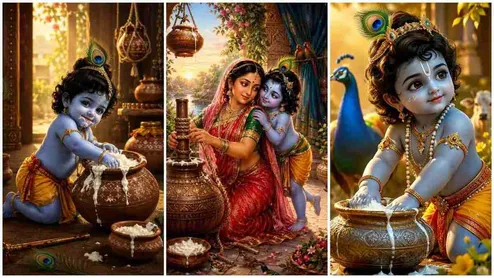
As the vibrant festival of Janmashtami approaches, the air is filled with love, devotion and the traditional prasad of Makhan Mishri. Many names have been attributed with Lord Krishna, Gopal, Nand Lal, Kanha, but the one that talks about Kanha’s childhood innocence is Makhan Chor, which translates to ‘butter thief’.
How Is The Makhan Chor Story Connected To Dahi Handi?
The origin of this title lies in the village of Gokul, where Lord Krishna spent his early years. Baby Krishna was notoriously fond of butter (makhan). But despite being the son of Nand Baba, a wealthy man, he would roam around with his friends, and would steal butter from Gopis.
The Gopis tried to save their earthen pot (matkis) and hang them near the ceiling. But Krishna and his friends would form a human pyramid in order to steal butter. Today we celebrate this human pyramid as Dahi Handi.
What Does Krishna’s Makhan Chor Leela Symbolise?
These stories seem to bring smiles on our faces, but it also holds a spiritual meaning. In Hindu philosophy, butter represents the soul or human heart. Butter is extracted from milk through the process of churning, in the same manner a good soul is extracted through spiritual healing. When Krishna steals butter, he aims towards touching the soul of his devotees, who have a pure soul.
Sharing of Makhan
After stealing the butter, Krishna would share his loot with his friends, and even the monkeys of the village. This teaches us the lesson of detachment of material possessions and also detachment from your title. The Gopis would complain to Yashoda, Krishna’s mother, but still long for Krishna to steal their butter, as it was seen as a divine blessing.
Conclusion
Lord Krishna’s title of Makhan Chor is a beautiful reminder of the accessible, and loving nature of the divine. This Janmashtami when you prepare your bhog, remember that ‘makhan chor’ is not just after the butter in your home, but the love in your hearts.
(Image Credit: Pinterest)
Stay tuned for more such stories at HerZindagi.