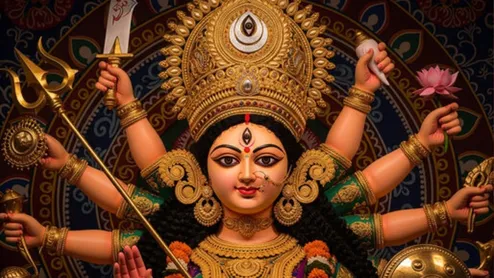
The face of Goddess Durga in Bengali sculpture is unique, characterised by almond-shaped eyes, a sweet smile, and an overall aura of divinity despite her being in the act of killing the demon Mahishasura. The interesting contrast of warrior energy (Mahishasuramardini) and maternal tenderness (Mata) is central to all Durga Puja festivities in Bengal. The reasons behind the use of this particular facial expression in Durga idols reveal many interesting aspects of sacred iconometry, ancient sculpting techniques, and the philosophy of Bengal.
Why Does Maa Durga Have A Distinct Facial Expression?
In Bengali tradition, Goddess Durga is worshipped not only as the Adishakti or supreme cosmic power, but also as the much-loved daughter, Uma or Gauri, who visits her mother’s place for five days every year. Durga’s facial expression is a balance of two different emotions:
Though armed with ten weapons in her ten hands, her face exudes peace and softness of love towards her children and her devotees.
Unlike war-like gods who become violent, the face of Mother Durga remains unperturbed because supreme righteousness removes evil effortlessly without anger or chaos.
How Artisans Create Maa Durga's Face
The making of the face of the goddess Durga requires careful craftsmanship according to sacred measurements:
The surface of a structure made up of bamboo and hay (kathamo) is covered by a paste of Punya Mati (sacred soil) with alluvial silt.
Sometimes the face of the goddess is separately shaped from fine clay and attached to her body; it is then polished smooth using jute fibres and water.
This divine process takes place on the sacred day of Mahalaya when master craftsmen undertake the act of drawing huge eyes (Patal-chokh) of the goddess in the form of freehand brushwork (Chokhu Daan).
The Role Of Kumartuli In Bengali Durga Idol Making
Situated near the banks of the Hooghly River in North Kolkata, Kumartuli is the traditional home of the sculptors of potters' families (the Kumbhakars), who maintain their ancient practice of making sculptural idols. For months before Durga Puja, Kumartuli transforms itself into an open-air sculpture studio where thousands of idols, both traditional (Ekchala idols) and contemporary, are made by sculptors. The sculptors of Kumartuli are internationally recognised for preserving the delicate facial features of their icons.
ALSO READ- Durga Puja 2026 Pandals In Delhi: Beyond CR Park; Top 7 Places For Authentic Bengali Celebrations
How Tradition Shapes The Facial Features Of Durga Idols
Traditional Bengali icons of Durga possess the following characteristics:
Large eyes resembling those of fish or lotus petals (Padmapatrakshi), prominent noses and sharp facial features, and golden or yellow skin tones dressed in solapith (pith) or zari garments.
Known for their soft and rounded appearance, full lips, and maternal tenderness.
Do Durga Idol Expressions Differ Across Regions?
Yes, idol expressions vary significantly depending on regional traditions and modern creative preferences:
They focus on a calm, motherly, ethereal expression that combines grace with regal authority.
It often highlights a bright, heroic warrior look with sharper, bolder facial features and intense eyes.
Modern theme pujas in Kolkata frequently experiment with artistic mediums, tribal aesthetics, or realistic human expressions while honouring traditional spiritual sanctity.
Conclusion
The peaceful expression on the face of Maa Durga is an art form which reflects spirituality. Crafted with great devotion by the craftsmen of Kumartuli, the peaceful expression provides peace to the devotees since love, justice, and grace will always triumph over chaos.
Image credits: Freepik
To read more such stories, stay tuned to Her Zindagi.