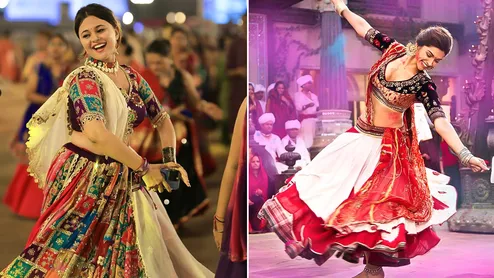
Navratri is a vibrant festival celebrated with immense enthusiasm across India, marked by colorful attire, energetic music, and traditional dance forms like Garba and Dandiya. Whether you are a beginner or looking to brush up on your skills before joining the circle, mastering the foundational steps is essential. With just 10 minutes of practice, you can easily learn the basic 2-Taali and 3-Taali Garba movements to dance with grace and confidence throughout the festivities.
Learn 2-Taali Garba Step This Navratri
The 2-Taali (two-clap) Garba step is one of the simplest and most traditional patterns in Garba dancing. It focuses on rhythmic swaying, side-to-side foot movement, and clapping twice to match the beat.
Step 1 (Footwork): Step your right foot out to the side, then bring your left foot next to it while performing your first clap.
Step 2 (Return Movement): Step your left foot back to the opposite side, bring your right foot to join it, and complete your second clap.
Step 3 (Spin & Rhythm): Add a slight bend at the knees and turn slightly as you move around the circle to keep in sync with fellow dancers.
Learn 3-Taali Garba Step This Navratri
The 3-Taali (three-clap) Garba step introduces a higher energy level with continuous spinning and extra clap transitions. It is popular when the dhol beat speeds up during peak Navratri nights.
Clap 1: Take a diagonal step forward with your right foot and clap low near waist height.
Clap 2: Step across with your left foot while bringing your hands up and clapping high.
Clap 3 & Turn: Spin on your toes while executing the third clap, resetting back into position for the next cycle.
Conclusion
Learning 2-Taali and 3-Taali Garba steps takes only a few minutes of practice, allowing anyone to join the celebration without hesitation. By focusing on your footwork rhythm and staying aligned with the beat of the music, you will be fully prepared to enjoy Garba nights with energy, style, and festive joy.
(Image Credits: Pinterest)
Stay tuned to read more such stories on Her Zindagi.