In most school rangoli competitions, ten children draw a lotus and only two win. The difference is rarely talent. It is usually a neat outline, a balanced design and a rangoli that is actually finished on time. From lotus and kalash to Lakshmi charan and peacock diya, check out 7 rangoli designs that can help you win your school competition this Diwali 2026.
7 Rangoli Designs For School Competition
Looking for Diwali 2026 rangoli ideas for a school competition? Here are 7 easy, eye-catching designs and tips on what judges really look for.
1. Lotus Rangoli With Diyas
A pink and maroon lotus with green leaves and a thin white border around each petal is the safest pick. The white outline makes the colours pop and hides small mistakes. Add four diyas around it and the design looks complete.
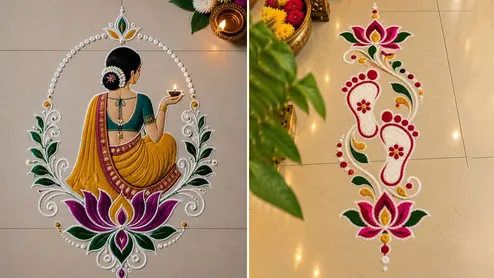
2. Woman Holding A Diya Rangoli
A woman seen from the back, in a mustard saree, holds a tiny diya with a lotus at her feet and a ring of white dots around her. It takes time, so practise the figure on paper first. Judges love a design that tells a story.
3. Kalash Rangoli With Mango Leaves
A red kalash with white dots, a patterned band at the neck and green mango leaves on top. It is simple, traditional and easy to read. Since a kalash stands for prosperity, it fits the Diwali theme perfectly.
4. Colourful Swirl Rangoli With A Rice Centre
Red, orange, yellow and blue curves spin outward from a round centre filled with rice grains. It looks bold even from far away. Mark the circle with a bowl first so the curves stay even.
5. Lakshmi Charan Rangoli
Two footprints in white and red, with a lotus at each end. It suits Diwali well, and the long, narrow shape works when the space given is a strip and not a square.
6. Ganesha Rangoli With Hibiscus And Lotus
A curved orange trunk, a red hibiscus, a brown kalash and a big pink lotus sit inside a white circle edged with dots. There is a lot going on, but the white background keeps it tidy. This one suits older students who can handle detail.
7. Peacock Diya Rangoli
A diya turns into a peacock, with a flame for a tail and a flower of red and green petals below. It joins two festive symbols into one, which is what makes a judge stop and look. Draw the outline lightly in chalk first.
What Judges Look For In A Rangoli Competition?
Marks are not only for the prettiest design. Judges usually check how neat the outline is, how well the colours sit together, whether the rangoli is finished and if it fits the theme. A simple lotus done well will beat a peacock left half done. Practise your design twice at home with a timer, fill the big colour areas first and keep borders and dots for the end. Carry extra colours too, because running out of green halfway is a real problem.
Conclusion
A winning rangoli is not the most complicated one. It is the one you can finish neatly, with colours that suit each other and one small detail that feels like yours. Pick a design you are confident about, practise it a few times and walk in calm. This Diwali, let the floor do the talking.
Image Credits: Pinterest
If you liked this story, then please share it. To read more such stories, stay connected to HerZindagi.