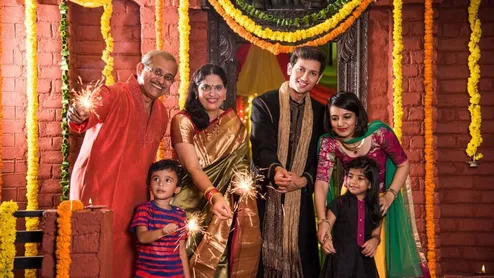
Diwali is not just a single night of lights; it is a five-day spiritual journey. In 2026, the Festival of Lights falls from Friday, 6th November to Wednesday, 11th November, with the main Lakshmi Puja on Sunday, 8th November. Dhanteras, Choti Diwali, and Bhai Dooj are among the five sacred days of Diwali. Each day marks a different victory: wealth, courage, light, nature, and love. Here is the complete significance, story, and traditions of the five sacred days.
What Are The Five Days of Diwali 2026?
Dhanteras, Naraka Chaturdashi (Choti Diwali), Lakshmi Puja (Diwali), Govardhan Puja, and Bhai Dooj are the five sacred days of the festival of lights. These days are celebrated with great love and exuberance all across the country.
Day |
Festival
Date in 2026
Day 1
Dhanteras
6th September 2026
Day 2
Choti Diwali (Naraka Chaturdashi)
7th September 2026
Day 3
Diwali / Lakshmi Puja
8th September 2026
Day 4
Govardhan Puja
10th September 2026
Day 5
Bhai Dooj
11th September 2026
Dhanteras 2026
Dhanteras, derived from ‘Dhan’ (wealth) and ‘Teras’ (13th day), officially opens Diwali. The 1st day of Diwali is dedicated to Lord Dhanvantari, the God of Ayurveda and health, who emerged from the Samudra Manthan carrying Amrit, and to Goddess Lakshmi and Lord Kuber, the treasurer of wealth. It is believed that cleaning the house and welcoming prosperity on this day invites Lakshmi to stay for the whole year.
Traditions Associated With Dhanteras
On Dhanteras, families perform puja in the evening for health and wealth. It is supremely auspicious to buy gold, silver, new utensils, or even steel. Even a small coin or copper vessel is considered a symbol of inviting fortune. On this day, a diya with sesame oil/mustard oil is lit outside the home facing south, dedicated to Yama, the God of Death, to ward off untimely death and negativity. This is the first lamp of Diwali.
Naraka Chaturdashi (Choti Diwali) 2026
The second day is the victory of light over darkness. On this day, two legends are celebrated. In North India, it marks Lord Krishna and Satyabhama’s victory over the demon Narakasura, who had imprisoned 16,000 women. In other regions, it celebrates Hanuman and Kali. It is a day of purification, reminding us that inner demons must be cleansed before divine light can enter.
Traditions Associated With Naraka Chaturdashi
The most important ritual is the pre-dawn oil bath before sunrise, with ubtan and scented oils. It is believed to remove poverty and sin. In West India, especially Gujarat, Goddess Kali is worshipped at midnight (Nishita Kaal) to remove the evil eye and black magic. On this day, homes are decorated with rangoli, and the first rows of diyas are lit, making it ‘Choti Diwali ’.
Diwali (Lakshmi Puja) 2026
This is the heart of all the five days. The darkest night of the year is turned into the brightest. On this Amavasya night, three great events converge. For most Hindus, it is the return of Lord Rama to Ayodhya after 14 years of exile and his victory over Ravana, welcomed by citizens lighting rows of diyas. For others, it is the birth anniversary of Goddess Lakshmi from the ocean churning, and the night she chooses to bless homes that are clean, bright, and welcoming. It symbolises the spiritual victory of knowledge over ignorance.
Traditions Associated With Diwali
On Diwali, Goddess Lakshmi (wealth), Lord Ganesha (wisdom), and Goddess Saraswati are worshipped together, along with account books and wealth. Every corner of the house is illuminated with earthen diyas, candles, and lights to guide Lakshmi inside and to keep Alakshmi (misfortune) away. Families share mithai like kaju katli and laddoos, exchange gifts, and burst fireworks to celebrate joy and community.
Govardhan Puja 2026
The day after Diwali shifts the focus from wealth to nature and gratitude. This day commemorates Lord Krishna’s lifting of the Govardhan Hill to protect the villagers of Vrindavan from Lord Indra’s wrathful rains. This day reminds us of the most important lesson Krishna taught us: that the hills, cows, and fields- nature itself should be worshipped, not just the Gods. It is a day to honour nature’s bounty and humility over arrogance. In Gujarat and Maharashtra, this day is also celebrated as Bestu Varas or Bali Pratipada: the Gujarati New Year and the victory of Vamana over King Bali.
Traditions Associated With Govardhan Puja
Families prepare 56 or 108 different vegetarian dishes (Chappan Bhog) and offer them as a mountain to Lord Krishna. Devotees make a small mound of cow dung representing Govardhan Hill, decorate it with flowers, and worship it, along with cows and bulls. In North India, many also celebrate Vishwakarma Puja, worshipping their instruments and machinery.
Bhai Dooj 2026
This day is similar to Raksha Bandhan; Bhai Dooj celebrates the eternal bond between a brother and sister. Legend says Yama, the God of Death, visited his sister Yamuna on this Dwitiya tithi. She welcomed him with aarti, tilak, and sweets, and Yama blessed her that any brother who receives tilak from his sister on this day will enjoy a long life. Another legend ties it to Krishna visiting Subhadra after defeating Narakasura.
Traditions Associated With Bhai Dooj
Sisters perform aarti, apply a vermillion tilak on their brother’s forehead, and pray for his long life and prosperity. Brothers, in return, give gifts and vow to protect them. Bhai Dooj marks the closing of Diwali festivities with a family meal, strengthening family harmony and togetherness.
The Vibrant Festival of Light Awaits!
Remember, Diwali 2026 is more than fireworks. It begins with cleansing and inviting health on Dhanteras, purifying the self on Choti Diwali, inviting light on Lakshmi Puja, expressing gratitude to nature on Govardhan Puja, and ends by celebrating human bonds on Bhai Dooj.
(Image Credits: Pinterest)
Stay tuned to read more such stories on HerZindagi.