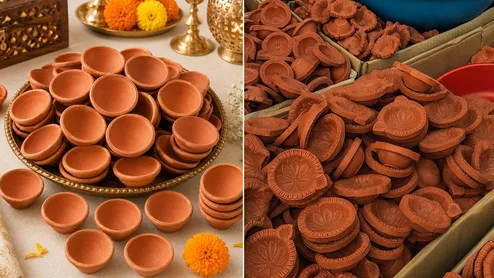
Lighting diyas is an integral part of Diwali celebrations in India. These diyas symbolise knowledge, hope, and the triumph of good over evil. This raises a question: should new diyas be used for every puja, or can old ones be reused? While modern convenience leads us to purchase new diyas every single time, traditional customs offer specific guidelines. You can use old diyas for puja after purification, but if your diya is broken or chipped, it needs to be recycled. You can convert it into compost and make a DIY soil mix.
As Diwali approaches, people in India prepare themselves to illuminate their houses with diyas. In Hinduism, Agni (fire) is regarded as a bridge between mortals and gods.
New Diya VS Old Diya: What Do Traditions And Vastu Say
The decision to buy a new diya or use an old one depends entirely on the material of the lamp.
Earthen Lamps (Mitti Diyas)
Earthen/ Clay Lamps represent the earthy element, i.e., the Prithvi Tatva. These lamps are porous; they absorb ghee and oil as they burn. Traditional Vedic guidelines suggest buying earthen lamps during Diwali to symbolise fresh beginnings and spiritual light. For daily puja, earthen lamps should be used after they are soaked, washed, and dried to remove leftover soil and dust.
Metal Diyas (Brass, Copper, Silver)
Metal Diyas are designed for long-term use. Brass and Silver lamps are considered pure and are lit throughout the year and across generations. However, they require strict routine cleaning and shudhikaran.
Diya |
Ideal Usage
Can be reused?
Purification Method For Puja
Clay/ Earthen Lamps
Diwali, Other Festivals
Yes
Soak in water, sun-dry, Ganga-jal sprinkle
Brass/ Bronze
Daily Home Mandir Rituals
Yes
Pitambari polish
Silver
Special Pujas
Yes
Soak in warm water, Ganga-jal rinse
Flour Lamps
Karwa Chauth, Laxmi Ganesh Puja
No
Fed to animals or birds, or immersed in water
How To Clean Old Diyas Before Giving Them A Makeover
Before lighting an old lamp for Diwali festivities, it must undergo physical cleaning and spiritual sanctification to restore its purity for puja, as per tradition.
Step 1: Physical De-Greasing
Leftover oil and stagnant buildup are the first step in cleaning diyas for puja. For earthen lamps, submerge them in a bucket of hot water with baking soda for 30 minutes. The baking soda will draw out the oil buildup from the porous clay pot.
For brass and metal lamps, soak the diyas in hot water mixed with lemon juice or Pitambari powder for 15-20 minutes. Then rub gently with a soft sponge without scratching the metal.
Step 2: Drying
You should never light a lamp that retains moisture, as wet wicks or damp surfaces produce smoke and sputter, which is considered inauspicious during the religious festivities. Place clean lamps under direct sunlight for 3-4 hours. Sunlight naturally sterilises and revitalises the material.
Step 3: Purification (Shuddhikaran)
Once a lamp is clean and dry, you should perform a brief purification before adding oil or ghee. Gently sprinkle ganga-jal or clean water mixed with turmeric over the lamps. Apply tilak on the rim of the lamps and, at the end, place some rice grains near the base of the lamp to offer respect to Goddess Lakshmi and Lord Ganesha.
When Should You Never Reuse A Diya?
While sustainability and reusability are the basis of Indian culture, when it comes to traditions and puja, there are certain restrictions when reusing a lamp is considered inauspicious.
- Cracked or Chipped Diyas: Never light chipped or cracked earthen lamps. Broken lamps are believed to disrupt the purity of the puja.
- Burnt/ Black Diyas: If an earthen lamp has turned completely black from prolonged burning, its clay structure has weakened and it should be returned back to soil.
3 Easy Ways To Give Old Diyas A Festive Makeover
Reusing old lamps aligns with the sustainability ethos of Indian homes. Here are some simple ways in which you can practice eco-friendly and eco-conscious worship.
- Compost Old Diyas: When earthen pots are no longer usable, crush them and mix gently with garden soil.
- Small Bowls: Wash and paint old diyas with acrylic paint. You can use them to keep kumkum, haldi etc.
- Mini Planters: Fill intact old diyas with soil, plant tiny succulents, mint, etc.
Conclusion
Diyas are a very important part of any religious ritual in Indian homes. The flame represents the removal of darkness, ignorance, and negativity, while it welcomes prosperity and divine energy into homes. Therefore, it is important to know all the rituals and traditions behind the use of diyas during celebrations such as Diwali.
(Image Credits: Pinterest)
Stay tuned to read more such stories on HerZindagi.