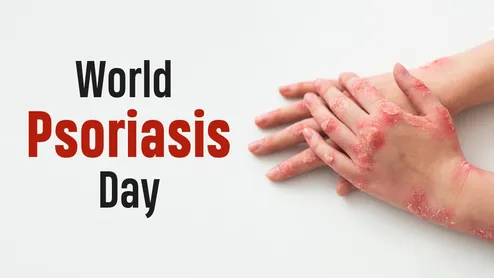
World Psoriasis Day is observed every year on October 29 to raise awareness of psoriasis, bust myths around it, and support millions of people living with the condition. This year's theme reminds us of a powerful message - See The Person, Not Just The Skin Condition.
What Is Psoriasis?
Sharing her expert insight, Dr. Rinky Kapoor, Dermatologist and Co-Founder of The Esthetic Clinics, explains: "Psoriasis is a long-term condition in which the immune system causes skin clls to grow faster than usual. This results in red, scaly patches that commonly appear on the scalp, elbows, and knees, but can develop on other parts of the body too." It is an autoimmune condition, not an allergy or infection, and its severity varies from person to person.
Myth vs Reality: Is Psoriasis Contagious?
One of the biggest misconceptions that fuels stigma is that psoriasis can spread by touch.
A common misconception about psoriasis is that it can spread from one person to another. This is not true. Psoriasis is not contagious and cannot be passed on through touch or by sharing everyday items.
However, because the patches are visible, people often face awkward stares, questions, or avoidance. "The visible patches can sometimes lead to stigma, as others may misunderstand the condition or assume it is contagious. This can leave people with psoriasis feeling judged, embarrassed, or uncomfortable in social situations," she adds.
Beyond The Skin: More Than Just Patches
Psoriasis is not just skin-deep. Dr. Kapoor notes that in some people, it may be linked to other health problems, including psoriatic arthritis, which causes joint pain, swelling, and stiffness. Early diagnosis is crucial to prevent internal progression.
Treatment: New Hope With Modern Therapies
While there is no permanent cure yet, effective management is possible. "Although there is no cure for psoriasis, treatments can help control its symptoms. If skin patches, redness, or scaling persist, it is best to consult a dermatologist rather than trying to diagnose or treat the condition on your own," says Dr. Rinky Kapoor.
Newer therapies like biologics are a blessing for psoriasis patients. The clearance rates are very high even in severe psoriasis, and they can also prevent internal progression of the disease. They can significantly improve the quality of life of patients but must be taken under medical supervision. One must consult their Dermatologist for these latest available treatments.
The Takeaway This World Psoriasis Day
Psoriasis is common, manageable, and non-contagious. What patients need most is empathy, not sympathy or avoidance. If you or someone you know has persistent red, scaly patches, don't self-diagnose. Consult a qualified dermatologist and explore the latest treatment options available. This World Psoriasis Day, let's pledge to see the person, not just the skin.
(Image Credits: Magnific)
Stay tuned to read more such stories on HerZindagi.