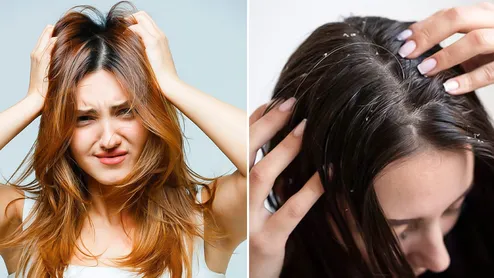
Winter is here, and so is that embarrassing moment - white flakes on your favourite black sweater. Your first instinct? It must be dandruff. You immediately switch to a strong anti-dandruff shampoo. But what if it's not dandruff at all, but just a dry scalp? Dermatologist Dr Nirupama Parwanda, Founder of Zolie Skin Clinic, says, ‘Dry Scalp and Dandruff, both conditions look similar, but treating them the same way can leave your scalp itchier, flakier, and more irritated than before’. She suggests that mistakes cause these conditions and what changes you need to add to your hair schedule.
Understanding the Core Differences: Dry Scalp vs. Dandruff
To understand what your scalp is going through, you need to understand the major difference between Dry scalp and dandruff.
Dry Scalp
Your scalp loses its moisture in the winter season, much like the skin on your hands. A dry scalp feels tight, especially right after washing. The flakes are small, fine, and white. As the weather gets colder, the itching gets worse. Using harsh shampoos, taking long hot showers, and using indoor heaters make the condition even worse.
Dandruff
Dandruff is different than a dry scalp. It is often linked to an imbalance involving a naturally occurring yeast on the scalp, along with oil production and skin sensitivity. Dandruff flakes are usually larger, may look slightly yellowish or oily, and the scalp itself can feel greasy or irritated rather than tight.
The tricky part is that both cause visible flakes and itching, so the signs are not the most definitive for getting the right treatment.
Treatment Mistakes to Avoid
Treating both conditions with the same products and by adopting the same habits is exactly where many people go wrong. Here are two mistakes that you should avoid when you are dealing with Dry scalp and dandruff.
Mistake 1: Over-washing Using A Strong Shampoo
When flakes appear, many start washing their hair daily with a strong anti-dandruff formula. If you actually have dandruff, ingredients like ketoconazole can help. But if you have a dry, sensitive scalp, frequent washing and strong formulations can strip away natural oils and increase dryness and irritation.
Mistake 2: Excessive Oiling
Oiling is a common winter ritual. While certain oils can help seal in moisture for a dry scalp, applying excessive oil does not fix dandruff. In fact, for some people, excess oil can feed the yeast that contributes to dandruff, making flakes worse.
In short, anti-dandruff treatment dries out a dry scalp, and oiling does not cure dandruff. Using the wrong solution aggravates the actual problem. So, what should you do?
Effective Habits And Treatments For A Healthy Scalp This Winter
1. Wash smarter, not harder: Use lukewarm water instead of very hot water. Avoid scratching or scrubbing your scalp aggressively with nails.
2. Choose according to cause: If dryness seems to be the issue, switch to a gentle, hydrating, sulphate-free shampoo and see if your scalp feels more comfortable. If dandruff persists, use a suitable anti-dandruff product as per its instructions, and don't keep switching between multiple treatments at once.
3. Don't ignore red flags: Not every flaky scalp is just dryness or dandruff. If you have persistent itching, redness, thick scales, a burning sensation, or noticeable hair loss, it is time to see a dermatologist.
The Bottom Line
Winter hair care doesn't mean you need a new product every time your scalp changes. The better first step is to understand what your scalp is trying to tell you. Flakes may be the visible problem, but choosing the right treatment starts with finding the actual cause.
(Image Credits: Magnific)
Stay tuned to read more such stories on HerZindagi.