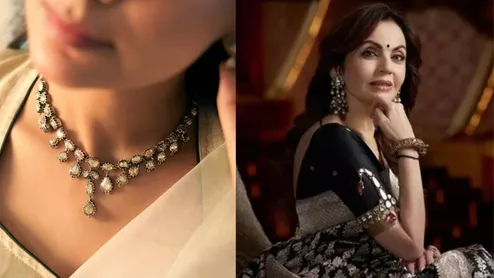
In an era where machine-made jewellery has taken over the market, we often forget to cherish and praise the handcrafted techniques of making jewellery that has been a part of Indian heritage from past centuries. One of those techniques is Pachchikam jewellery, which is a time-consuming handcrafted technique where silver and gemstones are used.
We bring you 'The Jewellery Archive' series, where we will share the fascinating stories of Indian jewellery-making techniques from different regions of the country. In today’s segment, we will explore the art behind Pachchikam jewellery.
What is Pachchikam Jewellery?
Pachchikam jewellery is an ancient, fragile style of handcrafted ornament that uses a silver base and closed-back bezel settings to hold uncut gems. Originating centuries ago in the Kutch region of Gujarat, India, the word comes from 'pachchigar', which means goldsmith.
This craft style of creating jewellery gives a soft, platinum-like metallic shimmer look with a slightly raw, delicate, and unfinished appearance.
When did Pachchikam jewellery craft originate?
This intricate craft originated rom Kutch around the 16th century, when the artists from this region were famous for their fine work and delicacy. It was not just a means of adornment but it showcased the prestige and royalty of that era. Slowly, pachchikam was carried forward across generations and became a heritage, with artisans keeping this technique alive.
What is the significance of Pachchikam craft for making jewellery?
As Pachchikam jewellery is carefully handcrafted, this has kept the art of intricate detailing by using hands alive and makes the pieces even more special. This process is also time-consuming, which is why every jewellery piece has its own importance.
Artisans carefully prepare the silver frame, press it, and then fit the beautiful stones into it. Because of this technique, every piece has a different and unique look with a special texture. Not only does it look beautiful, but it also remains durable for a long time.
What are the materials used in Pachchikam jewellery?
Pachchikam technique mainly uses two things: silver and colourful stones. The soft nature of silver allows artists to create beautiful designs while also including beautiful gemstones like Diamond, Emerald, Ruby, turquoise, and Amethyst. Glass stones are more often used for this technique.
What is the fascinating history of Pachchikam jewellery?
The exact timeline of Pachchikam jewellery has not been revealed, but it is evident that this was only made for royal families and nobles. It was considered a symbol of their grandeur and regalness, with kings and queens adorning them during important ceremonies.
However, this technique found new popularity during the 16th century, with European royals taking inspiration from its designs to get their own jewellery made.
What is the usual weight and size of Pachchikam jewellery?
The weight of Pachchikam jewellery is usually between 50 and 100 grams, with larger neck pieces usually being heavier. Rings, earrings, and small pendants made using the Pachchikam jewellery technique are light and suitable for daily wear.
ALSO READ- What Is Tarakashi? Inside Odisha’s 500-Year-Old Craft Turning Pure Silver into Fine Lace Jewellery
How has Pachchikam jewellery remained amid modern trend?
Pachchikam jewellery is experiencing a notable resurgence over the past few years, with people wanting to preserve old crafts and techniques, and also due to the popularity of vintage pieces.
Celebrities like Nita Ambani have also played a pivotal role in bringing back these designs and making them more popular. At an event, she wore a beautiful gem-studded bajuband, which once adorned Mughal Emperor Shah Jahan’s royal turban. It also had the use of the Pachikakaam technique and costs around 495000 USD.
Conclusion:
Not just Pachchikam, India has several jewellery-making techniques from different regions that have been passed down through generations. Pachchikam is more than just a piece of jewellery; it is also a living heritage of Kutch's soil and the story of every artisan who has worked on this technique across centuries.
(Image Credits: Instagram)
To read more such stories, stay tuned oto Her Zindagi.