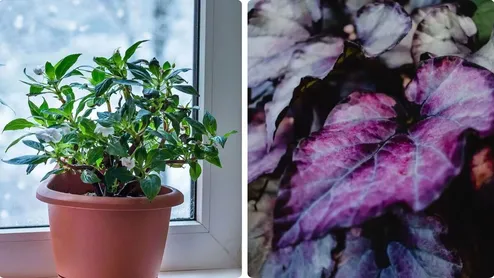
Have you wondered why your green plants turned purple during winters? Don’t panic. This is a very common winter phenomenon in plants, and no, your plant is not dying. It is just reacting to cold, light and nutrient changes.
When temperatures drop, plants slow down their growth and change how they absorb nutrients. This is the reason leaves, stems, and even veins start to look purple, reddish, or maroon. Sometimes it's natural, sometimes it's a warning sign. Here are 6 possible reasons why plant leaves turn purple in winter:
1.Cold Stress
This is the number one reason why leaves turn purple during winters. Most indoor and outdoor plants thrive in temperatures ranging from 12-15°C, especially at night, the plant gets stressed. To protect itself, it produces a pigment called anthocyanin, which makes leaves look purple.
Plants kept near windows, balconies, or doors are most affected.
What Can You Do: Move your plants away from windows, and keep them in a warmer environment, away from direct light and cold.
2. Phosphorus Deficiency
Purple leaves are a classic sign of phosphorus deficiency. In winter, cold soil makes it hard for roots to absorb phosphorus, even if the soil has enough. This is why lower and older leaves turn purple first, while new leaves stay green.
What Can You Do: Don’t overfertilise during winters. Add a balanced, phosphorus-rich fertiliser in a very small quantity, only if the soil is not too cold and wet.
3. Lack of Sunlight
In winter days are shorter, and sunlight is limited. When plants do not get enough sunlight, they produce more anthocyanin to capture light better. This is common in succulents, coleus and crotons.
What Can You Do: Place your plant near a bright window that gets morning sun for 2-3 hours. Rotate the pot every 3-4 days.
4. Overwatering in Winters
We often continue offering water to plants in the same manner we do in summers. This is one of the biggest mistakes one can make. During winters, plants drink very little water. Wet soil and cold makes the root weak. Roots stop working and are unable to carry nutrients, thus leaves turn purple, yellow and droopy.
What Can You Do: Check the soil with your finger before watering the plant. Water only when 1-2 inches of the top feels dry. Also remember to make sure that your plant has drainage holes.
5. Natural Winter Colour Change
Some plants are meant to turn purple in winter. Succulents like Echeveria, Jade Plant, Purple Heart, and Coleus naturally change colour in cold weather. It's their way of surviving winter and it actually looks beautiful. If the plant is firm, growing slowly, and not dropping too many leaves, it's completely normal.
What Can You Do: Just enjoy the colour. Don't try to make it green again with extra fertiliser.
6. Stress From Sudden Temperature Change
Shifting a plant suddenly from a warm room to a cold balcony, or vice versa, can shock it. This temperature shock damages cells and causes purple spots, purple edges, and leaf curling.
What Can You Do: Acclimatise plants slowly. Don't place them near heaters, AC vents, or open windows at night.
When Should You Worry?
Your plant needs immediate attention if you see:
- Purple leaves + soft, mushy stems
- Leaves falling in large numbers
- Black spots or foul smell from soil
That can mean root rot or severe frost damage.
How To Save Your Plant This Winter
- Keep plants in 15-25°C
- Give morning sunlight
- Water less, but don't let soil become bone dry
- Keep away from cold windows and heaters
- Don't repot or heavily prune in peak winter
Conclusion
Purple leaves in winter are mostly a sign of cold stress, low light, or phosphorus deficiency - not death. With a little warmth, correct watering, and patience, your plant will turn green again as soon as spring arrives.
Stay tuned for such stories on HerZindagi.