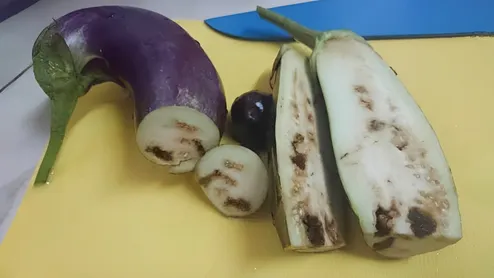
The vegetable brinjal, or the eggplant, is one of the most useful cooking items used by Indian housewives for everything from making the delicious baingan bharta to preparing different types of curries. But having to cut a perfectly good eggplant and suddenly seeing minuscule little larvae in it is not very enjoyable at all. Eggplant fruit and shoot borers usually lay their eggs on the flower buds and small fruits, resulting in caterpillars that bore through the vegetable. The best part is that you need not make guesses about how clean your brinjal is!
Does Your Brinjal Have Worms? How to Spot Them Before Cooking
1. Inspect the Skin for Tiny Pinholes
The most reliable sign of a caterpillar inside an eggplant is an exit or entry hole:
Look for Needle-Prick Holes: Closely check the smooth purple skin for minute brown or black specks resembling tiny pinpricks. These indicate where the borer larva entered or exited.
Check for Frass: Look for tiny grains resembling sawdust near any hole. This is insect waste (frass) pushed out as the larva feeds inside.
2. Check the Calyx and Stem
Insects frequently enter near the green cap (calyx) where the stem meets the fruit:
Fresh, Green Crown: Healthy brinjals have vibrant, tight green caps. If the calyx looks dry, withered, or shows dark browning around the base, caterpillars may have tunnelled beneath it.
Firm Attachment: Gently pull back the leaves of the cap; if the area feels soft or discoloured, choose a different vegetable.
ALSO READ- Dull Brass And Silver Pooja Utensils? 6 Simple Kitchen Hacks To Make Them Shine Like New For Diwali
3. Assess Weight and Firmness
Larvae feed by hollowing out the pulp from the inside, which alters the fruit's physical feel:
The Squeeze Test: A fresh, insect-free eggplant should feel uniformly firm with slight springiness. Any localised mushy or sunken spots often indicate internal decay caused by larval tunnelling.
Weight Check: An eggplant should feel heavy for its size. An unusually lightweight brinjal may have a hollowed, dried-out interior.
4. Slit and Soak Method
If you are cooking whole brinjals (for bharta or stuffed bharwan baingan), never roast or cook them without inspecting the inner flesh:
Make Deep Cross Slits: Cut 3 to 4 vertical slits along the body down to the core before cooking. Open the flaps slightly to check the centre for brown discolouration or moving caterpillars.
Turmeric and Salt Water Soak: If cutting the eggplant into cubes, submerge the pieces in a bowl of warm water mixed with 1 teaspoon of salt and 1/2 teaspoon of turmeric for 10 to 15 minutes. This draws out any hidden insects and prevents the vegetable flesh from browning.
Image credits: Freepik
To read more such stories, stay tuned to Her Zindagi.