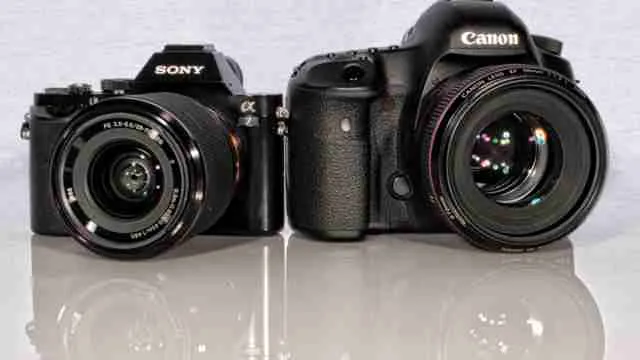
If you have used both, the first thing you notice is not the photo, it’s how they feel before you even click. With a DSLR, you bring it to your eye and it just shows you the scene as it is. No brightness change, no colour shift, just straight view through the lens. It feels very stable. With a mirrorless camera, the moment you switch it on, you are looking at a live image made by the sensor. So if you change exposure, you see it immediately. If the scene is dark, the view adjusts. That sounds helpful, and it is, but it also makes the experience a bit different from that direct feel of a DSLR camera. Over time, this changes how you shoot. One feels like you are looking at the scene first and then taking the photo, the other feels like the camera is already showing you the result before you take it.
Mirrorless Camera: What Actually Happens Inside And Why It Feels Different
A mirrorless camera is built in a simpler but more active way. Light comes through the lens and goes straight to the sensor all the time. There is no mirror stopping or redirecting it. Because of that, the camera is always seeing the scene and showing it to you on a screen or inside the viewfinder. What you see is not just the scene, it’s the camera’s version of it. So if you change brightness, colour, or settings, you see that change before clicking. That is why it feels more connected to the final result. Focus also works directly on the sensor, covering more of the frame and tracking faces or eyes more easily. At the same time, this system needs power to keep running, which is why battery drains faster compared to DSLR.
What you actually notice while using it:
- You see the final look before clicking, not after
- Focus sticks better to faces, eyes, and moving subjects
- No mirror means less vibration and quieter shooting
- Body feels smaller and lighter in hand
- Works better for video because sensor is always active
- Screen/viewfinder shows extra info like exposure and focus guides
Brands that have pushed mirrorless properly
- Sony comes with very strong autofocus, especially eye tracking that feels locked
- Canon is fortified with natural colours and reliable focus behaviour
- Nikon improves subject tracking and stable performance
- Fujifilm is for film-like colour profiles that reduce editing work
- Panasonic is strong when it comes to video control and stable output
This is why mirrorless is not just DSLR without mirror. The whole way it sees, focuses, and shows the scene is different, and that’s what changes the shooting experience.
Sony Alpha ILCE-7M3M with All new Lens FE 28-70mm F3.5-5.6 OSS II | Full-Frame Hybrid Camera 24.2MP Interchangeable-Lens Mirrorless Camera|4K HDR Video Recording - Black
Rs. 136490
Buy NowCanon EOS R10 24.2MP RF-S18-150 F/3.5-6.3 IS STM Mirrorless Camera (APS-C Sendor, 4K UHD Video) for Wedding & Content Creators - Black
Rs. 102918
Buy NowNikon Z5 II | Full-Frame mirrorless Stills/Video Camera | Nikon USA Model
Rs. 136190
Buy NowFujifilm X-T50 40 MP APS-C X-Trans Sensor|Retro Style mirrorless Camera|4k/6.2k vlogging|High Speed Recording FHD 240fps|Advance AF with 16-50mm Optical Zoom Lens f/2.8-4.8 - Charcoal
Rs. 180500
Buy NowPanasonic Lumix S5 FullFrame Mirrorless Camera with Lumix S 20-60mm Lens (DC-S5K), 3X Optical Zoom, Black
Rs. 113499
Buy NowSony Alpha ILCE-6700K (Previously ILCE-6700L) with Upgraded SEL16-50 (Ver 2) Power Zoom Lens | APS-C Interchangeable-Lens Mirrorless Camera |26.0 MP 4K 60p Recording - Black
Rs. 130990
Buy NowNikon Z50 Mirrorless Camera, 20.9 MP with Z DX 16-50Mm F/3.5-6.3 VR & Z DX 50-250Mm F/4.5-6.3 VR Lens
Rs. 91990
Buy NowLeica SL2-S Mirrorless Digital Camera with Vario-Elmarit-SL 24-70 f/2.8 ASPH Lens (Bundle)
Rs. 1163855
Buy NowPanasonic LUMIX S5IIX Mirrorless Camera, 24.2MP Full Frame with Phase Hybrid AF, New Active I.S. Technology, 5.8K Pro-Res, RAW Over HDMI, IP Streaming - DC-S5M2XBODY
Rs. 443033
Buy NowCanon EOS R6 Mark II 24.2 MP Mirrorless Camera-Body Only (Black)
Rs. 149990
Buy NowDSLR Camera: What’s Going On Inside And Why It Still Feels So Direct
A DSLR cameras works in a more mechanical way, and that’s what gives it that real feel. In this type of camera, the light comes through the lens, hits a mirror, and gets pushed up into the viewfinder. So when you look through it, you are not seeing a screen or processed image, you are seeing the actual scene through glass. Nothing is being adjusted or corrected in that moment. When you press the shutter, that mirror flips up, light reaches the sensor, and the photo is taken. Then the mirror drops back again. This whole movement happens very fast, but it’s always there. Because of this system, the camera is not constantly using the sensor, which helps battery last longer. Focus works through a separate system, which feels fast in normal use, but not as spread out across the frame as mirrorless.
What you actually notice while using it:
- Viewfinder shows the real scene, not a screen version
- No exposure preview, you adjust and then check after
- Battery lasts longer since sensor is not always active
- Slight sound and movement when clicking due to mirror
- Feels more stable when shooting for long hours
- Focus is strong in the centre, less coverage on edges
Brands that have built strong DSLR systems
- Canon is consistent in terms of colours and easy handling, works well for portraits
- Nikon comes with sharp image output and strong dynamic range
- Sony cameras is fortified with earlier DSLR/SLT systems with fast shooting
This is why DSLR still feels different. It’s less about screens and more about seeing the scene as it is, then shaping it through settings and timing.
Nikon D7500 DX-Format Digital SLR Body 20.9 MP with 16 GB Capacity (Black)
Rs. 65190
Buy NowNikon D780 DSLR Body with 24-120mm VR Lens, 3X Optical Zoom, Black
Rs. 155999
Buy NowSony Alpha ILCE-7RM4A Full-Frame 61.0MP Mirrorless Digital SLR Camera Body | 4K Full Frame | Real-Ti
Rs. 406980
Buy NowDigital Camera for Photography, DSLR Camera 5K 64MP 30FPS HDR with 3.2 Inch 180° Flip Screen, 12X Optical Zoom, CMOS Sensor, Autofocus Vlogging Camera
Rs. 44824
Buy Now50MP 4K High Definition Compact DSLR Camera 16X Digital Zoom 2.4 Inch Screen Anti Shake Selfie Camera for Photography Enthusiasts (No Memory Card)
Rs. 7489
Buy NowKodak AZ405BK PIXPRO Astro Zoom 20MP Digital Camera 40X Optical Zoom 24mm Bundle with Lexar 32GB UHS-I SDHC Memory Card and Deco Gear Camera Bag, Lens Blower, Lens Pen, 12inch Tripod & More
Rs. 73070
Buy NowMirrorless vs DSLR: What Actually Feels Different When You Use Them
Both can give similar photos, but the way they show the scene, handle focus, and respond while shooting creates a different feel in real use. That’s where the real difference shows up.
|
Aspect |
Mirrorless Camera |
DSLR Camera |
|
How you see the scene |
Screen or electronic viewfinder showing live image from sensor |
Optical view through lens using mirror, feels natural and direct |
|
Before taking a photo |
You can see brightness and changes before clicking |
You only see real scene, final result shows after clicking |
|
Focus behaviour |
Covers more of the frame, better at tracking faces/eyes |
Strong in centre, less spread across full frame |
|
Body and design |
More compact, fewer moving parts |
Slightly bigger due to mirror system |
|
Shooting feel |
Feels more connected to final result |
Feels more like observing first, then capturing |
|
Battery usage |
Drains faster because sensor and screen stay active |
Lasts longer since sensor is not always in use |
|
Sound and movement |
Mostly quiet, very little movement |
Noticeable click and slight movement from mirror |
Conclusion
In the end, both are doing the same job. You can take the same kind of photo from either one if you know what you’re doing. The difference is not in the photo, it’s in the process. A DSLR lets you look at the scene and figure things out after you click. A mirrorless camera shows you things changing before you take the shot. Some people like that control, some prefer the simpler feel. After a point, it’s less about which one is better and more about which one you get used to.
Read More: 5 Fujifilm Cameras That Focus More on Experience Than Just Specs on Paper
These 5 Mirrorless Full Frame Cameras Are Quietly Replacing DSLRs for Everyday Shooting
Do Canon Cameras Really Improve Photo Quality or Is It Mostly Skill?
Disclaimer: At Her Zindagi Your Picks, we prioritize providing up-to-date information on the latest trending commodities and goods. Links in this article are affiliate links. Please note that our product recommendations are based on independent research and analysis however, Her Zindagi Your Picks shall not be held liable for any claims, damages, or disputes arising under applicable laws, including the Consumer Protection Act, 2019. Any issues regarding product quality, delivery, or warranties must be directed to the respective manufacturer or seller. Furthermore, the products featured in this article are organized for reader convenience and are listed in no particular order of priority or ranking.