You dont really get a second chance in wildlife photography. A bird lifts off, a deer reacts, and it’s over before you even think about settings. That’s why the mirrorless camera matters in a very practical way here. It has to react with you, not after you. Sony cameras usually feel very sticky with focus. Once they lock on to an eye or subject, they tend to stay there, even when the movement gets messy. Canon feels a bit different. The focus is smooth and the output looks natural straight away, which helps when light keeps shifting between shadows and open areas. Nikon has quietly improved in this space, especially in tracking subjects moving across the frame without sudden drops. Speed also plays a role, but not just in numbers. Burst shooting only helps if the camera can keep going without slowing down, and that’s where buffer and processing start showing their difference. Some newer models also handle sensor readout better, so fast movement looks cleaner without weird distortion. Add weather sealing and a comfortable grip into the mix, and you start understanding what actually helps when you’re out there waiting for that one moment.
What Actually Matters in a Mirrorless Camera for Wildlife Photography?
Autofocus that stays, not just locks once: In wildlife, focus needs to follow movement, not just find it. Good systems read patterns like how a bird changes direction mid-air and keep tracking instead of jumping to the background.
Real burst performance, not just numbers: High fps looks impressive, but what matters is how long it holds that speed. A camera that keeps shooting without freezing or slowing down gives you a full action sequence, not broken frames.
Sensor readout speed and distortion control: Fast subjects can bend or stretch in photos if the sensor reads slowly. Cameras with faster readout handle wings, running legs, and sudden motion much cleaner.
Viewfinder with no lag during action: Some cameras blackout or stutter while shooting bursts. A smooth live view makes it easier to follow erratic movement, especially when tracking birds in flight.
Lens ecosystem from top camera brands: Wildlife needs reach. Systems from top camera brands matter because they offer reliable telephoto lenses that actually work well with tracking and stabilisation.
Low light handling that keeps detail usable: Early mornings and late evenings are common for wildlife. The camera should manage noise well so details like fur or feathers don’t break apart at higher ISO.
Handling and balance during long shoots: A solid grip, well-placed buttons, and balanced weight help more than expected. Wildlife often means waiting for hours, and comfort directly affects how steady you shoot.
Practical value, even in a budget camera: Not every setup has to be expensive. A well-tuned affordable camera with decent autofocus and stable performance can still handle wildlife if you understand its limits.
Understanding the mirrorless camera vs DSLR in real use:Mirrorless cameras give faster tracking and live exposure preview, which helps in changing light. DSLRs still feel natural to some, but mirrorless has an edge in reacting faster.
Every product we recommend is carefully selected through a thoughtful blend of primary research and in-depth analysis of trusted sources.
Sony Alpha ILCE-7M3M with All new Lens FE 28-70mm F3.5-5.6 OSS II | Full-Frame Hybrid Camera
The Sony Alpha 7 Mirrorless camera is one of those modlers that starts making sense after a few real shoots, not on paper. That 24.2MP full-frame sensor will not just add detail, it helps in keeping shadows usable when you shoot early mornings or under trees. Sony’s autofocus is where this camera still holds strong. It locks quickly and, more importantly, stays with the subject when movement gets unpredictable. The 10 fps burst feels practical because it doesn’t choke immediately, so you can actually follow action instead of timing single shots. Colors come out slightly neutral, which gives flexibility later without overprocessing. The kit lens is basic, but the body itself is where the real value sits. It’s the kind of camera that doesn’t get in your way once you understand it.
Why you should choose this camera
It’s not the newest, but that’s exactly why it feels balanced. The autofocus system is already proven, battery life is reliable for long outdoor sessions, and the sensor gives enough room to recover details later without stress.
Specifications:
BrandSony
ColourBlack
Warranty1 Year
DimensionsApprox. 126.9 x 95.6 x 73.7 mm
ModelILCE-7M3M (Alpha 7 III)
ManufacturerSony Corporation
ASINB0GMGJN8Z4
Country Of OriginJapan
Reasons to buy:
✓Autofocus tracking feels stable even with fast, uneven movement
✓Full-frame sensor keeps detail usable in low light
Reason to avoid:
✗Menu system takes time to get used to
01
Canon EOS R10 24.2MP RF-S18-150 F/3.5-6.3 IS STM Mirrorless Camera
You notice the speed on this Canon mirrorless camera almost immediately. The moment something moves, the camera reacts without that small delay you sometimes feel. With the 24.2MP APS-C sensor, you also get that extra reach, which actually helps more than expected when the subject is far and you can’t move closer. Focus is where it starts making more sense. It doesn’t panic when movement gets messy. If a bird changes direction or something crosses in front, it adjusts instead of losing track completely. That makes shooting form this Canon camera feel a bit more relaxed. The 23 fps burst sounds big, but what matters is you can actually hold it for a bit and get a proper sequence, not just 2 to 3 usable shots. Colors stay simple and natural, nothing looks overdone. The 18-150mm lens also helps when you don’t want to keep switching lenses while you’re out.
Why you should choose this camera
It’s built for speed without feeling complicated. The autofocus system reacts naturally to movement, and the extra reach from the APS-C sensor makes it easier to frame distant subjects without needing very expensive lenses.
Specifications:
BrandCanon
ColourBlack
Warranty2 Years
Dimensions Approx. 122.5 x 87.8 x 83.4 mm
ModelEOS R10
ManufacturerCanon Inc.
ASINB0B2KV6D97
Reasons to buy:
✓Very fast burst with usable tracking for moving subjects
✓APS-C crop helps in getting extra reach for distant wildlife
Reason to avoid:
✗Battery drains faster during continuous shooting
02
Our Core Values
Transparent, Honest Reviews
We provide straightforward insights into each product's strengths and weaknesses, so you can make confident, informed decisions.
Trusted Brands Priority
We focus on products from reliable brands known for quality, consistency, and customer satisfaction.
Smarter Value for Your Money
We highlight products that strike the perfect balance between cost, quality, and performance, so you get true value without the extra cost.
Nikon Z5 II | Full-Frame mirrorless Stills/Video Camera | Nikon USA Model
At first, this Nikon camera feels very fast. Once you start using it for a while, you realise it is more about staying consistent than reacting instantly. The 24.5MP full-frame sensor helps here. When light drops, like early morning or near sunset, images don’t fall apart that quickly. You still get usable detail without pushing too much. Focus feels calm rather than aggressive. It picks up birds and animals without jumping around too much, even if something passes in front. It just keeps adjusting instead of losing track completely, which actually helps when things get messy. The stabilisation also makes a difference, especially if you are holding the camera for long. You dont notice it immediately, but your shots come out steadier. In this Nikon camera burst speed is there, but it feels more useful for short action moments than long sequences. The viewfinder stays clear even in bright light, which helps while tracking.
Why you should choose this camera
It’s more about consistency than speed. The subject detection works quietly in the background, and the stabilisation plus full-frame sensor make it easier to get usable shots even when conditions are not ideal.
Specifications:
BrandNikon
ColourBlack
Warranty1 Year (varies by seller)
DimensionsApprox. 134 x 100.5 x 69.5 mm
ModelZ5 II
ManufacturerNikon Corporation
ASINB0F3HJD64Y
Country Of OriginJapan
Reasons to buy:
✓Full-frame sensor keeps detail stable in low light
✓In-body stabilisation helps during handheld wildlife shooting
Reason to avoid:
✗Not the strongest option for extreme telephoto reach
03
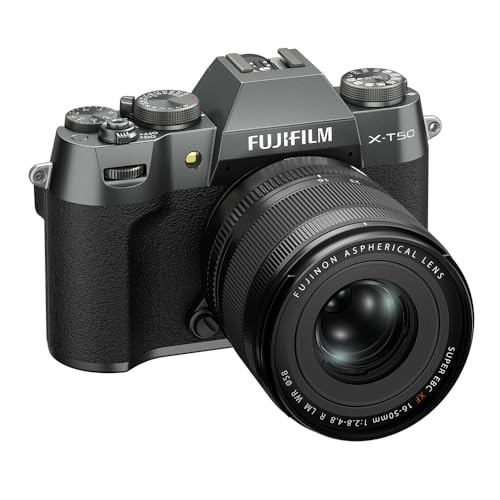
Fujifilm X-T50 40 MP APS-C X-Trans Sensor|Retro Style mirrorless Camera
The 40MP APS-C sensor is the first thing that actually changes how this Fujifilm mirrorless camera behaves in wildlife use. You get a lot of detail to work with, so even if the subject is a bit far, cropping later still keeps the image usable. That helps more than expected when you can not get physically closer. The physical dials on top also make a difference. Instead of going into menus, you adjust shutter or exposure directly, which saves time when things are moving. Autofocus is fine, not built for very fast or unpredictable motion, but for slower movement it stays consistent enough. Fujifilm’s color processing is another thing you notice. Images come out with a slightly finished look, not flat, so you don’t always feel like fixing them later. Stabilisation also helps while shooting handheld, especially when you’re trying to hold a longer frame without support.
Why you should choose this camera
If you care about how images look straight away, this one stands out. The color science and high resolution make it easier to get usable shots without spending too much time fixing them later.
Specifications:
BrandFujifilm
ColourCharcoal
Warranty1 Year (varies by seller)
DimensionsApprox. 123.8 x 84 x 48.8 mm
ModelX-T50
ManufacturerFujifilm Corporation
ASINB0DFGWL134
Country Of OriginJapan
Reasons to buy:
✓40MP sensor gives strong detail and cropping flexibility
✓Film color profiles reduce need for editing
Reason to avoid:
✗Autofocus not as reliable for very fast wildlife movement
04
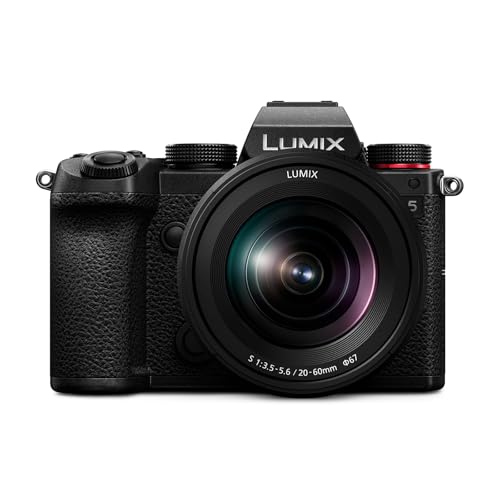
Panasonic Lumix S5 FullFrame Mirrorless Camera with Lumix S 20-60mm Lens
Dual Native ISO is the part that actually changes how this Panasonic Lumix mirrorless camera behaves. When light drops, it doesn’t struggle the same way, noise stays under control and details don’t fall apart quickly. That makes a difference in wildlife, especially during early morning or late evening when most activity happens. The 24.2MP full-frame sensor keeps things balanced. You’re not chasing resolution here, but the output stays clean and usable. Stabilisation is another strong point. The in-body and lens stabilisation work together, so handheld shots feel more steady even when you’re holding longer frames. Autofocus is a bit different though. It’s not the fastest compared to others, but it has improved enough to hold subjects better than before. Burst speed is limited, so this camera feels more suited to controlled moments rather than very fast action.
Why you should choose this camera
It works better when conditions are not perfect. If you often shoot in low light or handheld, this camera holds up well and gives more consistent results instead of chasing speed.
Specifications:
BrandPanasonic
ColourBlack
Warranty1 Year
DimensionsApprox. 132.6 x 97.1 x 81.9 mm
ModelDC-S5K
ManufacturerPanasonic Corporation
ASINB09C1Q19GV
Country Of OriginJapan
Reasons to buy:
✓Dual Native ISO keeps low-light shots cleaner
✓Strong stabilisation for handheld shooting
Reason to avoid:
✗Autofocus not as reliable for fast wildlife movement
05
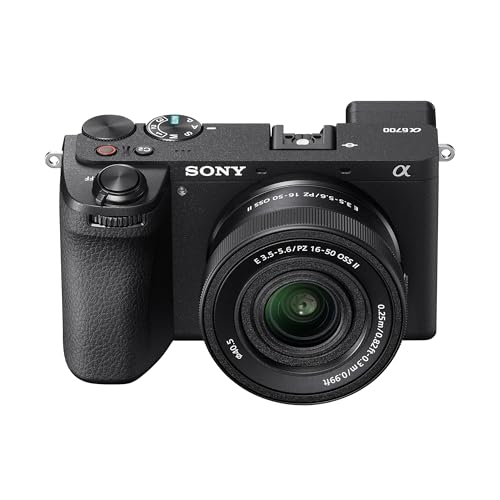
Sony Alpha ILCE-6700K (Previously ILCE-6700L) with Upgraded SEL16-50 (Ver 2) Power Zoom Lens | APS-C Interchangeable-Lens Mirrorless Camera
The AI-based subject tracking is what changes things on this Sony camera. It will not just follow movement, it understands what it is tracking, whether it is a bird, animal, or human, and that makes a difference when movement gets unpredictable. You dont have to keep correcting focus again and again. The 26MP APS-C sensor also helps with reach. You can crop in a bit without losing too much detail, which is useful when the subject is not very close. Stabilisation is strong here as well. Even handheld shots feel controlled, especially when you are trying to hold framing for a few seconds. It’s not built around very high burst speed, but the focus system makes up for it. You end up getting more usable shots instead of just more frames.
Why you should choose this camera
It reduces effort while tracking. The AI system handles subject recognition in the background, so you spend less time adjusting focus and more time actually framing the shot.
Specifications:
BrandSony
ColourBlack
Warranty2+1 Year
DimensionsApprox. 122 x 69 x 75 mm
Model ILCE-6700K
ManufacturerSony Corporation
ASINB0FKNBXGDC
Country Of OriginJapan
Reasons to buy:
✓AI-based tracking keeps subjects locked more reliably
✓Good stabilisation for handheld wildlife shooting
Reason to avoid:
✗Burst speed not the strongest for fast action sequences
06
Nikon Z50 Mirrorless Camera, 20.9 MP with Z DX 16-50Mm F/3.5-6.3 VR & Z DX 50-250Mm F/4.5-6.3 VR Lens
This Nikon mirrorless camera is one of those cameras that feels simple to start with, but it slowly starts making more sense once you take it outdoors. It uses a 20.9MP APS-C sensor, which is not very high on numbers, but it keeps images clean and easy to work with. What helps more in wildlife is the dual lens setup. The 50-250mm lens gives you proper reach, so you don’t feel limited when the subject is far. Autofocus is decent here. It will not feel very aggressive, but it stays steady enough for general wildlife movement. The 11 fps burst is useful when something happens quickly, though it works better for short action rather than long sequences. The Nikon camera is also light, so carrying it for a longer time will not feel tiring, which actually matters more than expected when you’re out shooting.
Why you should choose this camera
It’s a practical starting point. You get useful reach with the included lenses and a camera that is easy to handle without feeling complicated, especially if you’re getting into wildlife photography.
Specifications:
BrandNikon
ColourBlack
Warranty1 Year
DimensionsApprox. 126.5 x 93.5 x 60 mm
ModelZ50
Manufacturer Nikon Corporation
ASINB084MH4VBS
Country Of OriginThailand
Reasons to buy:
✓Dual lens kit gives good range for wildlife
✓Lightweight body makes long shoots easier
Reason to avoid:
✗Autofocus not as strong for very fast subjects
07
Leica SL2-S Mirrorless Digital Camera with Vario-Elmarit-SL 24-70 f/2.8 ASPH Lens (Bundle)
The full-frame 24MP sensor on this Leica mirrorless camera is built more for control than numbers. It will not try to oversharpen or push colors, so what you get looks clean and natural, especially in tricky light. That becomes useful in wildlife when conditions are not stable and light keeps changing. The buffer is another thing that stands out. It can handle continuous shooting without slowing down too quickly, so you don’t feel that sudden stop while tracking movement. Burst speed is there, but this camera feels more about timing than spraying frames. Autofocus is not the fastest here, and that’s something you notice if subjects move very quickly. But for slower or predictable movement, it stays consistent. The build also feels solid, a bit on the heavier side, but stable in hand, which helps while holding longer shots.
Why you should choose this camera
It’s more about control and output quality than speed. If your shooting style is more about waiting for the right moment instead of chasing fast action, this camera fits better.
Specifications:
BrandLeica
ColourBlack
Warranty1 Year
DimensionsApprox. 146 x 107 x 42 mm
ModelSL2-S
ManufacturerLeica Camera AG
ASINB09B84729K
Country Of OriginGermany
Reasons to buy:
✓Clean and natural output without heavy processing
✓Strong buffer handling for continuous shooting
Reason to avoid:
✗Autofocus not ideal for very fast wildlife action
08
Panasonic LUMIX S5IIX Mirrorless Camera
The phase hybrid autofocus is the biggest shift on this Panasonic mirrorless camera. Earlier Panasonic cameras struggled a bit with moving subjects, but this one feels more confident. It locks faster and, more importantly, keeps tracking even when there are multiple things moving in the frame. That makes it more usable for wildlife than older Lumix models. The 24.2MP full frame sensor keeps output clean without trying to overdo sharpness. You get natural detail, which helps when light is uneven or slightly harsh. Stabilisation is also strong here. The Active I.S. system helps while shooting handheld, especially if you are moving a bit while framing. It’s not built around high burst shooting, so this camera feels better when you time your shots instead of holding the shutter. But once focus is locked, it stays reliable.
Why you should choose this camera
It fixes the main weakness Panasonic had earlier. The autofocus is now much more dependable, so you get a more balanced camera that handles both movement and stability without needing too much adjustment.
Specifications:
BrandPanasonic
ColourBlack
DimensionsApprox. 134.3 x 102.3 x 90.1 mm
Warranty1 Year
ModelDC-S5M2X
ManufacturerPanasonic Corporation
ASINB0CJ44QZHM
Country Of OriginJapan
Reasons to buy:
✓Improved autofocus tracking compared to older Lumix models
✓Strong stabilisation for handheld shooting
Reason to avoid:
✗Not focused on high-speed burst performance
09
Canon EOS R6 Mark II 24.2 MP Mirrorless Camera-Body Only (Black)
The 40 fps burst is the first thing that changes how this Canon camera feels. You dont really worry about timing the exact moment, you just follow the action and pick the best frame later. That actually helps a lot when birds take off or movement happens too quickly to predict. The 24.2MP full-frame sensor keeps output clean, especially when light isn’t perfect. You can push ISO a bit and still get usable detail without things breaking apart. Canon’s autofocus is another strong point here. It locks fast and stays with the subject, even when movement gets unpredictable or the subject moves across the frame. Stabilisation also plays a role. Handheld shots feel more controlled, which helps when you are using longer lenses. Overall, this camera feels built for speed but still keeps things reliable.
Why you should choose this camera
It reduces the chance of missing the moment. The combination of fast burst and stable autofocus makes it easier to capture unpredictable wildlife without overthinking timing.
Specifications:
BrandCanon
ColourBlack
Warranty2 Years
DimensionsApprox. 138.4 x 98.4 x 88.4 mm
ModelEOS R6 Mark II
ManufacturerCanon Inc.
ASINB0BQYFNTZX
Country Of OriginJapan
Reasons to buy:
✓Very fast burst with reliable subject tracking
✓Strong low-light performance from full-frame sensor
Reason to avoid:
✗Higher battery usage during continuous shooting
10
10 Mirrorless Cameras from Sony, Canon, Nikon and More: Feature Comparison
Each camera behaves differently once you step outdoors, where autofocus, burst handling, sensor type, and stability decide how well it actually keeps up with real wildlife movement.
Disclaimer: At Her Zindagi Your Picks, we prioritize providing up-to-date information on the latest trending commodities and goods. Links in this article are affiliate links. Please note that our product recommendations are based on independent research and analysis however, Her Zindagi Your Picks shall not be held liable for any claims, damages, or disputes arising under applicable laws, including the Consumer Protection Act, 2019. Any issues regarding product quality, delivery, or warranties must be directed to the respective manufacturer or seller. Furthermore, the products featured in this article are organized for reader convenience and are listed in no particular order of priority or ranking.
Faq's
Do mirrorless cameras really help with wildlife or is it just hype?
They do help, but not in a magic way. The main thing is focus. When something moves fast, the camera doesn’t lose it that easily. But you still miss shots if your timing is off.
Full-frame or APS-C what actually works better?
If the subject is far, APS-C feels more useful. You get that extra reach without doing anything. Full-frame is better when light is low, but then you need longer lenses.
Is high fps that important?
It helps when something happens suddenly, like a bird taking off. But after a point, it doesn’t change much. If focus is not keeping up, more frames won’t fix it.
Can you manage wildlife with a cheaper camera?
Yes, but you’ll have to adjust a bit. Focus won’t be as reliable and you’ll miss more shots. Still works if you’re patient and not expecting every frame to come out right.