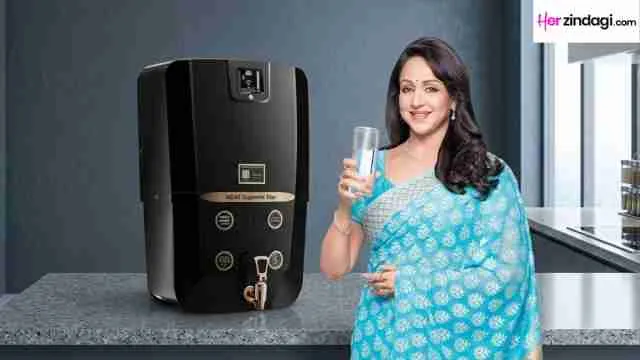
Borewell water in India generally has higher TDS and hardness than city tap water. This means that even a water purifier designed to handle city tap water may face problems when it comes to handling borewell water.
The KENT RO systems were made specifically for brackish and borewell water, and there are five such models this month that can work well for households with hard and high-TDS borewell water.
Faq's
What is hard borewell water and why is it a problem for drinking?
Hard water is the water that is collected through the borewell passes through soil that contains minerals, it contains more minerals such as dissolved salts, calcium, and magnesium when compared to the tap water. This water is hard and forms scales on containers and cannot be drunk.
How does KENT RO technology effectively handle high TDS and hardness in borewell water?
The purpose of RO is to assist in minimizing TDS, which includes salts causing water to be hard. Although RO process by itself reduces a lot of dissolved minerals, this particular KENT water purifier has a TDS controller that combines RO-treated water and UF treated water.
What are some of the costs associated with using borewell water which is not purified in India?
Hard borewell water may result in scale formation in geysers, kettles, and pipes, which may reduce the efficiency of the equipment over time. Hard borewell water is perceived to have a rough texture by some individuals when it comes into contact with the skin and hair. It should be noted that the drinking water purifier is meant for drinking purposes alone.
How often do I need servicing of my KENT RO purifier with a borewell water connection?
With a borewell connection, the frequency of filter change such as sediment filter and carbon filter can increase to about six months as per the quality of water and its usage. Usually, RO membranes have a life of 12 to 18 months while UV lamp is changed once in every year. Borewell connections mostly go for servicing twice in a year.